
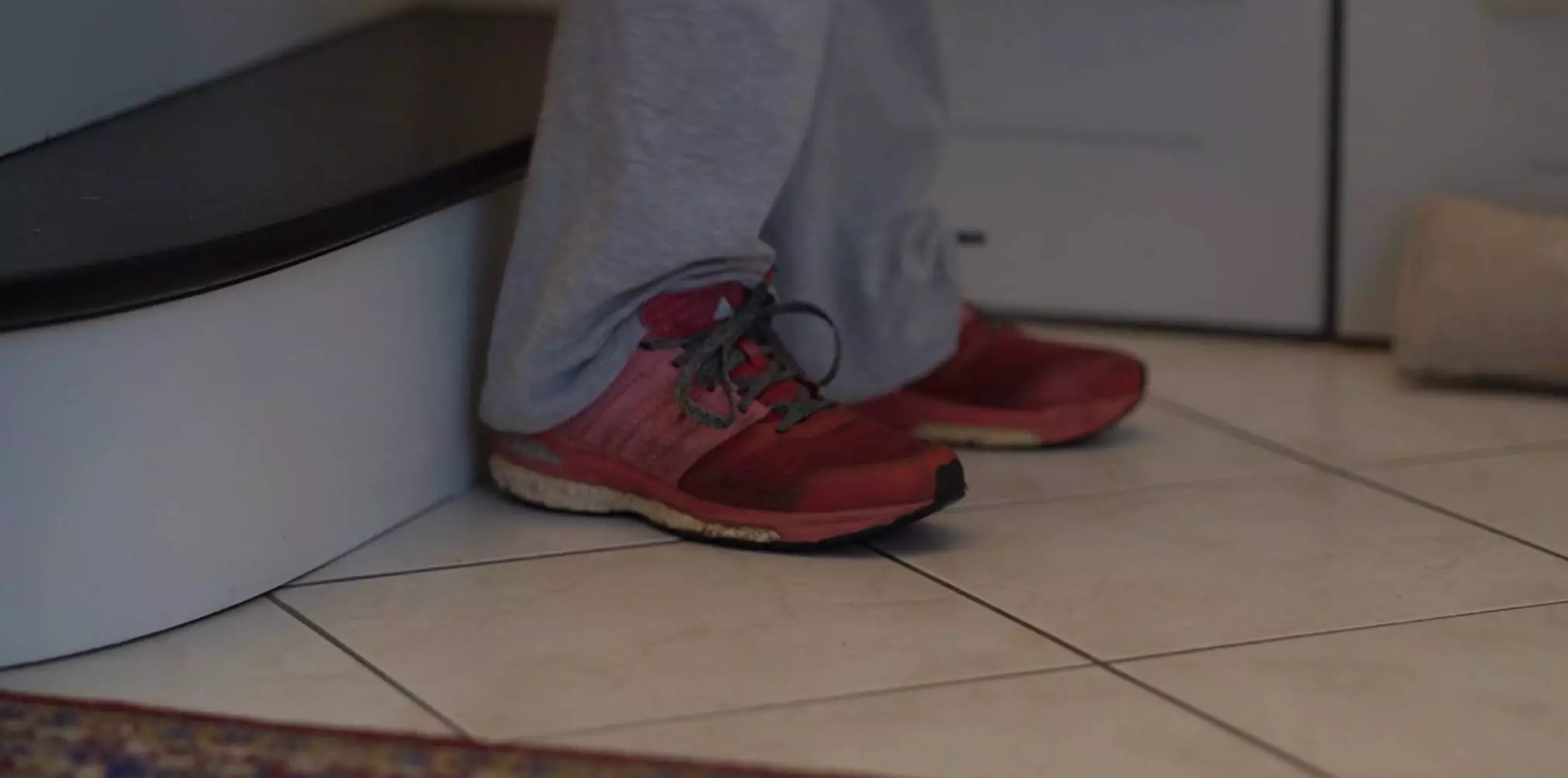
An emotionally intense short film
The film adopts a sober narrative to give full expression to the character’s emotions. Everything opens on a gentle note: Salomé wakes up in the home she shares with her mother, a space filled with warmth that embodies their osmosis. The sun-drenched kitchen, the plants and the simplicity of the place exude a palpable tranquillity. A few exchanges are enough to create this peaceful complicity, these habits that quietly express what’s essential. But once she crosses the threshold, Salomé moves away from this protective bubble. Her stride begins, and with it a gradual shift towards a more brutal, messier, almost oppressive exterior.
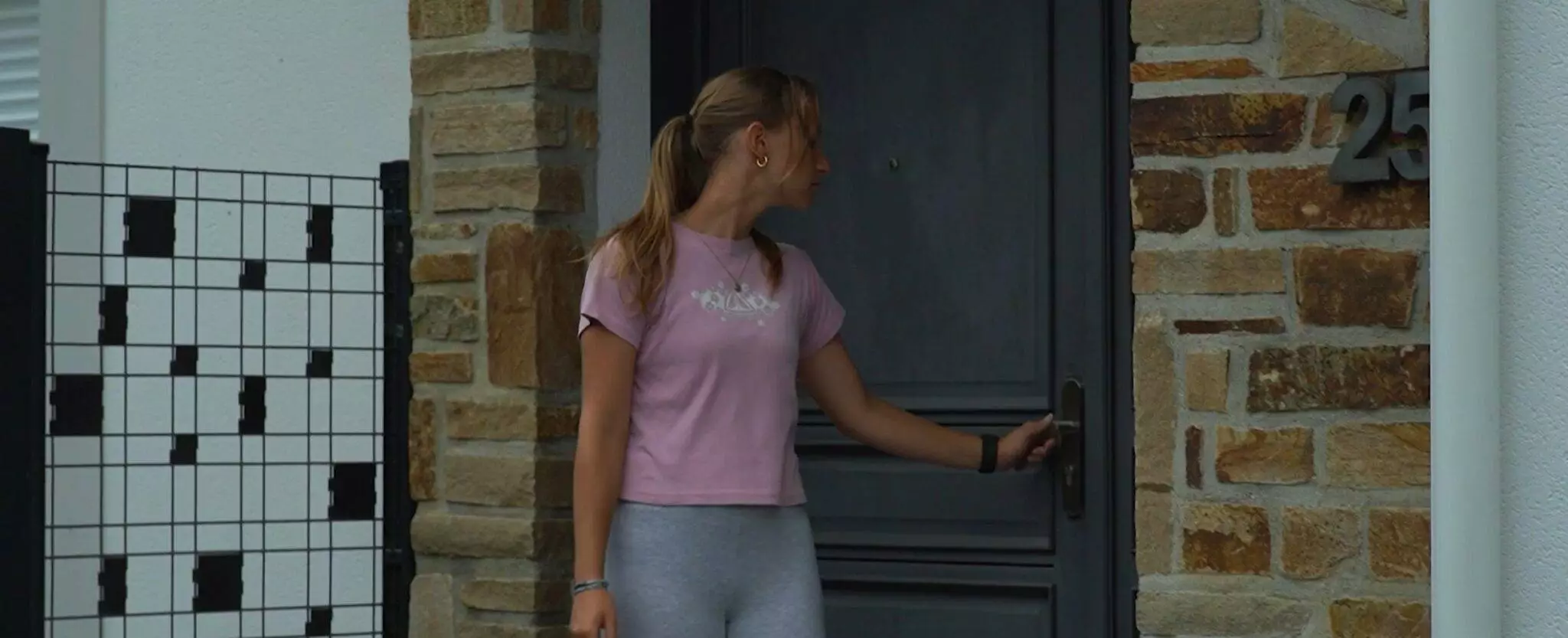
The street as a thread of memory
The setting of this residential street structures the entire production. A linear, uniform space, it becomes the reflection of Salomé’s journey, a journey where each step brings back a memory. The street is like a memory frieze where past and present merge. The decisive moments of her life resurface in bits and pieces, gradually revealing repressed pain and emotions. The viewer, immersed in her point of view, perceives this growing intensity almost without words.

The play of light
The lighting shapes the atmosphere of the film. In the house, natural and artificial light combine to create a golden, intimate atmosphere, evoking the softness of the morning and the tenderness of a mother. The orange rays caress the walls, enhancing the textures without overpowering them.
Outside, the light changes. Brighter and more direct, it contrasts with the cocoon inside and intensifies the tension, transforming reality into an additional challenge.

A staging of silence and emotion
In Run like a Girl, the dialogue fades quickly. The brief exchange between Salomé and her mother simply reveals their complicity, before silence takes over as the main narrative tool, plunging us into Salomé’s interiority, her breath, her rhythm, her emotional journey. Every gesture, every look reveals what she is going through. This choice reinforces the immersion: the spectator feels more than he understands, sharing with her the mounting anguish, the memories and the gradual liberation.

A film about resilience
The brief interaction with a young man embodies the unpredictable difficulties of life, reminding us that Salomé must move forward despite whatever disrupts her path. In two minutes, Run like a Girl plunges into the intimacy of a young woman undergoing reconstruction. Through a jog that is anything but trivial, the film explores resilience, the weight of memories and the strength needed to free herself from them. Without superfluous words, with a delicate aesthetic and masterful direction, it invites viewers to experience, alongside Salomé, an intense and universal moment.