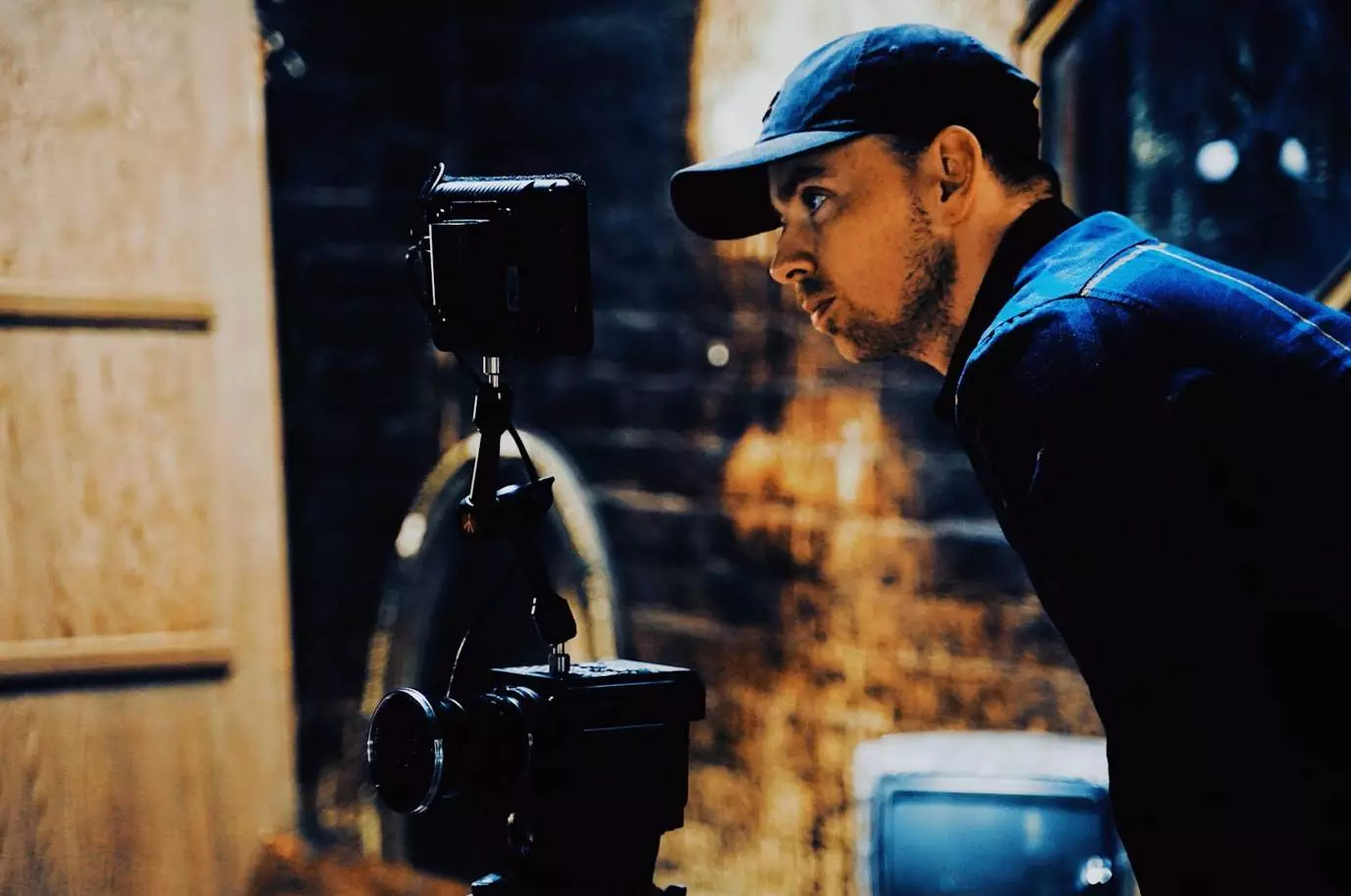
Film producer

Tasks and roles of the film producer
A true conductor of a film project, the film producer plays a central role in the creation of a film or any audiovisual project. This professional is the backbone of a film or programme, from its creation and development through to its final distribution in cinemas or on television channels.
At the head of a production company, the film producer works closely with the artistic director. They supervise, coordinate and take the decisions needed to ensure the artistic, financial, logistical and legal success of the film. To carry out their role, they also rely on the support of all the people involved in the shoot. In particular, he/she is responsible for :
Developing the project
The film producer selects and launches a film idea. He then assists the authors and scriptwriters in writing the screenplay. They determine the artistic and financial feasibility of the project.
The financial package
Drawing up a provisional budget is an essential step that the producer will have to take. To do this, they have to start looking for funding (public grants, television channels, private investors, co-producers, etc.). This also involves negotiating contracts with financial partners.
Assembling the team
If the director has not yet been chosen, the film producer must carry out this task. They also take part in casting and recruiting the main technical managers. Once the technical team has been assembled, the producer supervises the employment contracts and ensures that they are consistent with legal requirements.
Monitoring production
The producer manages the shooting schedule and ensures that the budget is respected. They monitor all stages of filming, usually in collaboration with the production manager. He may be called upon to resolve any logistical or human problems.
Post-production
The film producer monitors editing, colour grading, sound mixing, etc.
Distribution and exhibition
The edited and finished film must now be distributed. The producer organises the promotion and screening of the film (festivals, cinema releases, foreign sales, etc.). They negotiate with distributors, television channels, streaming platforms, etc.).
Legal and administrative management
The producer’s work continues with the registration of the film with the CNC (Centre national du cinéma et de l’image animée, formerly known as the Centre national de la cinématographie). This ends with the management of copyright, music rights, etc., as well as declarations and other legal obligations.
The skills and qualities needed to be a producer
This all-round profession requires rigour and creativity, as well as a number of essential skills and qualities.
Technical skills
- Knowledge of the film industry in terms of funding channels, distribution, legislation, copyright, etc.
- Financial skills for drawing up a budget, seeking funding and keeping track of project accounts.
- Project management skills to plan, organise, budget and anticipate unforeseen events.
- Understand production techniques (shooting stages, post-production, equipment used, etc.).
- Legal and administrative knowledge to manage contracts, collective agreements, etc.).
Interpersonal skills
- Knowing how to negotiate with the various parties involved in a project (partners, broadcasters, technicians, artists, financial backers for complex financial packages).
- Mastering the art of communication to defend a project, convince an investor or talk to a director.
- Excellent leadership skills to manage and motivate a team, etc.
Essential personal qualities
- Creativity. A good producer needs to be able to spot a good script, a potential film and a talented team.
- Rigour, particularly in terms of meeting deadlines, budgets and legal obligations.
- Authority, to supervise the many partner companies and the best-known artists.
- Organisational skills to manage artistic, technical and financial aspects simultaneously.
- Resistance to stress in a job where the stakes are high and the pressure is often on.
- The ability to plan ahead, taking an overall view of the project from start to finish.
- Reactivity and adaptability to deal with unforeseen circumstances, which are frequent in this profession.
- Finally, to succeed in this profession, a film producer must know how to network and maintain a good address book (directors, authors, financiers, distributors, etc.).
Which baccalaureate should I choose?
To become a film producer, certain baccalaureates are recommended:
- The general baccalauréat, specialising in humanities, literature and philosophy (HLP), which is aimed at students who are curious and like to broaden their horizons. This baccalauréat helps to develop an artistic culture and analytical skills. The HLP bac is useful for entering preparatory courses, universities and film schools.
- The general baccalauréat, specialising in cinema and audiovisual arts. This baccalauréat covers film analysis, shooting, editing and more. It’s an excellent basis for understanding the film industry.
- The general baccalauréat, specialising in Economic and Social Sciences (SES), which is particularly well-suited to the management, economics and financial aspects of being a producer.
Training and qualifications to become a film producer
There is no single route to becoming a film producer. There are several types of training available after the baccalauréat, depending on your profile, ambitions and desired level of selection.
National public competitive schools
These schools are highly selective, public and recognised for training top-level professionals in the film and audiovisual industries. Admission is by competitive examination, often after a preparatory class or university course.
Public schools specialising in the film industry
These schools are accessible by application or competitive examination, and offer professional training courses lasting from 3 to 5 years. They give students the opportunity to gain practical experience of the production profession, with local support and a strong grounding in the industry.
CinéCréatis – With locations in Nantes, Montpellier, Lyon and Bordeaux, CinéCréatis trains students for careers in the film and audiovisual industries through a comprehensive, progressive and professional curriculum. The school stands out for :
-
-
- Progressive specialisation, giving students a hands-on approach to production from the very first years.
- Supervision provided by working professionals, allowing real immersion in the workings of the sector.
- Studios integrated into the school (film sets, mixing rooms, post-production stations) for working under professional conditions.
- End-of-study films made in teams and presented to external juries.
- A dynamic network of partners (channels, producers, festivals, studios) and a community of alumni in France and abroad.
-
With its approach combining artistic standards, technical mastery and preparation for professional life, CinéCréatis is the ideal choice for those wishing to enrol in a film training course.
Short professional courses (BTS / Bachelor)
For those who want to learn quickly while developing solid skills, there are a number of short courses that provide a very practical entry point into the production sector, thanks to various BTS or Bachelor’s degrees.
For those planning a career in Hollywood, there are international courses offered by expensive but prestigious schools such as :
- NYU Tisch School of the Arts, USA
- USC School of Cinematic Arts, USA
- London FilmSchool, UK
Tools and software used by the producer
In the world of cinema, a producer needs specific tools to manage production, organise teams, plan shoots, monitor budgets and so on. Film professionals mainly use :
- New Movie Magic Scheduling, developed by Entertainment Partners, a company known for its production management solutions. This software is specially designed for planning film and television productions.
- Celtx, screenwriting software for creating projects directly formatted in the film industry’s standard format. A free or premium online version is available.
- StudioBinder, a creative management platform with functions for creating call sheets, managing casting, planning, shooting schedules and more. This software is widely used in independent film, advertising and music video shoots.
- Movie Magic Budgeting, essential for creating and managing a film budget, by item (casting, sets, technical, etc.).
- Final Draft, a benchmark in scriptwriting software. Dedicated to screenwriting, it allows the producer to read, comment on and monitor the different versions of the script.
- PDF Annotator / Adobe Acrobat for annotating scripts, contracts and administrative documents.
How much does a film producer earn?
Average starting salary
For an entry-level film producer, the monthly salary is between €2,500 and €4,000 gross.
Average experienced salary
An experienced professional can earn between €4,000 and €8,000 gross per month.
Note: remuneration can be considerably higher thanks to percentages on film receipts and the valuation of adaptation rights.
Possible outlets and careers
Young graduates generally start their careers with a production company or television channel as production assistants or managers. With experience and a solid professional network, they progress to positions of responsibility such as production manager, executive producer and then line producer.
Some film producers also decide to become independent by setting up their own production company. While this option widens the choice of projects, it also exposes them to greater financial risk.
Sectors and companies recruiting
A film producer will find job opportunities in :
- Film production companies producing short, medium or feature films.
- Television channels and streaming platforms.
- The video games and virtual reality sector. Some companies, such as Ubisoft Film & Television, which develop narrative games or augmented or virtual reality projects, are looking for producer profiles.
- Communications and advertising agencies and studios producing branded content such as adverts, mini-series or music videos.