Evadere
INFOS
- formation 3rd year
- année Class of 2022
- durée 04:50
Film pitch
Overwhelmed by the noise, Ela retreats to an attic to find some peace and quiet. On the creaky wooden floor, her gaze falls on a painting of a snowstorm. Swept away into a dark world, she lets her body do the talking, and dances to release her unease…
-
Evadere
Evadere is a dance film that shows how the body and dance can be used to express inner suffering when words are no longer enough. Through sound, image and movement, the film makes Ela’s imprisonment felt, and dance becomes a necessary moment of escape to keep moving forward.
An intention to create driven by the body and emotion
From the outset, the director’s statement of intent asserts a visceral desire: to bring out what cannot be said. When words fail, the body takes over. Dance is seen here as an outlet, a living material capable of transforming invisible pain into tangible movement.
Produced in the form of a scripted clip, Evadere follows Ela’s emotional journey through several symbolic spaces. The film asserts that dance has the power to evacuate and externalise, a capacity to temporarily relieve the ills of body and mind. The proposed escape is not a cure, but a suspended moment, a necessary breath to keep moving forward.
Sound plays a central role in the narrative. From the very first sequence, the world of sound becomes brutal, saturated with strident sounds, tinnitus and disturbing noises, reflecting Ela’s singular way of perceiving the world. Synesthesia, the association of sounds with shapes and colours, gives visual expression to this auditory suffering, plunging viewers into an immersive sensory experience.
The frame: filming a body in pain
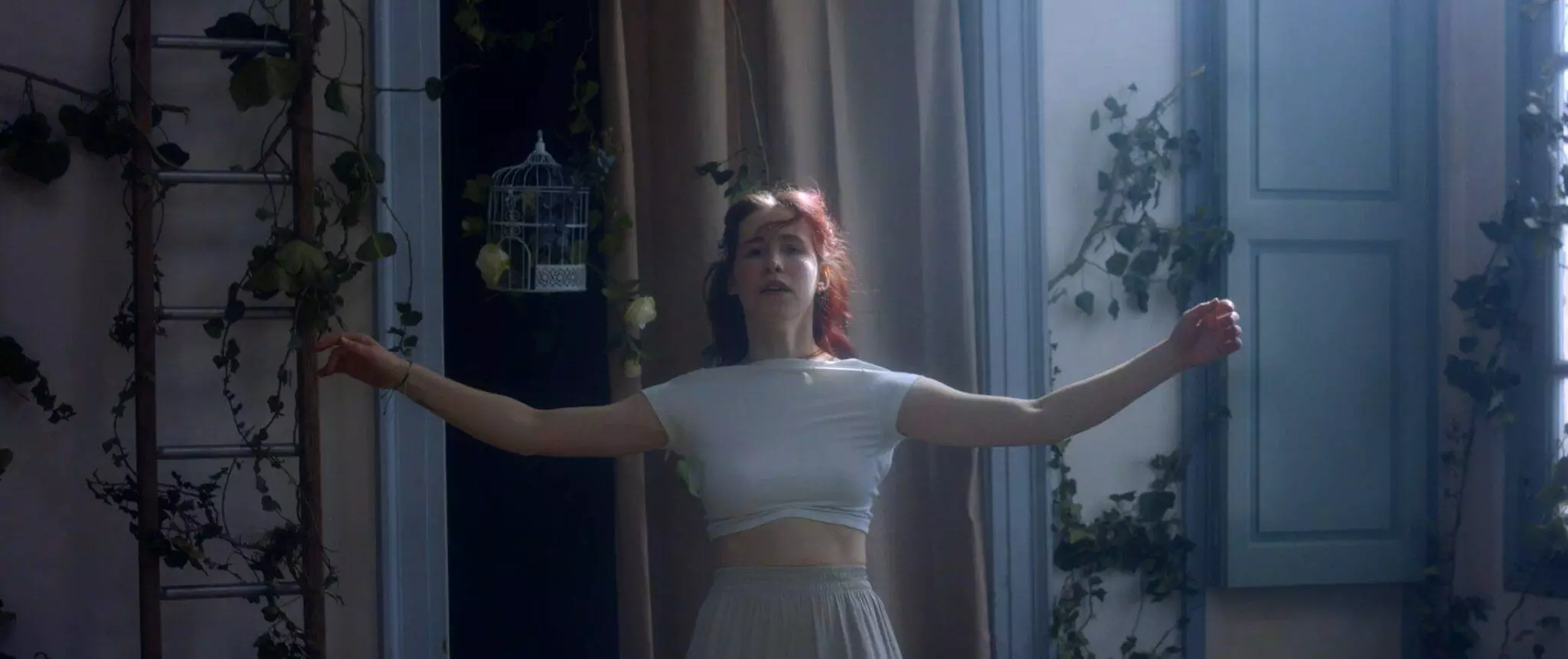
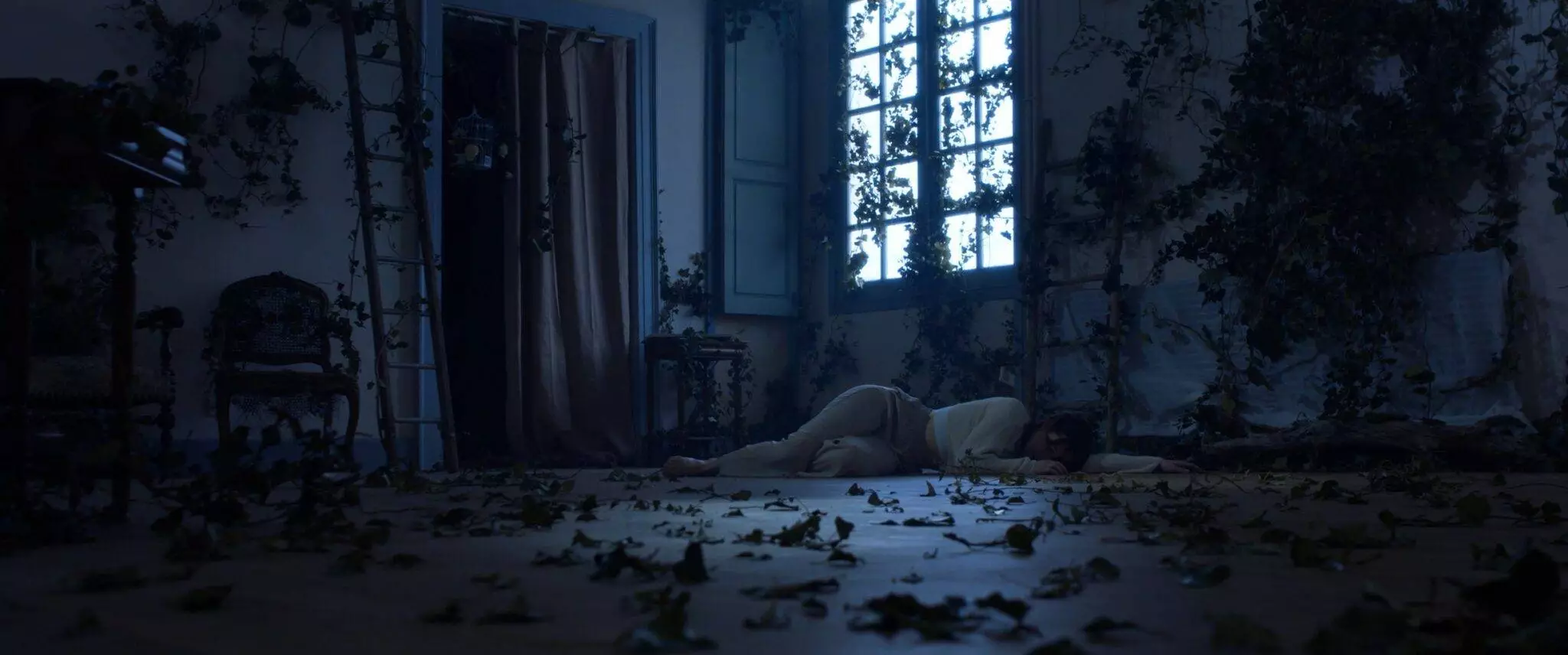
The framing work closely accompanies the emotional state of the protagonist. The choice of a 2.35:1 ratio accentuates the feeling of confinement in the attic, overloading the space horizontally while restricting the verticality of the frame. Ela seems trapped in her environment, unable to escape.
The hand-held camera used throughout the film lends an organic dimension to the image. It follows the dancer’s movements, falling with her, circling her body, as if the camera itself were dancing. This proximity creates a physical and emotional immersion, reinforced by the alternation between very tight shots, filmed in long focal length to capture the pain of the body, and wide shots in short focal length, which underline the solitude and vulnerability of the character.
Light: between refuge and ambiguity
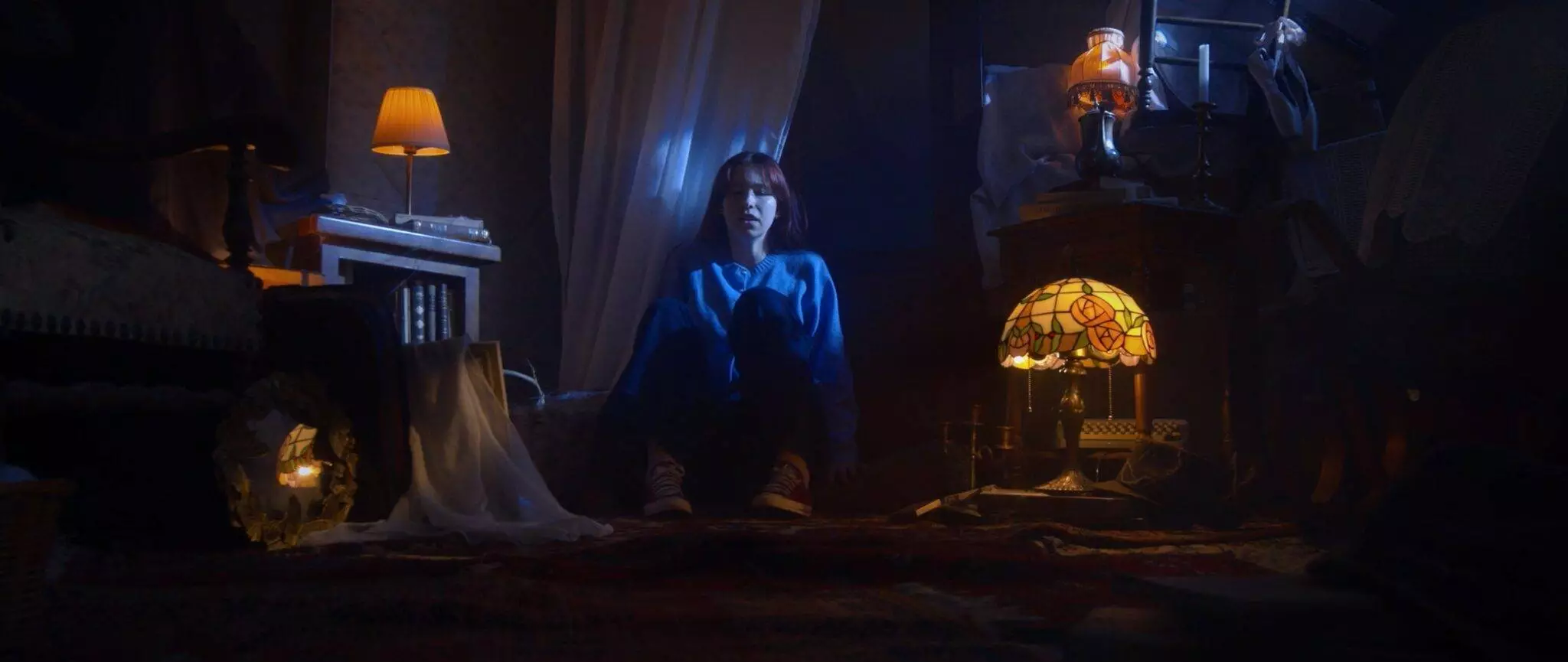
Light accompanies the film’s dual temporality and Ela’s inner evolution. The attic, traditionally perceived as dark and oppressive, is transformed into a luminous refuge. Warm orange hues dominate, evoking a sense of security and comfort. The beams filtering through the cracks and shutters create shifting shadows, reflecting the character’s inner turmoil.
In the second part, the light becomes more contrasted and ambivalent. The chiaroscuro, the deep blacks on Ela’s body and the beams of light crossing the space materialise a quest for freedom hindered by doubt. The presence of particles and smoke makes the light almost palpable, reinforcing the sensory and emotional dimension of the image.
The sets: materialising the mental state
The sets in Evadere are conceived as direct extensions of Ela’s psychological state.
The attic, overloaded with objects, furniture and memories, is an enclosed but intimate space, abandoned by the rest of the family. Aged and dusty, it paradoxically becomes a protective cocoon, a place where Ela can be alone with herself.
In contrast, the overgrown castle room represents Ela’s imagination. Ivy, roots and driftwood block all the exits, creating a visual metaphor for inner confinement. Far from being liberating, nature becomes oppressive, reflecting the emotional storm Ela is experiencing. The link with Turner’s painting, Snowstorm at Sea, reinforces this symbolism of a violent and lonely inner struggle.
Sound and VFX: sensory immersion
The sound work is at the heart of the narrative. Inspired by misophony, it aims to place the viewer in Ela’s subjective perception. The first part, built around synaesthesia, combines aggressive sounds and coloured shapes generated in VFX. This visual and sonic abstraction deliberately assaults the senses, creating a shared discomfort with the protagonist.
Caleb Arredondo’s Echo Sax End music acts as a breath of fresh air. Reshaped in the editing process, it accompanies the emotional evolution of the dance, while the breaths and sounds of Ela’s body become a parallel melody. Gradually, the realistic sounds disappear to make way for a more scenic dance, symbolising the character’s gradual deliverance.
Editing: two rhythms, two states
The editing clearly articulates two narrative regimes. In the attic, the rhythm is slow and contemplative, giving way to silences and a calm temporal continuity. In contrast, the dance sequence adopts a more brutal and accelerated editing style, marked by sharp breaks.
There is a clear break in the sequence, supported by the sound editing, to reflect Ela’s psychological shift: the music stops abruptly before starting up again on the drop, signalling a profound change in her inner state.
TECHNICAL LIST
PRODUCTION
Associate producer: Ulysse Chaudron
Production manager: Mathilde Sala
STAGE DIRECTION
Director: Alicia Nevers
1st assistant director: Mathilde Sala
Scriptwriter : Thibault Arles
IMAGE
Director of photography: Mathis Menconi
Cameraman: Maëlys Laine
1st camera assistant: Nolwenn Nicod
ELECTRICITY / MACHINERY
Chief electrician: Malo Taulelle
Electrician 1: Alan Le Bihan
SOUND
Head of OPS: Esmée Chiron
OPS Manager: Cassandra Chevalier
MANAGEMENT
Location Manager: Mathilde Sala
Assistant Stage Manager : Katiana Gobber
POST-PRODUCTION
Editor: Cassandra Chevalier
VFX supervisor: Cassandra Chevalier
Sound-designer: Cassandra Chevalier
Sound design support: Mathis Menconi
Calibrator: Mathis Menconi
DIT: Cassandra Chevalier
DECORATION / PROPS
Head Decorators: Maëlys Laine, Alicia Nevers
Back-up decorator / ripper: Nicolas Guichard
Set props: Thibault Arles
INTERPRETED BY
Eve Renard Deconynck