Muse
INFOS
- thème Fiction
- formation 2nd year
- année Class of 2023
- durée 6:30
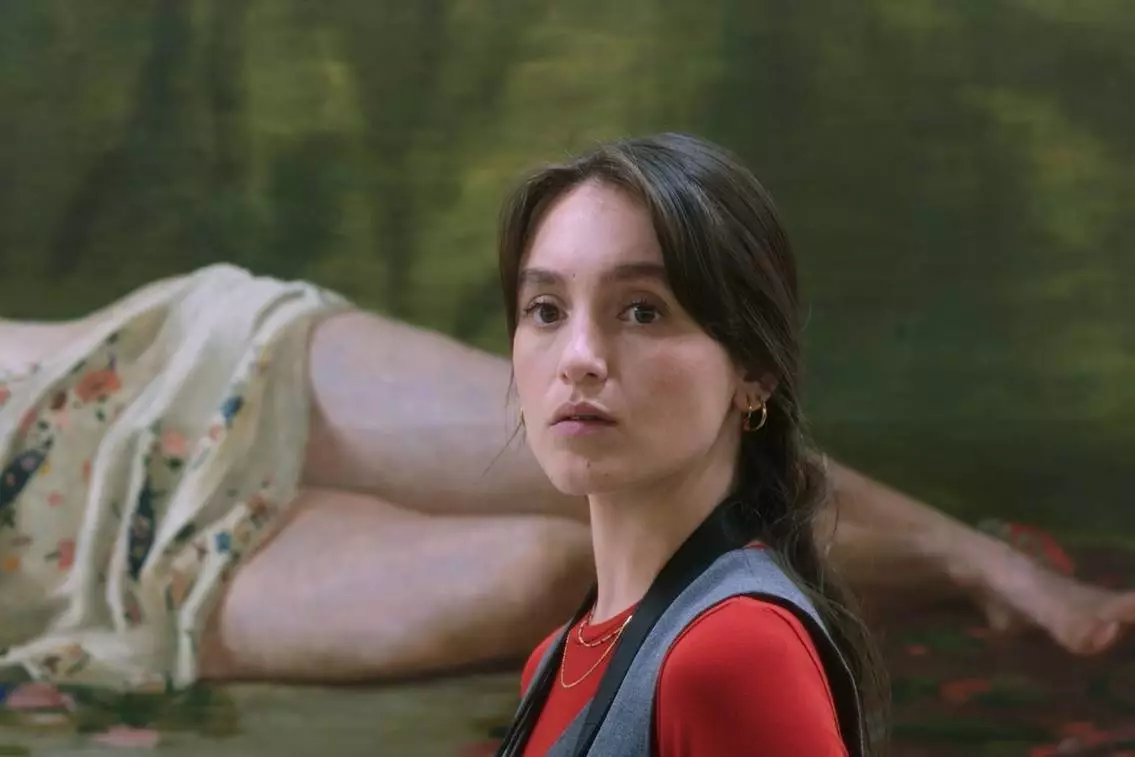
When the gaze becomes cinematographic material
Last year, to mark the 200th anniversary of the Musée Fabre, the students, divided into two teams, were given carte blanche to create a fictional film based on the works in the museum.
The short film, Muse, directed by Gabin De Coster, unfolds as a sensory and contemplative experience at the heart of the Musée Fabre. The film explores a fragile moment: the moment when the gaze wavers, when inspiration is felt but never grasped.
Through the wanderings of Suzie, a young photographer in search of meaning, Muse offers an interior journey. The museum is more than just a backdrop: it becomes a living space, a silent partner where the works look as much as they are looked at.
A staging based on restraint
The director’s intention is clear: to let things happen without forcing them. Inspired by Robert Bresson, the project refuses any psychological demonstrations or heavy-handed acting. The bodies are present, but never expressive in the traditional sense.
The Muse, an enigmatic figure, is not there to guide or explain. She crosses the frame like a fleeting idea: calm, distant, almost unreal. Her mere presence reveals Suzie’s inner turmoil. The film is organised around micro-events: a glance, a pause, a tiny movement that take on vital importance in a deliberately pared-down set-up.
This approach makes Muse a film about looking: looking at works of art, looking at them as if under pressure, looking at them in a way that is impossible to fix. The viewer is invited to adopt the same posture as the heroine: to observe, to feel, without immediately seeking to understand.
The frame as a space of tension
The work on the frame is based on a constant dialectic between control and loss of reference points. Most of the shots are fixed, frontal, on tripods. This stability creates a sense of order and control, like the museum itself. But this rigour is occasionally undermined by two camera movements, a tracking shot and a sliding shot, which upset the overall balance.
The depth of field, the management of the off-screen and the sometimes rigid compositions enclose Suzie in frames that are beyond her. As her obsession with the Muse grows, the frame becomes more unstable, giving way to blur and empty space as narrative elements in their own right.
Light between naturalism and dream
The lighting in Muse is based almost exclusively on that already present in the museum. Soft, diffuse and low in contrast, it preserves the authenticity of the space while creating a slightly unreal atmosphere. The faces are sometimes very slightly underexposed, reinforcing the mystery and distance between the characters.
The choice of a white balance deliberately colder than that of the museum (around 3000 K) produces a subtly bluish image, which is then accentuated during colour grading. The tones are desaturated, with skin tending towards pink, evoking an aesthetic reminiscent of Lost in Translation.
The use of a Black Frost 1/2 filter softens contrasts and textures, helping to blur the line between dream and reality. Light becomes a narrative tool: it doesn’t emphasise, it suggests.
Sound: an inhabited silence
Sound plays a central role in the dramaturgy. The museum is treated like a living organism, with muffled footsteps, rustling clothes, distant echoes and breathing. Each room has its own sound identity.
The Muse’s appearances are accompanied by slight auditory anomalies: murmurs, pronounced silences, almost imperceptible distortions. The release of the camera becomes a sound signature, a suspended moment when time seems to stand still.
In the final scene, the almost total return to silence gives way to breaths alone, marking the tipping point between turmoil and appeasement. The sound never comments on the image: it accompanies it, prolongs it, worries it.
Editing and duration as sensitive material
The editing favours slowness and contemplation. The shots are stretched out just long enough to allow the eye to settle in and the details to emerge. The joins are designed as shifts rather than breaks, reinforcing the impression of inner wandering.
A few more intense moments punctuate this stable structure, without ever breaking it. These perceptual micro-accidents act like discreet jolts, accentuating the film’s sensory dimension.
The paintings: active presences in the narrative
The works featured, from Goncharova to Monfreid to Soulages, are not chosen at random. Each carries a symbolic, plastic or chromatic charge that resonates with Suzie’s inner state.
The Soulages painting, in particular, becomes a tipping point: a black, silent, almost absorbing surface against which the Muse appears and then disappears. The work stands still, where inspiration fades.
The technical team :
Director: Gabin De Coster – 1st Ass. Director: Tom-Lou Esnard – 2nd Ass. Director: Mélhyne Flambeau – Camera operator: Pierre Llorca Dauba – 1st Ass. Shooting : Anatole Coste – 2nd ass. Director of photography: Camille Bohren – Production manager: Hugo Tardieu – Production assistant: Alizée Hornung – Post-production manager and colourist: Axel Dejean – Chief electrician: Malo Taulelle – Electricians: Simon Boutin, Emma Fabregoule, Paloma Mondoloni – Head stagehand: Léna Rigoulet – Stagehands: Ronan Saves and Morgan Saurat – Sound engineer and editor: Auranne Jolidon – Art director: Elsa Rimlinger – Script: Ilona Baunard – Casting director: Ronan Saves – Scriptwriter: Emilie Wyss – Stage Manager: Océane Gasson – Assistant Stage Managers: Solune Asselin, Nicolas Carcassonne, Liam Gerth, Sofia Griffiths Alfaro, Lucie Martinez, Erine Vitoria – Head Set Designer: Melina Gomme – 1st Ass. set designer: Grégoire Gilly – Head Costume & Accessories Designer: Mila Thoyer – Head Make-up Artist: Lauryn Piolet – Set Designer: Emilie Wyss – Postproduction Manager: Axel Dejean – Head Sound Operator: Auranne Jolidon – Assistant Sound Operator: Axel Dejean and Simon Boutin – Sound Mixer: Auranne Jolidon – Sound Designer: Ilona Baunard – Calibrator: Axel Dejean – DIT: Clarence Lecou – Set Photographer: Lucie Martinez and Valentine Ruchot.