Orgueil et deuil
INFOS
- formation 1st year
- année Promotion 2024
- durée 5:11
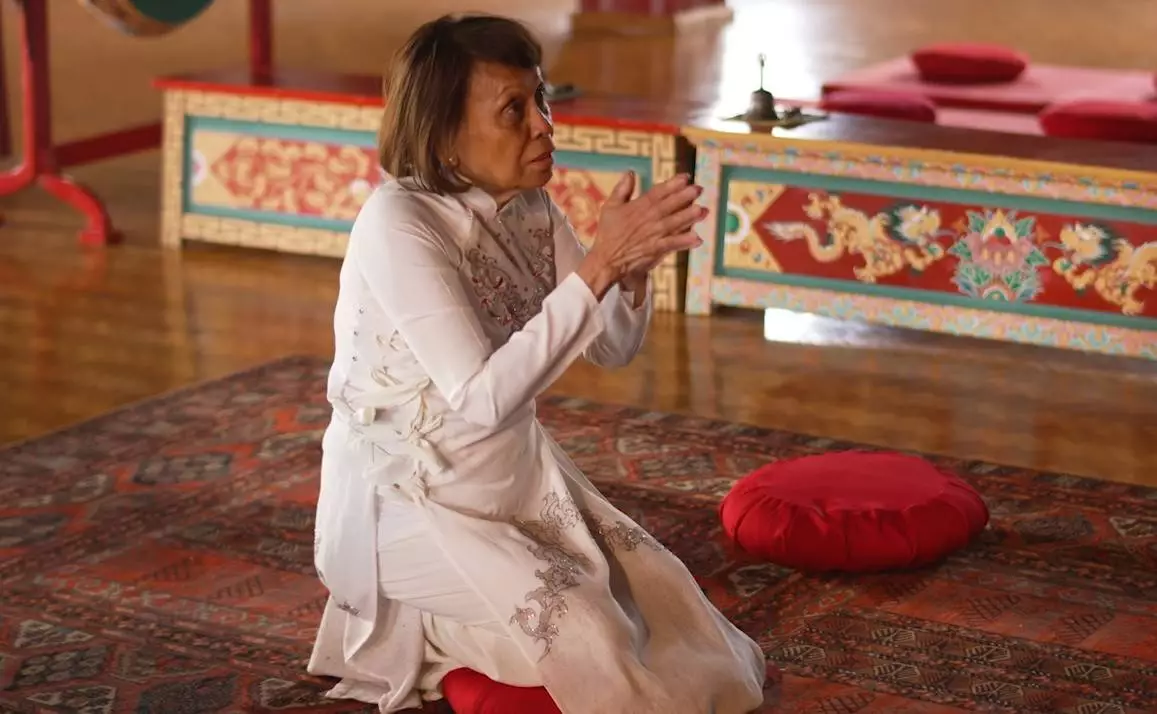
Orgueil et deuil
a cinematic meditation on loss and acceptance
With Orgueil et Deuil, the CinéCréatis team is offering much more than a simple end-of-year exercise: a genuine object for reflection, on the borderline between philosophical tale, contemplative cinema and spiritual parable. By freely adapting the famous Buddhist sutra of Kisagotami, the story of a mother trying to bring her son back to life, the film questions our intimate relationship with death, lack and pride.
-
Film pitch
In her distress after the death of her son, an elderly mother accepts a test imposed on her by a monk: to find a person who has never experienced grief. In the course of her search, she discovers that loss is universal, and that her son never really left the world of the living.
A universal story, rooted in a spiritual tradition
The film’s starting point is profoundly human: a mother, shattered by the loss of her son, refuses to accept the inevitable. Her quest, initially motivated by despair, gradually becomes a path of initiation. By asking her to find someone who has never experienced grief, the monk is not offering her a miraculous solution, but a mirror: that of her own condition and that of humanity as a whole.
Through this journey, Orgueil et Deuil explores the different ways of experiencing loss. Some of the characters the old woman meets bear their grief with modesty or resignation; others have accepted it as part of their existence. Faced with them, the mother embodies pride and refusal, not out of malice, but out of love and pain. The film invites viewers to question their own relationship with death, memory and attachment.
Cinematographic writing between dream and reality
While the narrative remains legible, it takes on a fragmented, dreamlike dimension. The nightmare sequences, in which the mother appears masked, visually translate her inner torments. These drifting moments break with the realism of the rest of the film and recall the influence of contemplative Asian cinema, claimed by the directors.
The references to Kurosawa, Zhang Yimou and Tran Anh Hung are not simply aesthetic homages: they permeate the mise en scène, the rhythm and the way the bodies are filmed in space. The film favours long takes, silence and meticulous attention to gestures and landscapes.
Aesthetic lighting and framing at the service of meaning
The note of intent on lighting and framing reveals a genuine quest for visual expression. The forest, the place of initial mourning, is bathed in filtered, almost diffuse natural light, enveloping the mother in an atmosphere of solitude and contemplation. The dream sequences, on the other hand, play on sharper contrasts and darker textures, materialising the anguish and inner struggle of the character.
The temple, meanwhile, appears as a space of transition: its warm, golden light symbolises spirituality, calm and truth. The choice of framing, alternating intimate close-ups and wider shots that place the mother at a distance, visually translates her inner journey from egocentricity to awareness.
A film rooted in a culture and a place
Beyond the story, Pride and Grief is also an immersion in Vietnamese and Tibetan Buddhist influences. The props, costumes and musical choices bear witness to a genuine concern for cultural authenticity. Shooting at the Pagode de la Boulaye, a place charged with spirituality, reinforces this contemplative dimension and gives the film an almost documentary depth.
In three and a half minutes, Orgueil et Deuil manages to condense a dense reflection on life, death and attachment. Somewhere between visual poetry, spiritual heritage and pure emotion, the film presents itself as a cinematic meditation that invites us to feel as much as to think. A short but ambitious work, its sincerity and sensitivity leave a lasting impression.
Film made during the first year of study at Cinécréatis.
-
Technical team
Director : LLORET Samuel – Assistant Director : MONTANT Nhât Lê – Cinematographer : LAURENT Victor – Gaffer : BROSSARD Swann – Sound engineer : TÊTE Joachim – Editor : RAMBAUD Jùles – Script : Matéo Gastaldo – Set Photographer: Eva Lloret
-
Artistic list
Farida Michel – Kim An Pham – Jian LIAO
-
Music
Camillo Ferreira