Un jour de marque
INFOS
- thème Mini-Series
- formation 2nd year
- année Class of 2023
- durée 11:25
Film pitch
On his wedding day, Joseph gradually discovers that his bride-to-be’s family is hiding a chilling ancestral ritual. What was supposed to be a celebration turns into a sacrificial ceremony, in which Joseph becomes the offering intended to free Anne from a mysterious mark that condemns the women of her line. Trapped between love, tradition and violence, Joseph will have to make a tragic choice to survive, at the risk of becoming a bearer of the mark himself.
-
A day to remember
Through Un Jour de Marque, the artistic team is developing a work in which every aesthetic choice plays an active part in the narrative. The various statements of intent reflect a common desire: to create a gradual, almost imperceptible sense of unease, which becomes fully apparent as the episodes unfold.
Directed by
The direction of Un Jour de Marque is based on a clear intention: to tell the story of a gradual descent into horror without ever tipping over into the immediately spectacular. The story is initially set in a familiar and reassuring situation, a wedding, the better to distort its codes. The viewer is deliberately placed in the same position as Joseph: he observes an apparently normal situation, before gradually perceiving its inconsistencies.
-
Episode 1: Setting up the scene and the characters, creating a sense of unease.
-
Episode 2: Revelation of the ritual and the switch to stalking.
-
Episode 3: Intimate and moral confrontation, refocused on the characters.
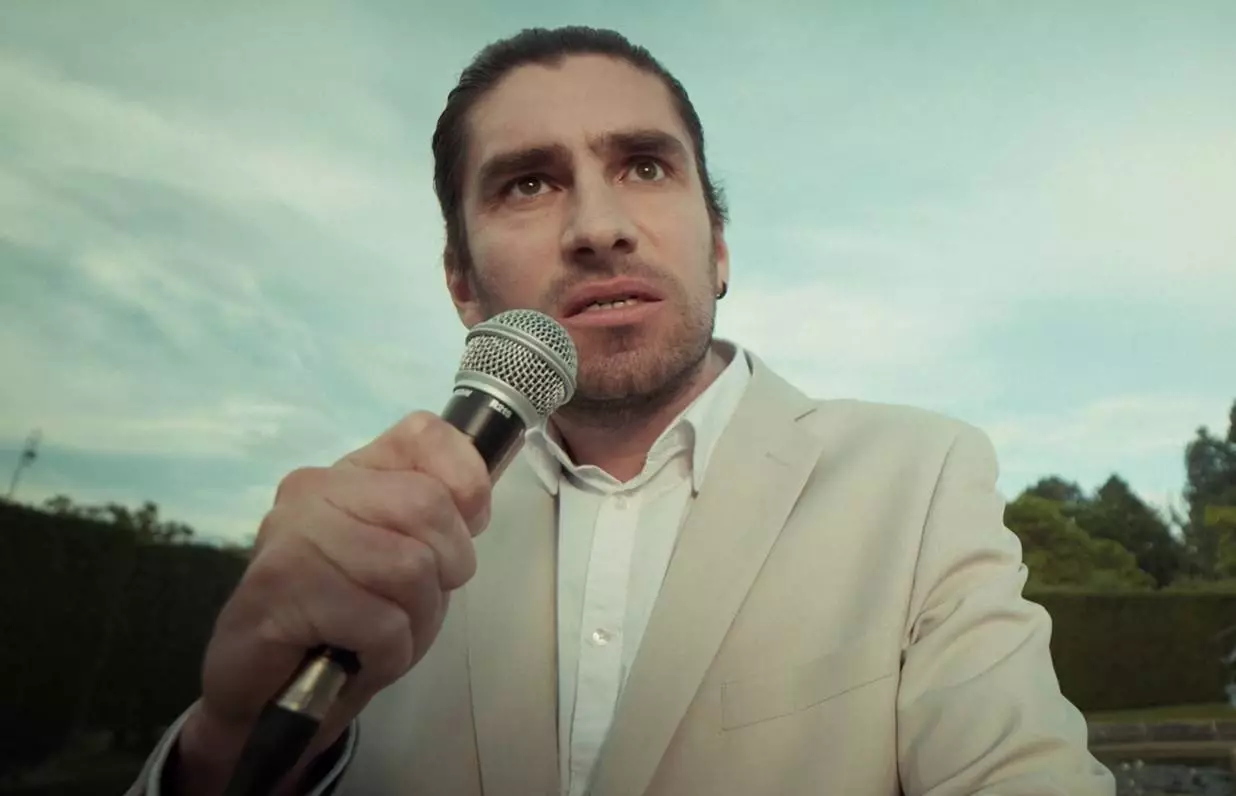
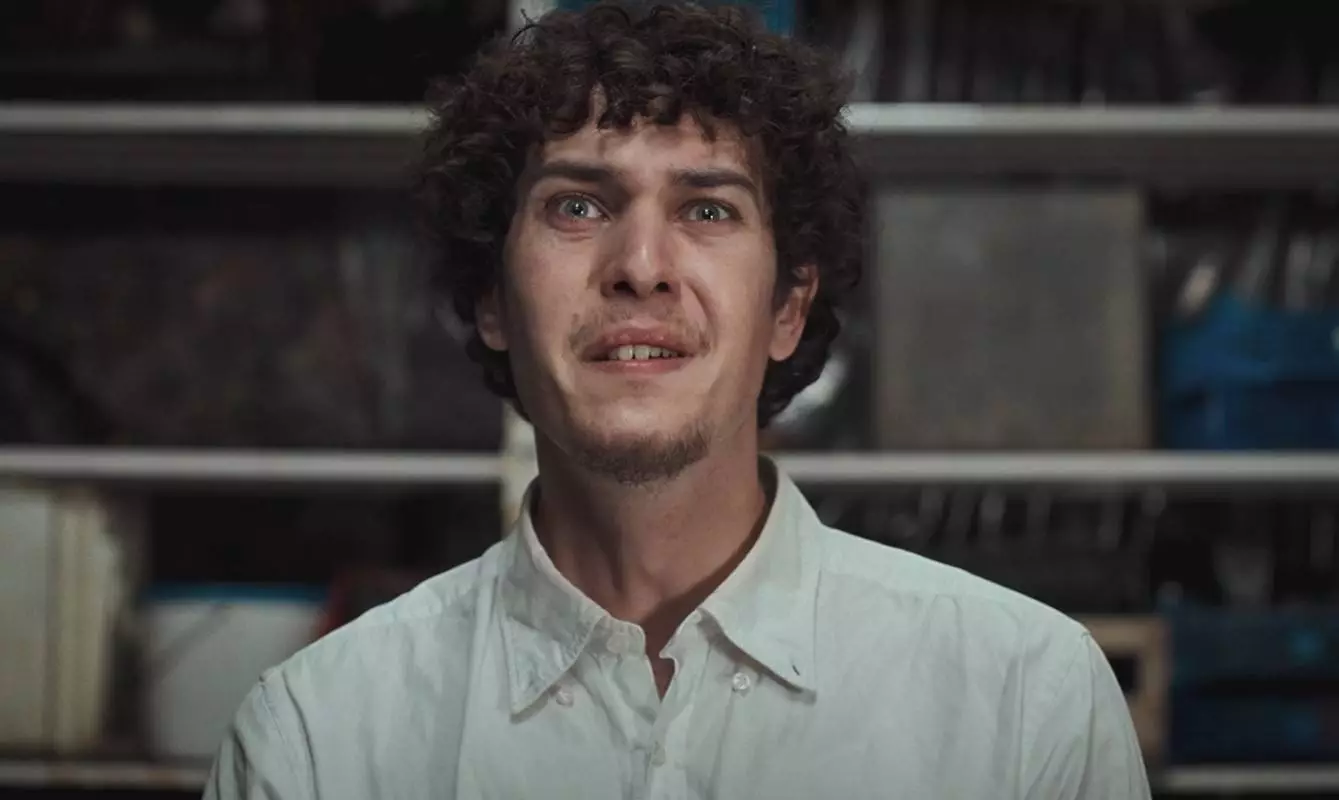
The direction of the actors tends towards emotional restraint. The secondary characters, particularly Nathan and the guests, are almost mechanically neutral, reinforcing the idea of a collective subject to an immutable tradition. In contrast, Joseph embodies raw emotion, panic and incomprehension, creating a constant contrast between the individual and the group.
Lighting
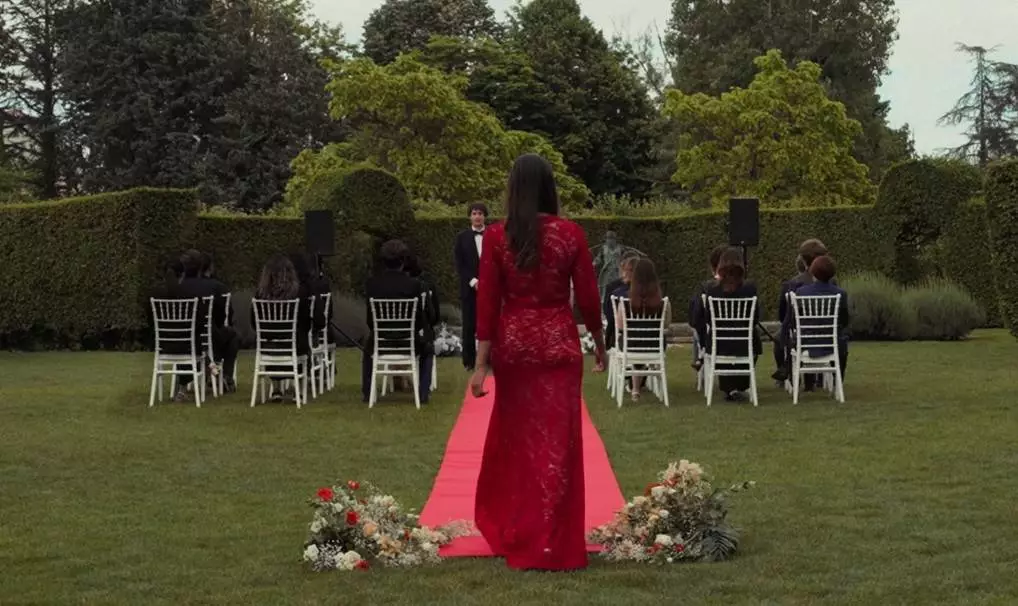
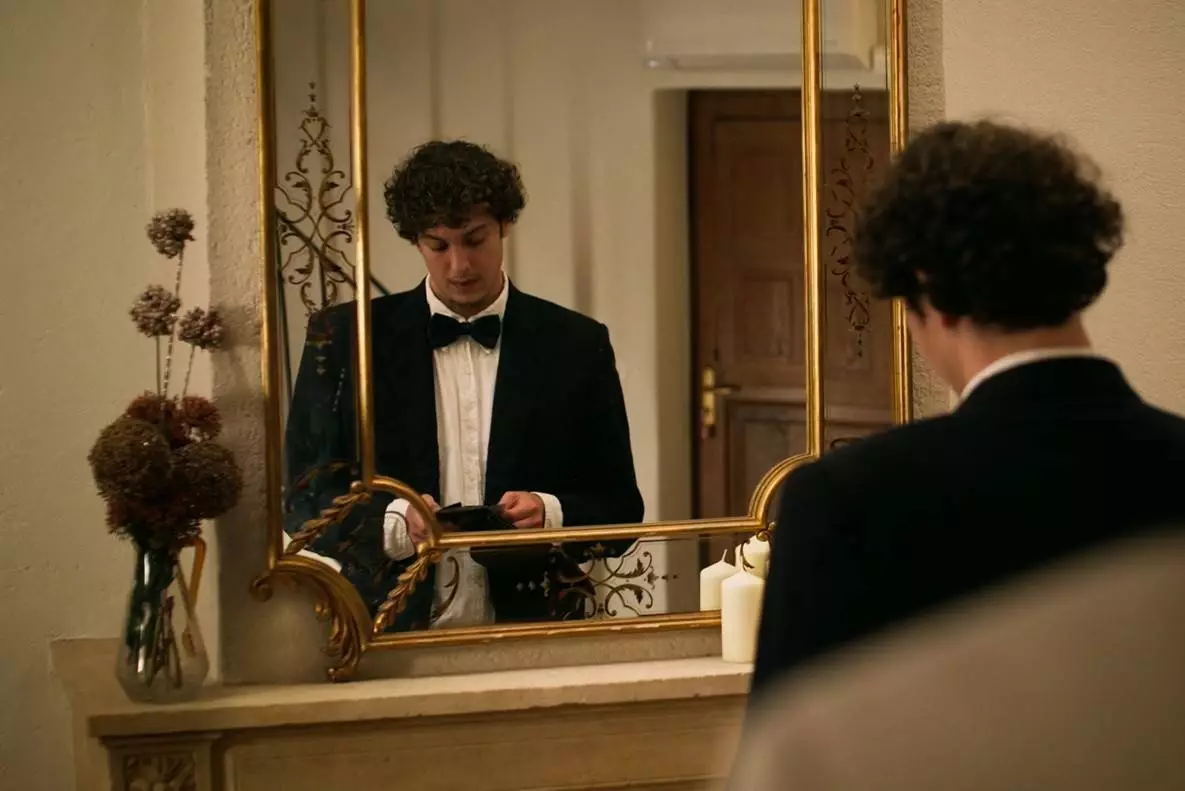
The lighting directly accompanies the dramatic development of the story. In the opening sequences, the light is predominantly natural, soft and diffused. Joseph’s preparations and the wedding ceremony benefit from bright, balanced lighting, evoking an idyllic, reassuring setting.
However, this “clean” light gradually becomes a source of unease. During the ceremony, although the space is open and in daylight, the uniformity of colour and the absence of strong shadows create an almost frozen sense of unreality. The viewer senses that something is wrong, despite the apparent normality of the situation.
From Joseph’s escape until the third episode, the light becomes much harder:
-
contrasts increase,
-
areas of shadow become more prominent,
-
light sources are more directional and artificial.
In the closed room of the last episode, the neon lighting reinforces the clinical and oppressive aspect of the place. The light no longer seeks to embellish but to crudely expose the characters, accentuating their vulnerability and the brutality of the choices they have to make.
The setting
The frame is conceived as a direct extension of Joseph’s psychological state. In the opening scenes, the camera adopts stable, balanced and classic compositions. The shots are mostly still or accompanied by fluid movements, conveying an impression of control and normality.
As the story progresses, this stability deteriorates:
-
the shots become tighter,
-
the camera becomes more mobile,
-
the axes sometimes become unbalanced.
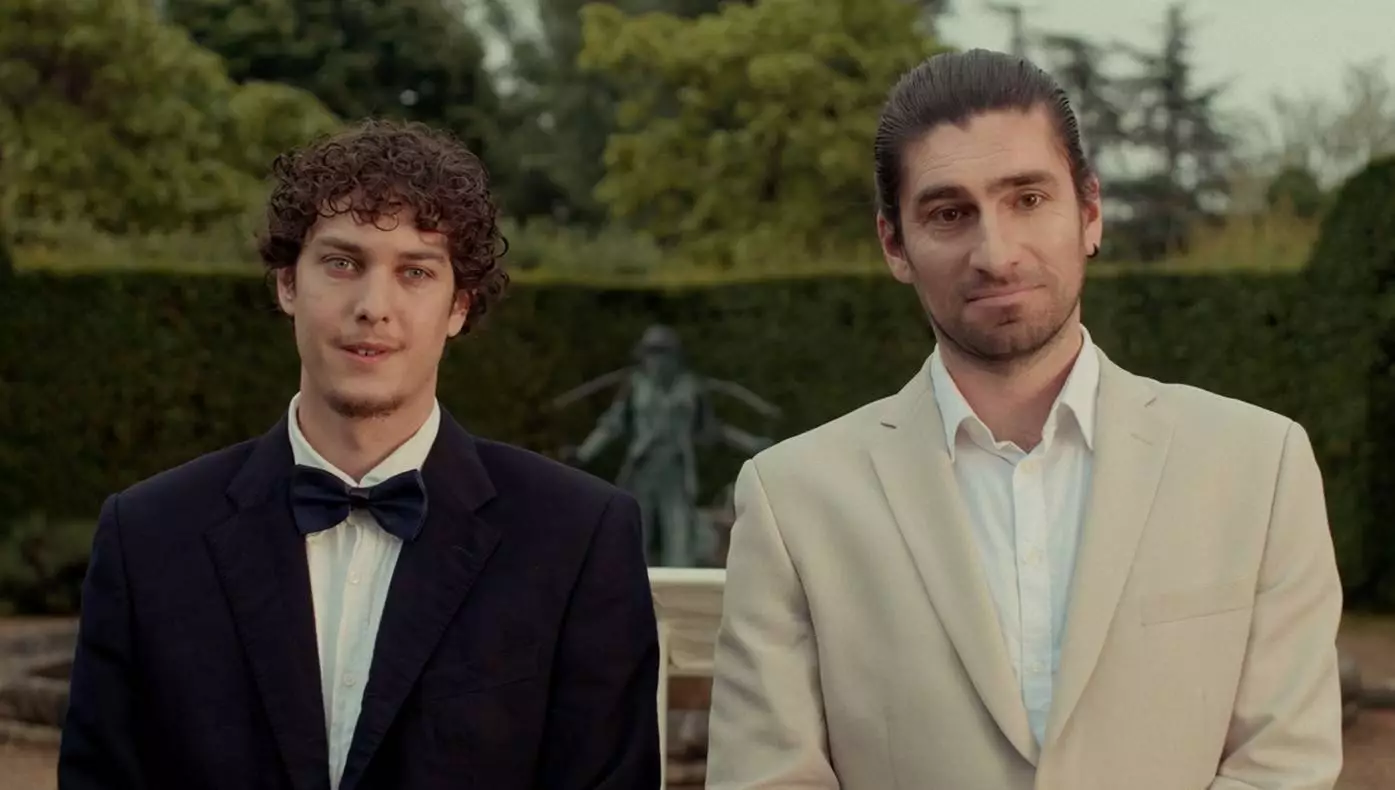
During the ceremony, the wide shots show Joseph isolated within a homogeneous group, underlining his status as an outsider. In contrast, the chase scenes are shot closer to the body, often from the shoulder, creating a sense of urgency and loss of bearings.
In the final episode, the frames become more confining. The concrete walls and vertical lines of the room accentuate the idea of a trap. The viewer physically shares in the characters’ confinement, right up to the tragic outcome of the confrontation.
The sound
Sound plays a central role in creating a sense of unease. Rather than multiplying effects, the project opts for a minimalist and precise soundtrack. Silences are used as real dramatic tools, giving the spectator time to anticipate the horror.
During the ceremony, the music and applause temporarily mask the violence of the ritual, creating a disturbing discrepancy between what is seen and what is heard. The drums, used at key moments, recall the ancestral and sacrificial aspect of the tradition.
In the scenes in the forest and behind closed doors, the sound work focuses on :
-
breathing,
-
footsteps,
-
muffled sounds.
This approach reinforces the feeling of isolation and heightens the dramatic tension. Sound becomes a vector of anguish rather than a simple accompaniment to the image.
Art direction and sets
The décor is conceived as a narrative element in its own right. The main aim is to create a believable wedding world while gradually integrating disruptive elements. The spectator must feel a sense of unease without immediately being able to identify it.
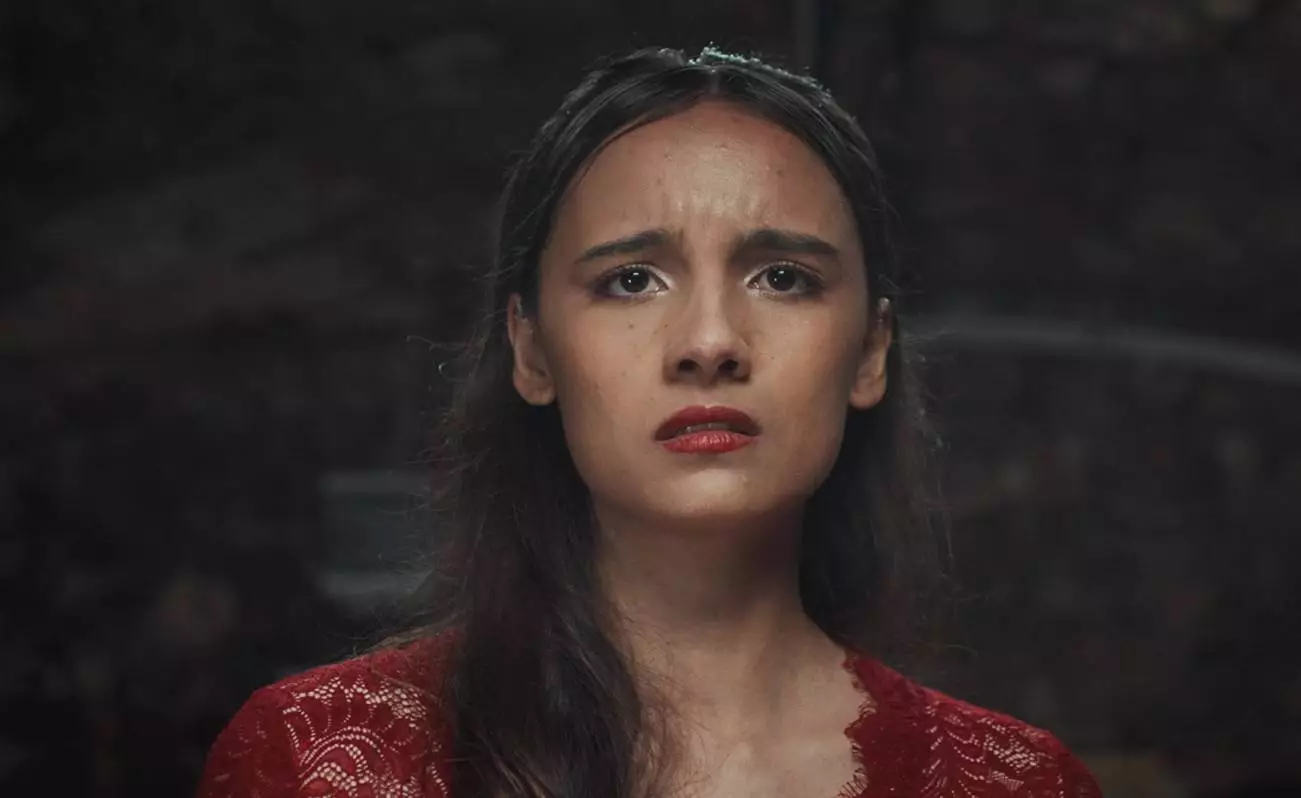
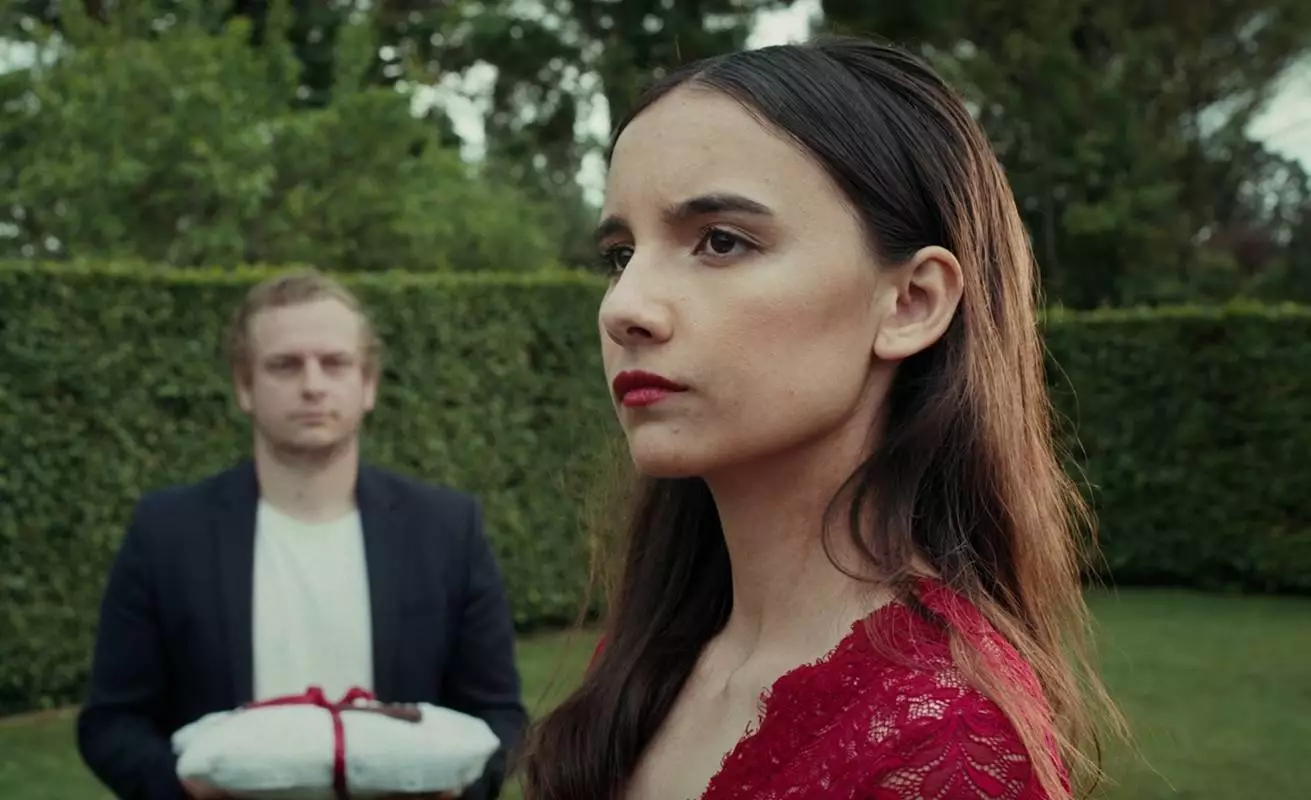
The use of colour plays an essential role. The uniformity of the guests’ navy blue suits suggests that they belong to a closed, almost sectarian group. In contrast, Anne’s red dress acts as a powerful symbol: it heralds bloodshed, violence and a break with traditional wedding codes.
The accessories are chosen for their symbolic significance: the comb, the photo of the mother, the ritual knife. Each object has a precise narrative function and accompanies the psychological trajectory of the characters.
In the closed room of the last episode, the set is deliberately stripped of all artifice. Rough concrete, no windows and artificial light create a timeless, almost abstract space where the characters are confronted with their choices and have no way out.
All these intentions converge towards the same ambition: to offer a mini-series where the form is not content to illustrate the content, but becomes a real driver of meaning and dramatic tension.