Un serment
INFOS
- thème Fiction
- formation 1st year
- durée 5:29
SYNOPSIS
Mathilde, a young lawyer, is preparing to plead for a man accused of homicide. As she struggles to bring out her client's humanity, the appearance of the victim in the courtroom destabilises her, confronting her with her own guilt and the full extent of her duty...

Un serment : filming the rift
Un serment is about 4 minutes of fantastic drama. This film proves to be much more than a simple short film exercise. Driven by a strong aesthetic ambition and an intimate reflection on justice, the film directed by Valentin Szezepaniak is a genuine exploration of the tensions between social role and inner truth.
The project began with a simple but dizzying question: how do you defend the indefensible?
This reflection, fuelled by a phrase heard in the legal profession: “a lawyer does not defend an act, but a person”, became the starting point for the film.
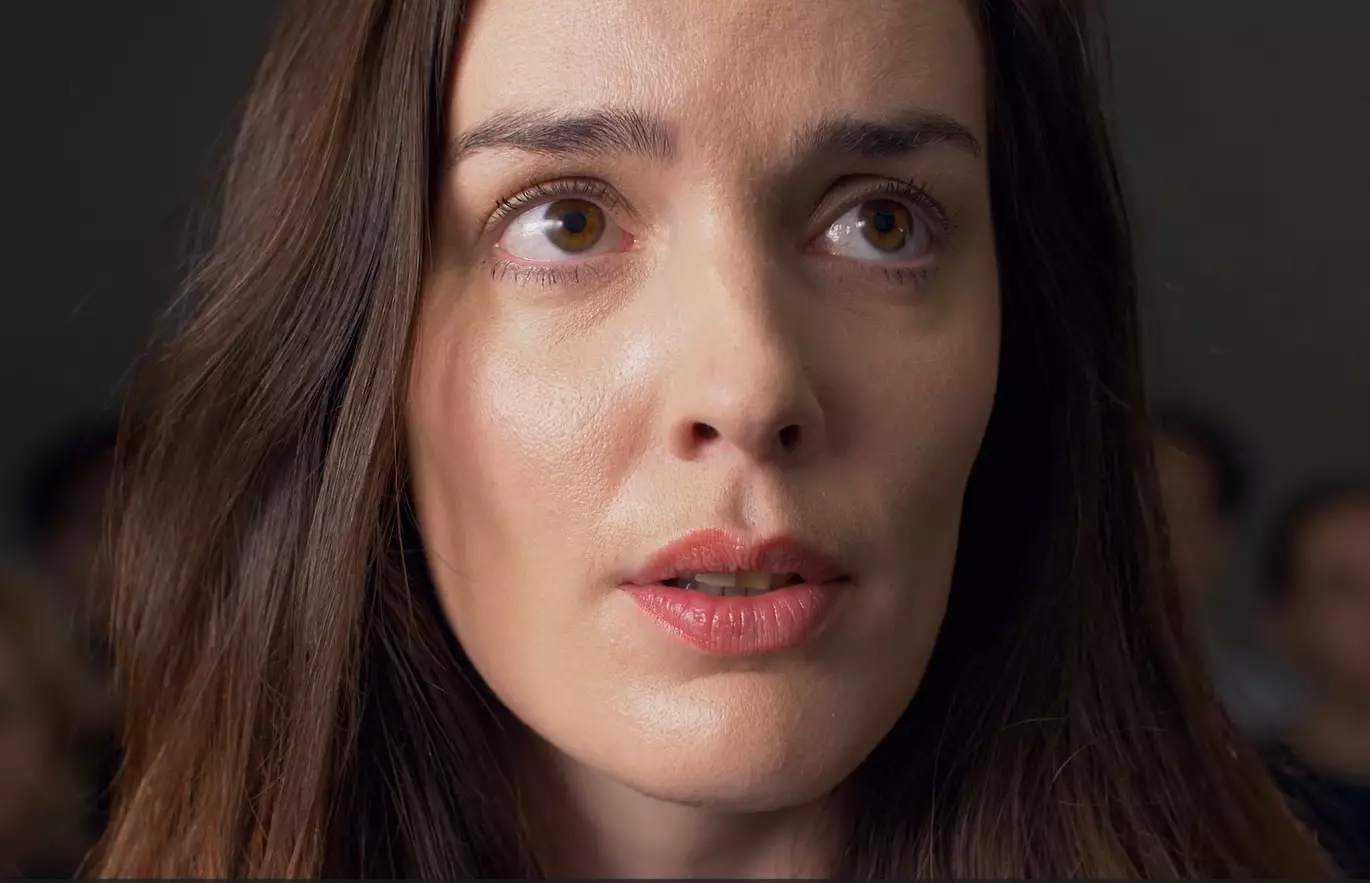
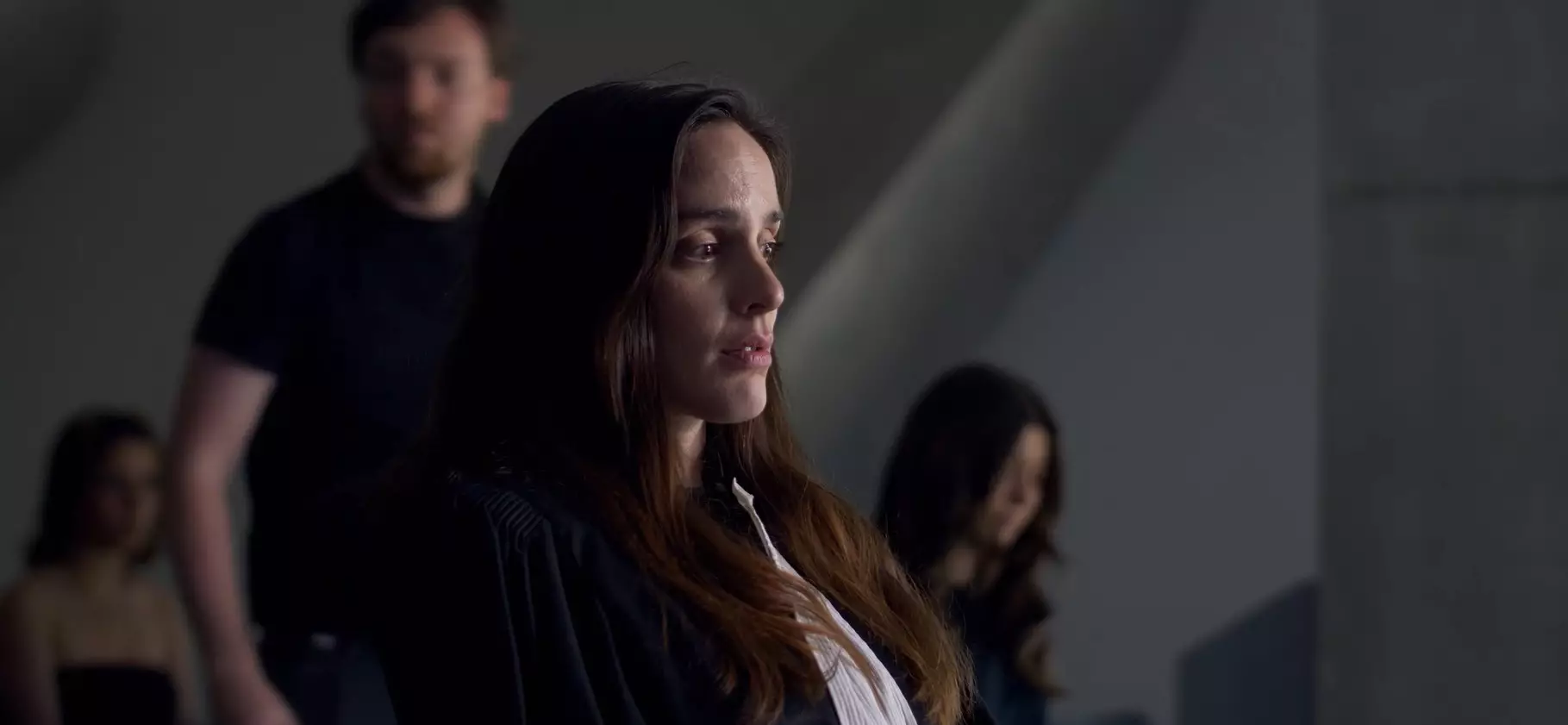
The character of Mathilde, a young lawyer, embodies this shift. She can no longer subscribe to this idea, and sees her role crack at the very moment when she should be carrying it with the most strength. This inner crisis becomes the backbone of the film, both narratively and visually.
Staging the film
One of the film’s most striking choices is its visual set-up. From the very first seconds, the 4:3 format literally encloses the character in the frame.
The camera, often moving slowly, accompanies this feeling of suffocation, reinforced by long shots and a deliberately heavy rhythm.
The setting also contributes to this oppression: a streamlined courtroom with white walls and no escape. Everything is designed to convey Mathilde’s mental impasse.
But at the heart of the closing arguments, everything changes.
The format changes to 16:9, the space opens up and the camera becomes fixed. This change is not just aesthetic: it materialises the character’s inner break, her passage from a constrained role to a form of liberation.
When the real slips into the symbolic
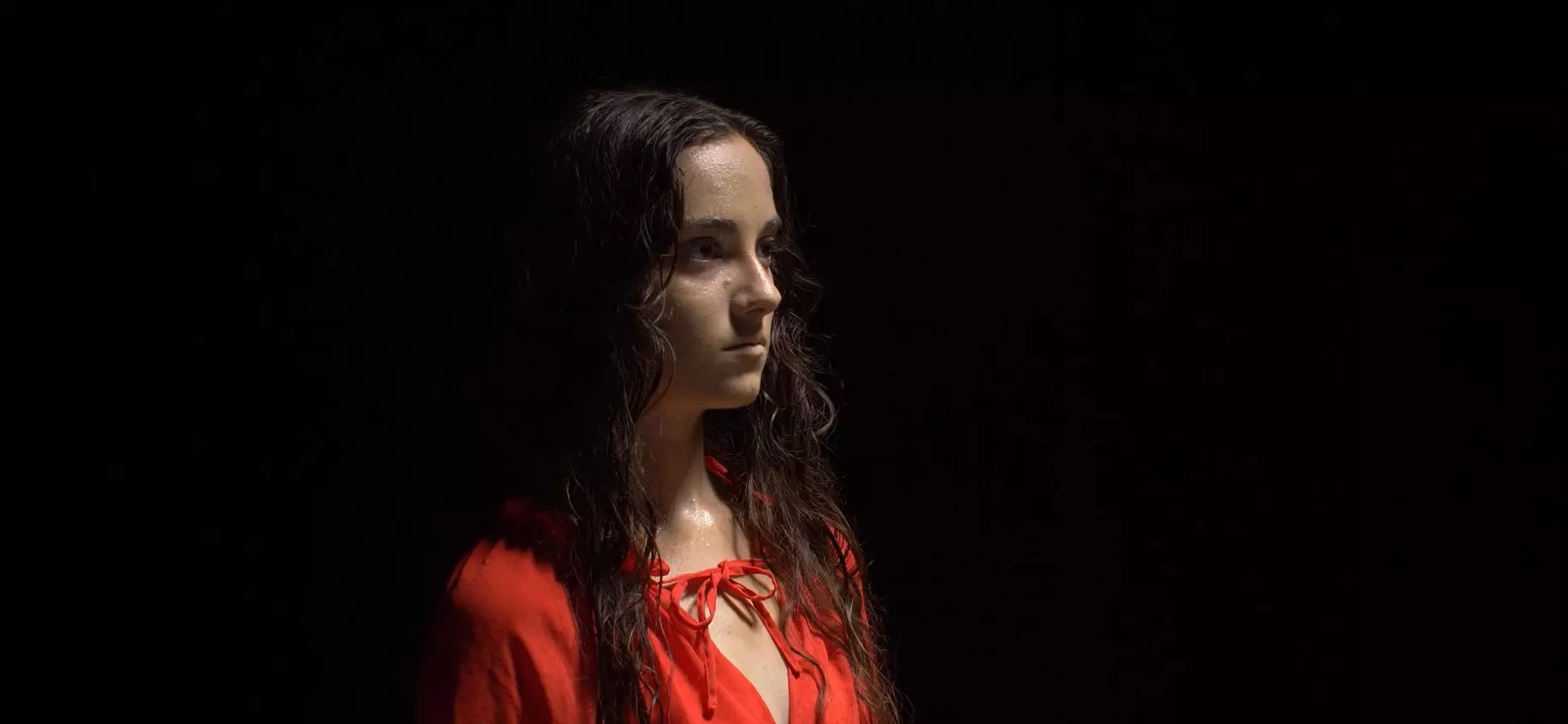
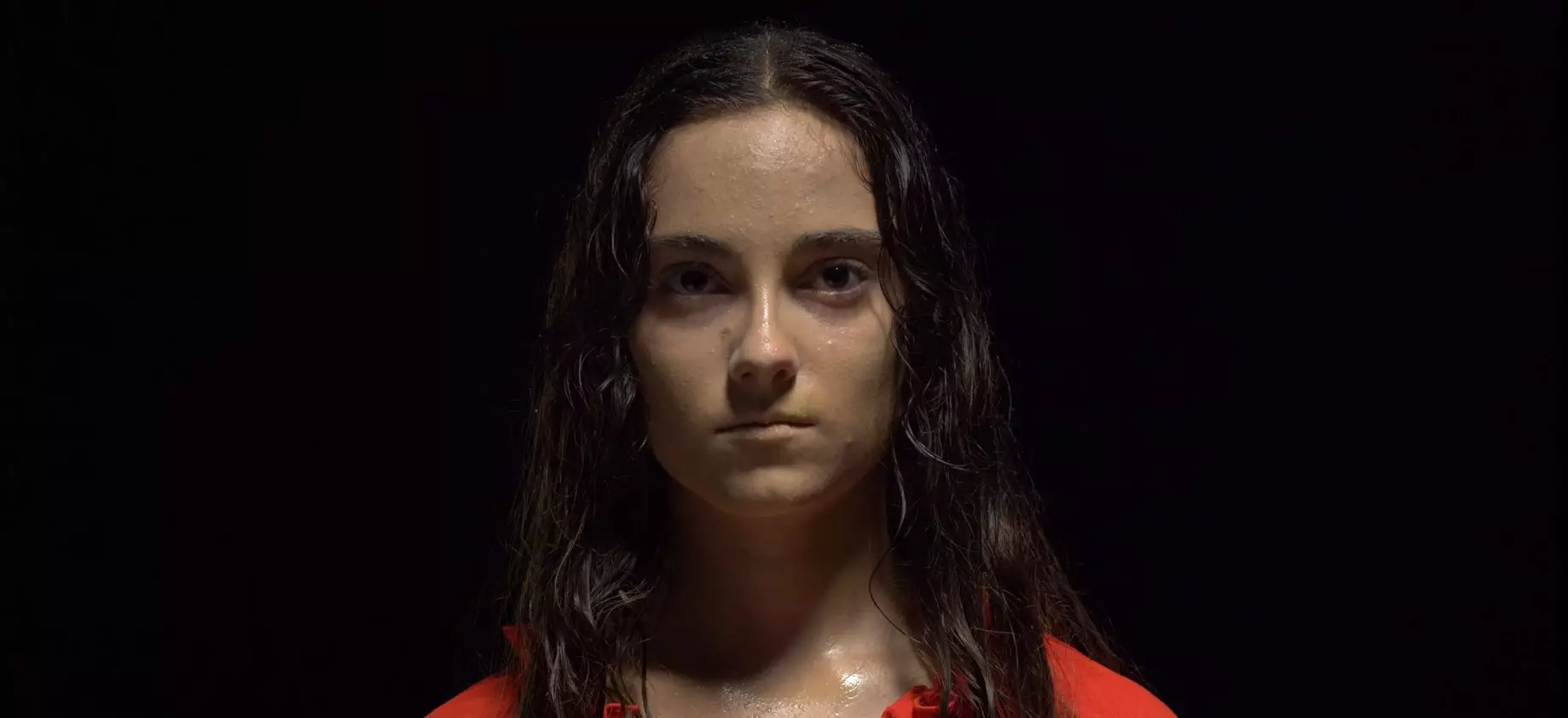
The appearance of the victim in the courtroom is undoubtedly the most disturbing element of the film. Yet the film’s brief is clear: this is no ghost.
This presence is a mental projection, an embodiment of doubt and guilt. It acts as an inner mirror, forcing Mathilde to confront her own contradictions.
The staging accompanies this shift: the realistic courtroom is gradually transformed into an abstract, empty, almost theatrical space. The lighting itself changes, evoking a stage set, as if to remind us that everyone is playing a role: judge, lawyer, defendant.
Working with sound: from chaos to silence
The sound treatment plays a central role in this deconstruction. At the beginning, the sound environment is dense, almost oppressive, overwhelming Mathilde’s voice.
Then, as the character wavers, the sound recedes. A heavy silence sets in, paradoxically liberating. The emptiness of the sound allows the spoken word to change its nature: no longer controlled, it becomes a confession.
Mathilde’s voice ceases to be a professional tool and becomes an intimate cry.
An ambitious production despite a short format
Shot over two days at the Domaine de Pierresvives, the Domaine de Méric and Studio Clapas in Montpellier, the film is based on rigorous organisation.
The technical set-up is particularly meticulous for a student project:
- Lumix GH5 camera with Samyang cinema lenses
- Complete lighting set-up (Skypanel, Astera tubes, softbox)
- Precise work on the machinery and camera movements
The use of around fifteen extras in the courtroom reinforces the realistic setting, contrasting with the mental dimension of the story.
Art direction: restrained and symbolic
Every visual element carries meaning.
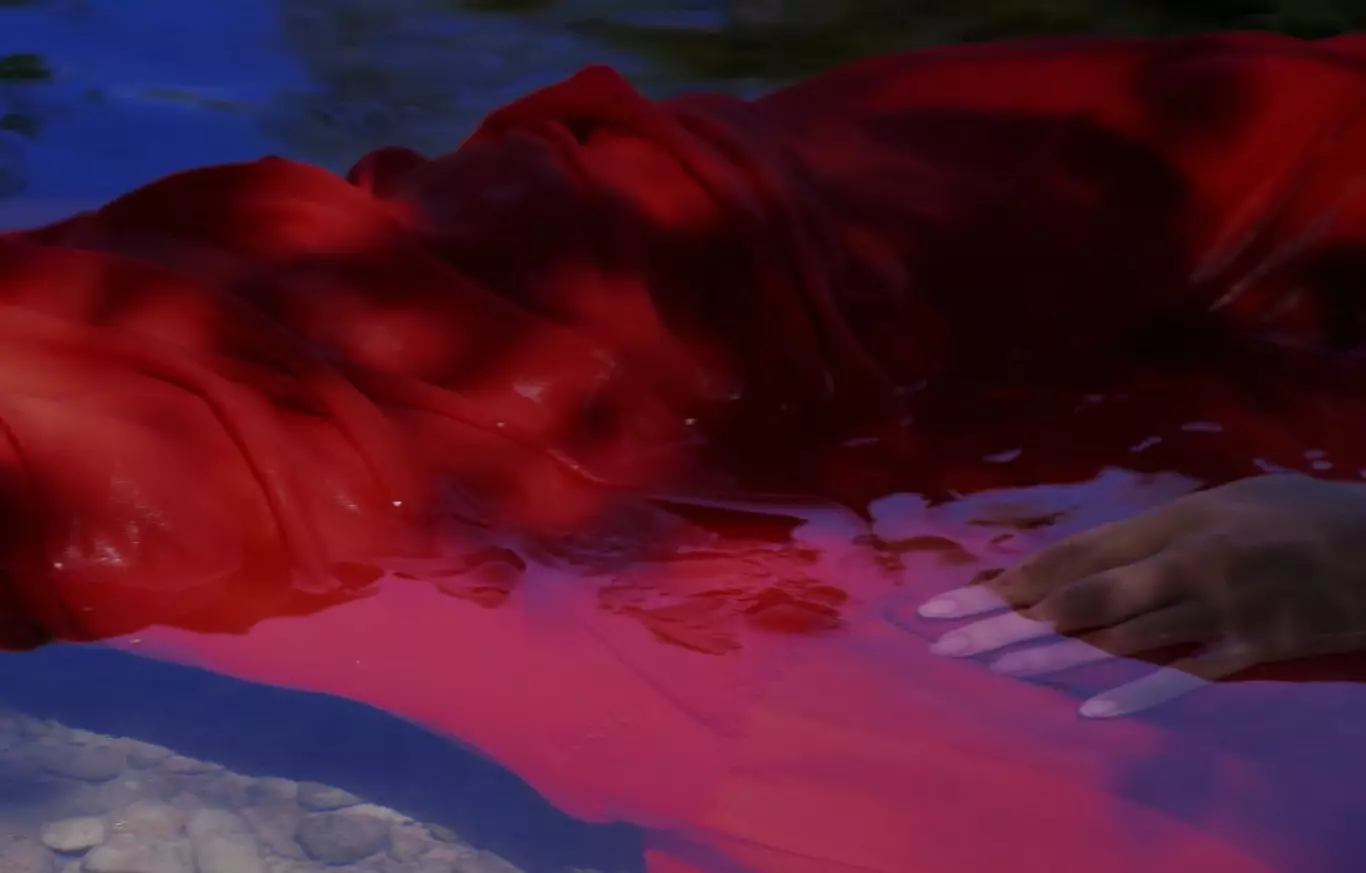
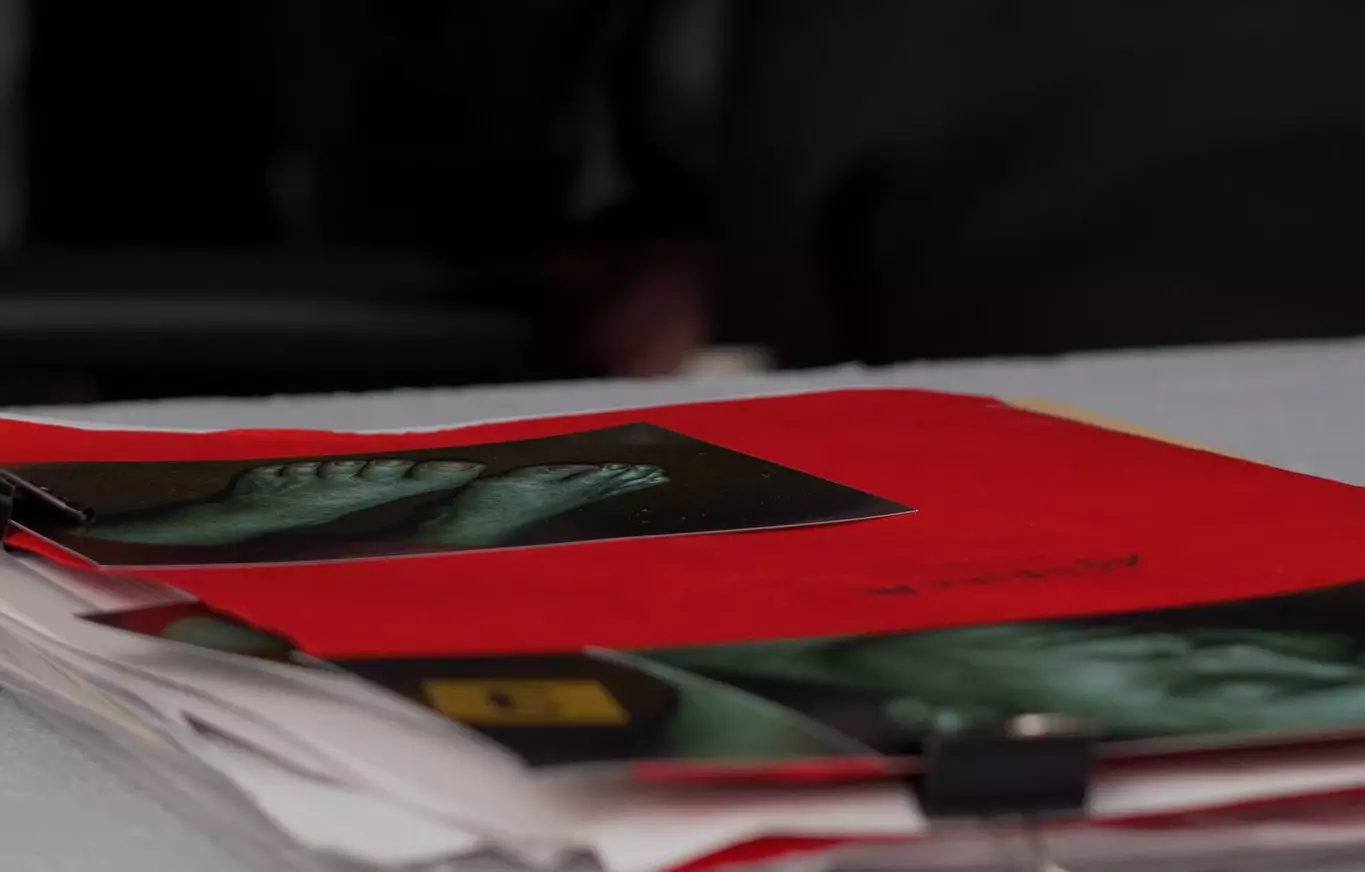
Red, in particular, becomes a strong motif: that of the floating fabric in the opening scene at the lake, but also that of the victim.
This choice of colour creates a link between crime, memory and guilt.
The make-up also contributes to this logic: a dull, almost disembodied face for the victim, against a Mathilde who is gradually stripped of her social mask.
The film raises the question of whether it is possible to dissociate oneself from one's role.
Beyond its aesthetic device, Un Serment is above all a film about words.
Words that are supposed to defend, convince and structure, but which end up breaking down.
The final paradox is brutal: Mathilde fulfils her duty and her client is acquitted. It’s a professional victory.
But inside, everything has collapsed.
The film leaves open an essential question: can we really separate the role we play from who we are?
Proven cinema experience
With Un Serment, the team has come up with a coherent project, in which every technical, narrative and aesthetic choice responds to a strong intention.
This collective effort, supported by a complete team (image, sound, set design, direction, post-production), bears witness to a real understanding of the challenges of directing and a desire for cinema that is already mature.
A short film that, behind its reduced format, explores with precision and sensitivity human failings, and those of the system that claims to judge them.
Crédits
Artistic team
PRODUCTION MANAGER : Faure Lucie
DIRECTOR : Szezepaniak Valentin
1ST ASS. DIRECTOR : Spilmont Emani
SCRIPTE : Albertus Lou-Ann
STAGE MANAGER : Quero Romane
REGISTRATOR : Carcassonne Nicolas
DIRECTOR OF PHOTOGRAPHY : Le Bihan Alan
FRAMER : Antony Linda
CAMERA ASSISTANT : Grandprat Gabrielle
CHIEF ELECTRICIAN : Lasande Pablo
ELECTRICIAN : Pean Jérémy
MACHINIST : Noguera Gauthier
CHIEF DECORATOR : Albertus Lou-Ann
SOUND ENGINEER : Blaise Joshua
ERECTOR : Absyte Nell
Artistic list
In the role of Mathilde : Cécilia Boggia
In the role of the victim : Ysé Breil
In the role of The Accused : Josef Bozinosksi