Film and the audiovisual sector: understanding the changes taking place in the sector to help you find your way
Understanding the changes in the film and audiovisual industries since 2020.
Changes in roles, new ways of working, AI, platforms and the skills in demand: discover the keys to better understanding the challenges and opportunities facing the sector.
Fill in the form to download the white paper for free.
White Paper: The Film and Audiovisual Sector
Since 2020, the film and audiovisual industries have been operating in a more unstable, fragmented and demanding environment. The health crisis, changing viewing habits, the rise of streaming platforms, the delayed effects of the Hollywood strikes and the gradual introduction of artificial intelligence into workflows have shifted the balance within the sector.
These changes do not mean that careers in the visual media are disappearing. Rather, they require a better understanding of the conditions under which these professions are practised today: diversification of formats, less linear career paths, the rise of hybrid skills, the growing importance of post-production, and the need to master new tools without losing sight of the culture of the visual arts.
CinéCréatis is publishing this white paper to provide students, families and careers advisers with a well-researched and up-to-date overview of the sector.
Some key figures to contextualise the sector:
In France, the film industry remains on a solid footing: 181.5 million cinema admissions in 2024, a 44.8 per cent market share for French films and 309 films approved for release over the year.
Subsidised audiovisual production also remains active, with a budget of 2 billion euros in 2024 and 4,353 hours of supported programmes.
At European level, the picture is more mixed: following 843 million cinema admissions in 2024, attendance fell to 796 million in 2025, whilst box-office takings remained relatively stable.
These figures show a sector that is not collapsing, but is undergoing a restructuring. It remains productive, well-organised and attractive, whilst becoming more selective in its models, formats and access conditions.
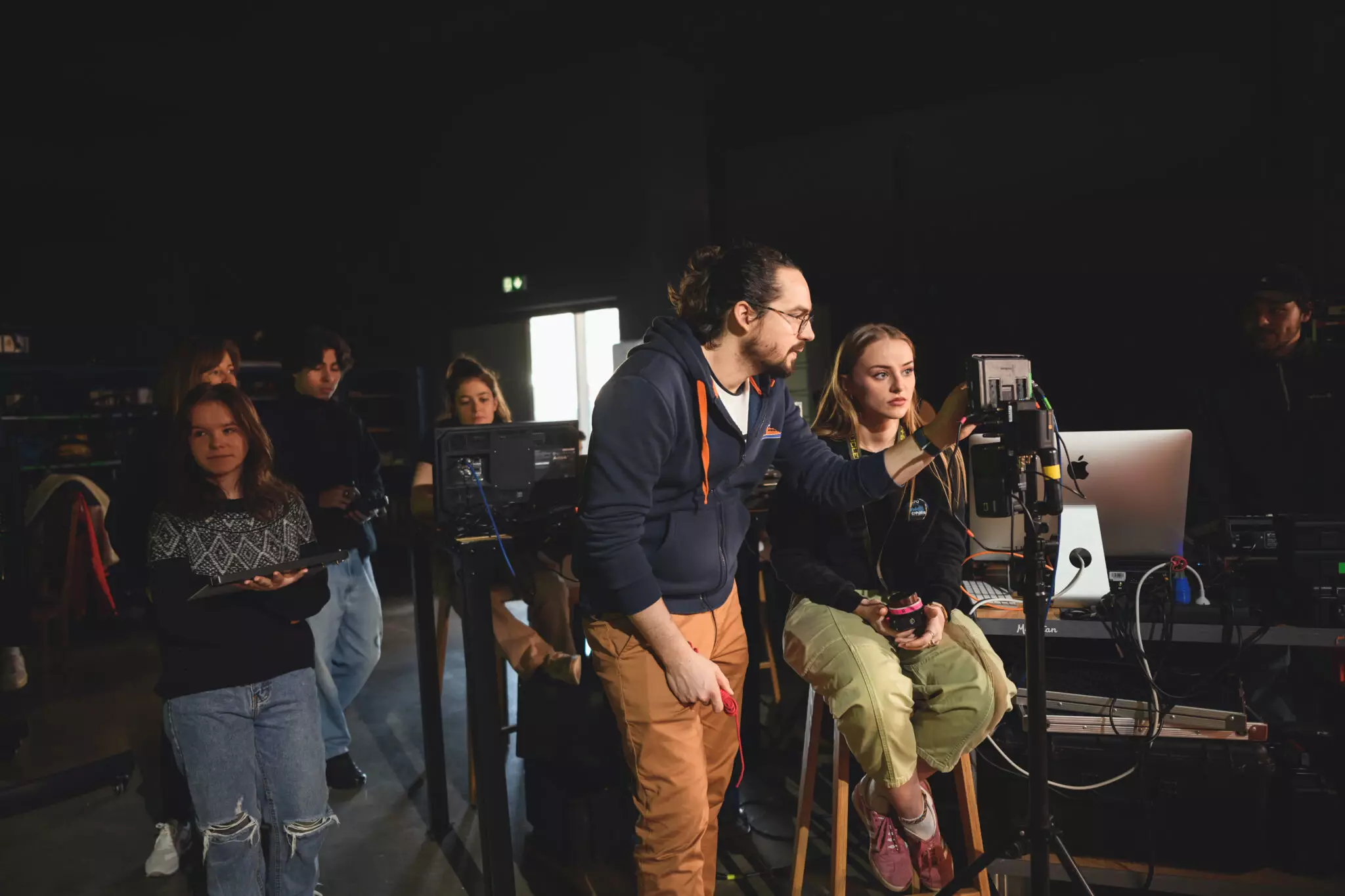
A sector undergoing restructuring
The cinema and audiovisual sectors can no longer be understood solely in terms of the contrast between crisis and recovery. The French market retains some key strengths: a dense network of cinemas, support mechanisms, an active domestic production sector and a diversity of formats.
However, this strength coexists with several vulnerabilities: cost pressures, a slowdown in certain international commissions, increased competition between formats, changing distribution practices and shifting audience expectations.
The white paper analyses these dynamics without oversimplifying them. It distinguishes between short-term effects — Covid, Hollywood strikes, a slowdown in certain markets — and more long-term trends: the fragmentation of viewing habits, the diversification of distribution channels, the gradual integration of AI and the changing skills required.

AI: a tool that is transforming working methods
Artificial intelligence now features prominently in professional discussions. It is already being used in a number of areas: visual search, lead generation, the automation of technical tasks, workflow improvements, post-production support and image exploration.
The white paper does not present AI as a one-size-fits-all solution, nor as a mechanical replacement for creative professions. It analyses it as a tool whose value depends on the context of use, human supervision, artistic judgement and its integration into a coherent production chain.
For future professionals, the challenge is therefore not merely to know how to use these tools. It is to understand what they produce, what they transform, what they leave out, and under what conditions they can be deployed.
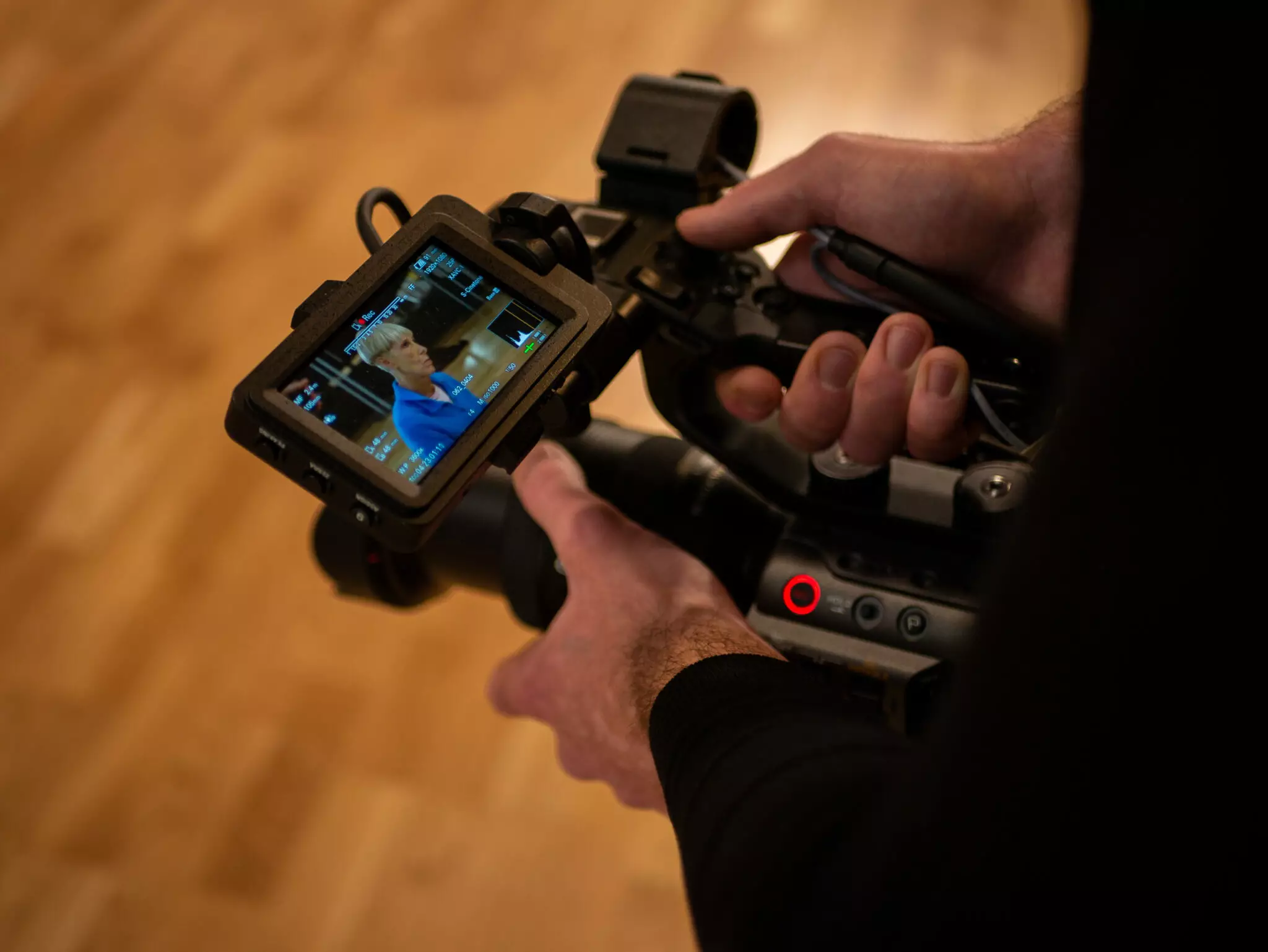
Opportunities beyond feature films alone
Feature films remain an important prospect, but they no longer represent the full range of career opportunities on their own. Early professional experience can also be gained in short fiction films, TV series, documentaries, advertising, brand content, live recording, digital content, post-production, VFX, virtual production or immersive formats.
This diversification does not signify a move away from cinema. It reflects the broadening of the environments in which audiovisual skills can be applied: writing, framing, editing, producing, coordinating, creating special effects, colour grading, mixing, supervising or establishing visual and audio coherence.
This reality is central to career guidance. It is no longer simply a matter of linking a course of study to a single profession, but of understanding transferable skills, the various entry points into the sector and the possible career paths after leaving school.

Experts to shed light on the reality on the ground
The white paper draws on industry data, as well as testimonials from professionals and alumni. These insights from the field help to link the analysis to real-world practices.
Pierre Marie Boyé, Head of VFX Production at Les Tontons Truqueurs, discusses virtual production, visual effects, AI and the rise of professionals capable of combining an understanding of visual culture with technical expertise.
Ronan Dumesnil, VFX composer and CinéCréatis alumnus, emphasises the need to understand an image before transforming it: camera, lenses, lighting, filming, post-production and the production pipeline.
Théo Richeux and Théo Constant, digital compositors and AI artists, discuss the practical integration of AI into post-production workflows.
Samuel Vercelloni, a video editor and CinéCréatis alumnus, illustrates more gradual career paths, via social media, music or communications.
François Gila Girard and Yan Arlaud round off this discussion with their perspectives on set design, the role of the creator and the evolution of artistic practices in the face of new tools.
Bruno Richaud, for his part, sheds light on the transformation of audiovisual formats, the rise of digital technology and new ways of producing content.
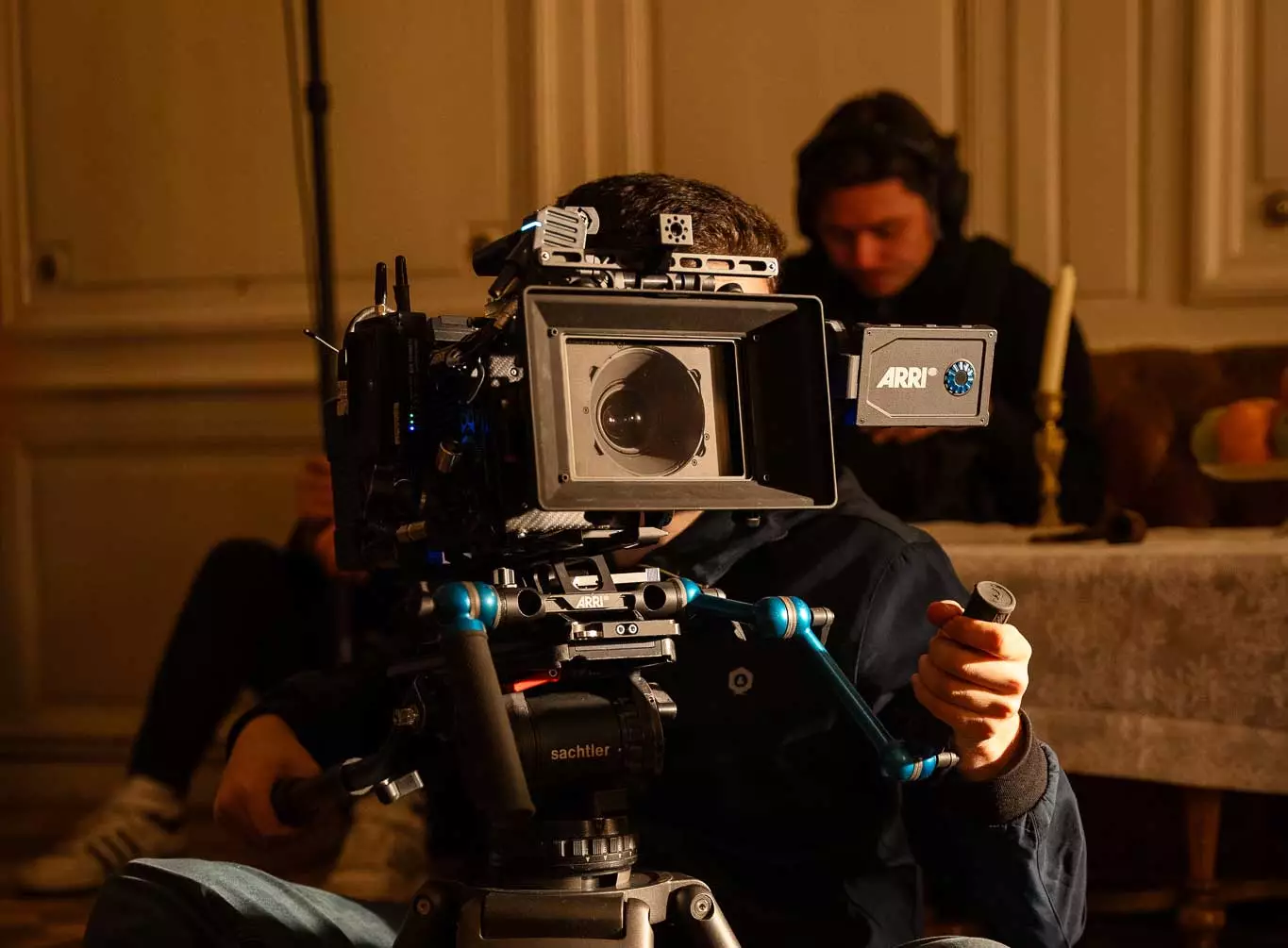
The Cinécréatis model
Cinécréatis provides training for careers in the film and audiovisual industries through two courses: a three-year vocational programme, with a progressive specialisation in Production, Cinematography or Post-production; a two-year BTS in Audiovisual Studies, which trains professionals in camerawork, lighting and digital image management.
With campuses in Nantes, Bordeaux, Lyon and Montpellier, the school offers a teaching approach based on practical experience, group projects, regular film shoots and a comprehensive understanding of the production process, from scriptwriting to post-production. The course leads to the RNCP40926 qualification, ‘Audiovisual and Cinematographic Production Designer’, level 6.
In an increasingly selective sector, this holistic approach takes on particular significance. It is not merely a matter of imparting technical skills, but of helping students understand how a work is actually created: with artistic intent, but also with the constraints of production, organisation, coordination and specialisation.