Maggie
INFOS
- thème Fiction
- formation 2nd year
- durée 6:44
SYNOPSIS
Sylvain, a solitary farmer on the brink of collapse, tries to save his farm as debts mount and the past resurfaces through a series of strange letters. With only his faithful dog Pégase and his last cow, Maggie, by his side, he comes to terms with his memories, his absences and the choices that threaten his future.
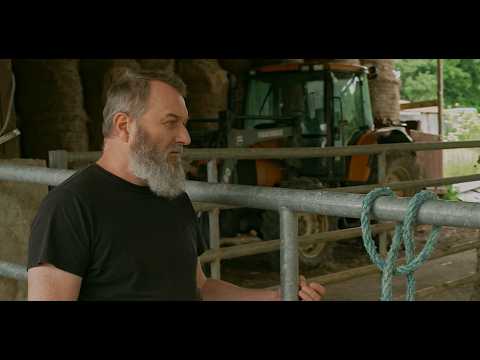
Behind the scenes of the filming of *Maggie*
Behind the six minutes of the short film *Maggie* lay several months of planning, preparation and a significant collective effort. Directed by Yaëlle Gueguen as part of a study project at Cinécréatis, the film brought together a team covering various technical and artistic roles. Filming took place in Couëron over three days, from 19 to 21 May 2025.
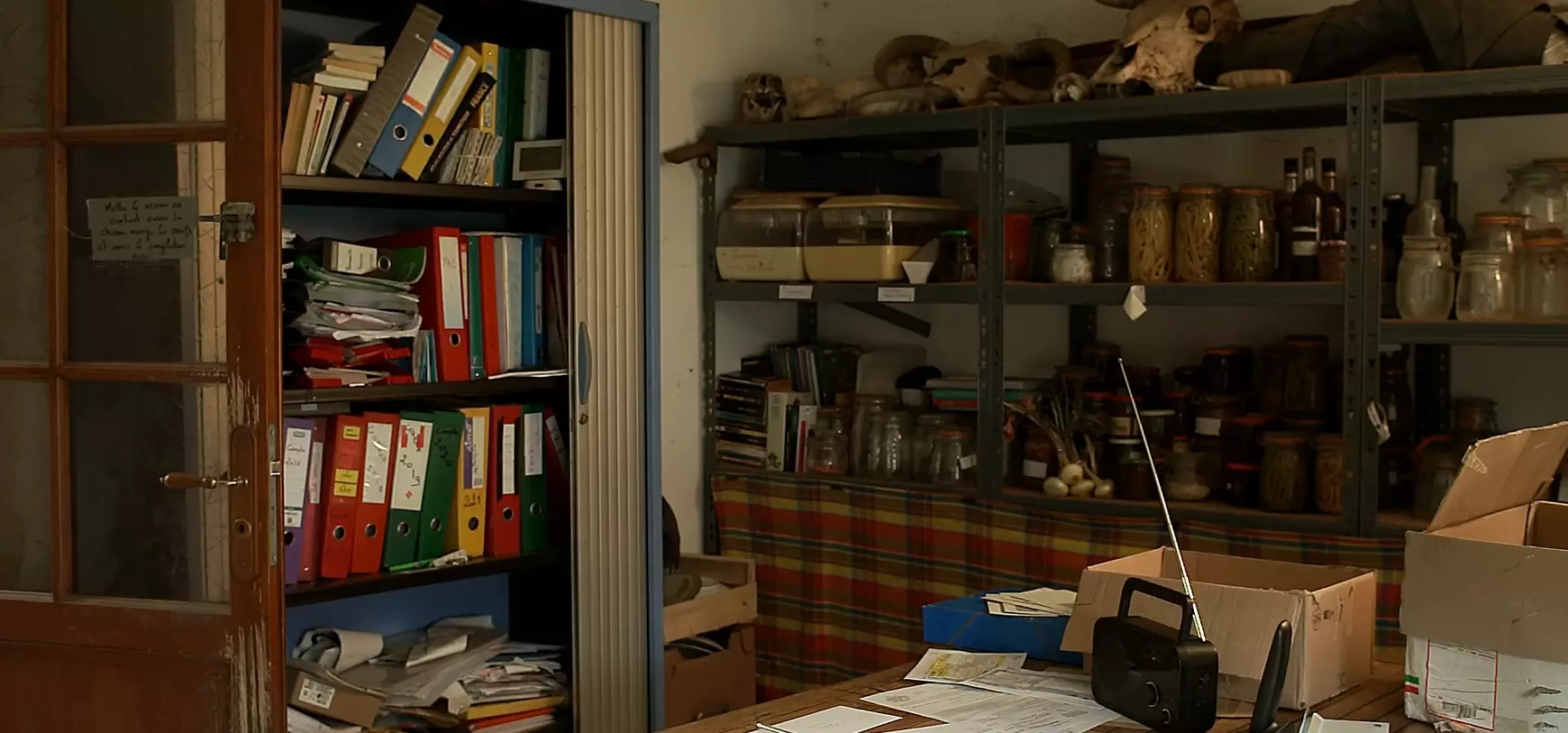
A setting designed to tell a story
One of the main challenges during preparation was to transform a real farm into a setting capable of visually conveying Sylvain’s loneliness. Unlike a traditional set, the aim was not to add elements, but rather to remove them. Most of the furniture was moved to leave spaces almost empty and give the impression of a farm that had gradually been abandoned.
The office was an exception. It was arranged around a pile of administrative documents, filing cabinets, invoices and letters, to illustrate the character’s financial difficulties. The barn, too, was cleared out and furnished in a minimalist style, retaining in particular the hay and the items necessary to establish Maggie’s presence. The tractor, the livestock trailer and the animals also required special attention, as they played a key role in the story.
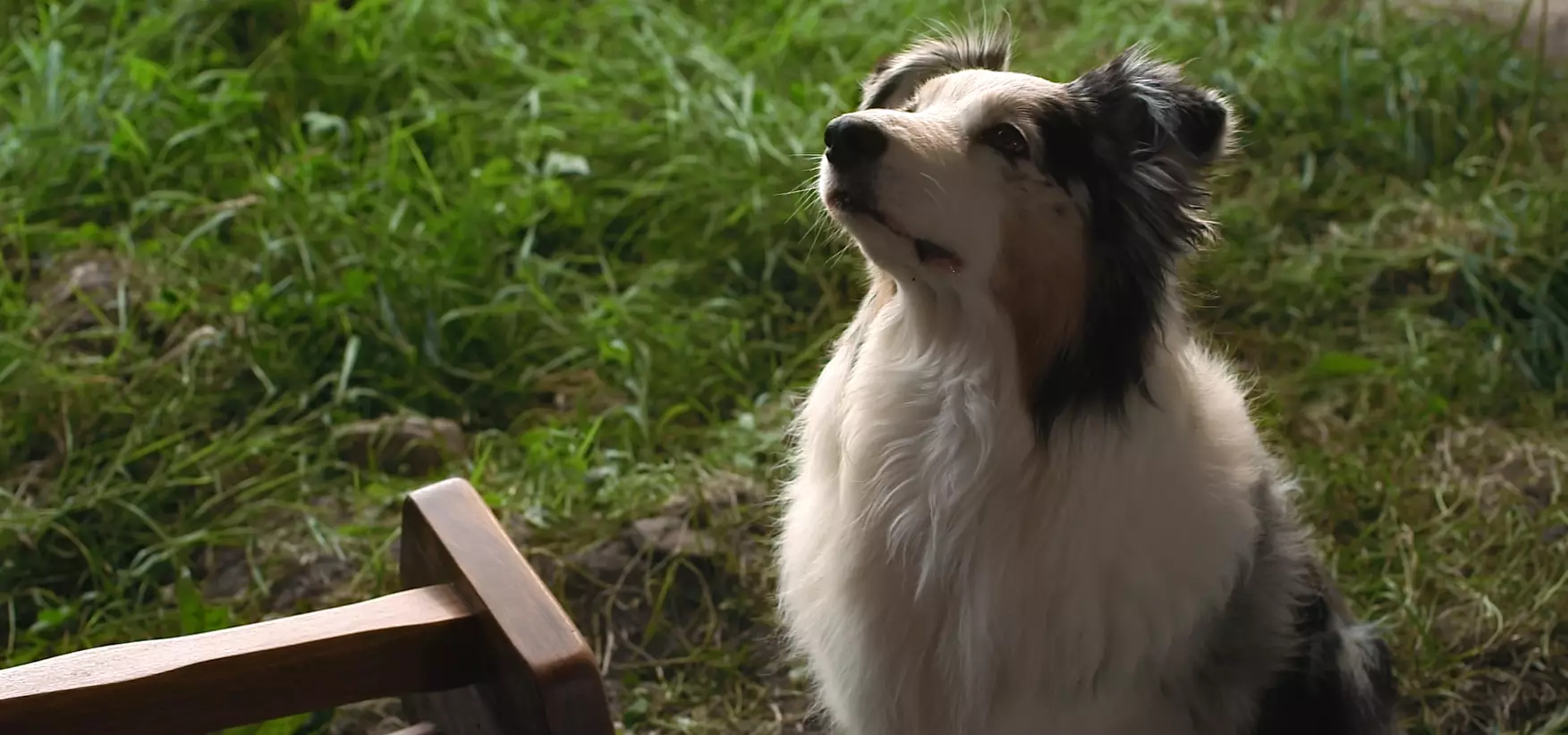
Light that evokes emotions
The lighting design reflected Sylvain’s changing emotional states. For the outdoor scenes, the team opted for natural light and a slightly warm tone, in order to preserve the beauty of the landscapes and the character’s attachment to the countryside.
Conversely, the office was lit with artificial lighting, which was darker and offered greater contrast. HMI and Forza 60 spotlights, in particular, helped to recreate controlled lighting whilst maintaining a realistic atmosphere. The dim light and beams of light cutting across the room reinforced the impression of a stifling space, in which Sylvain seemed to no longer feel at home.
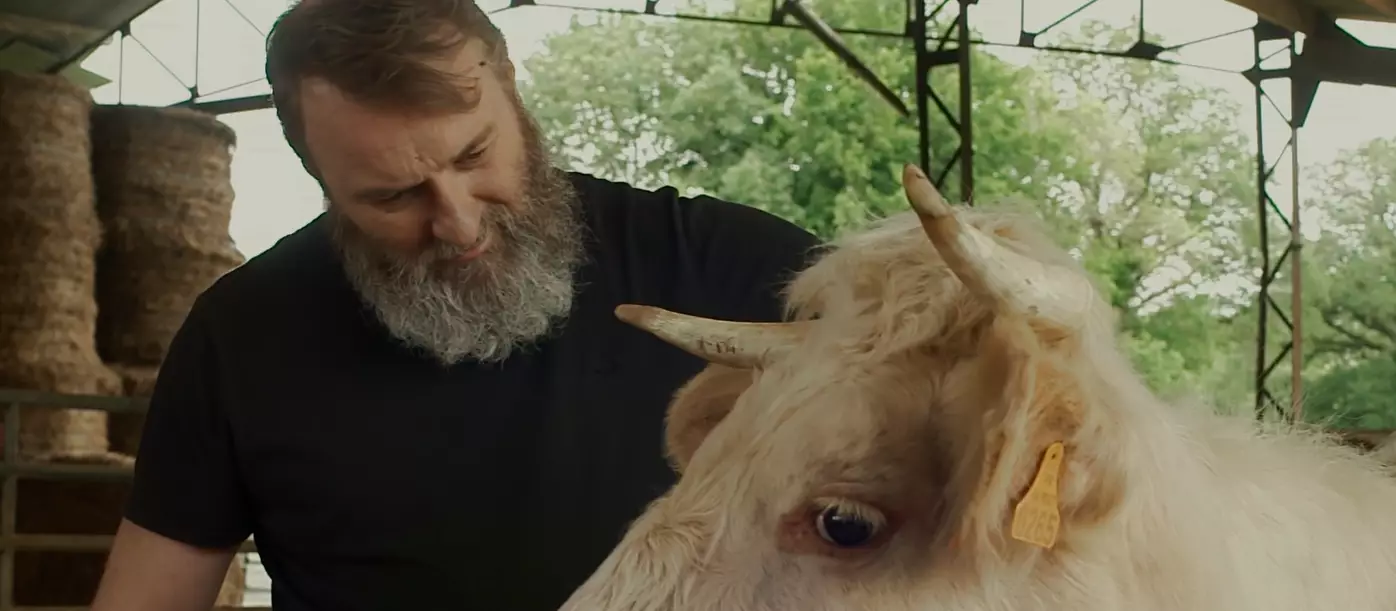
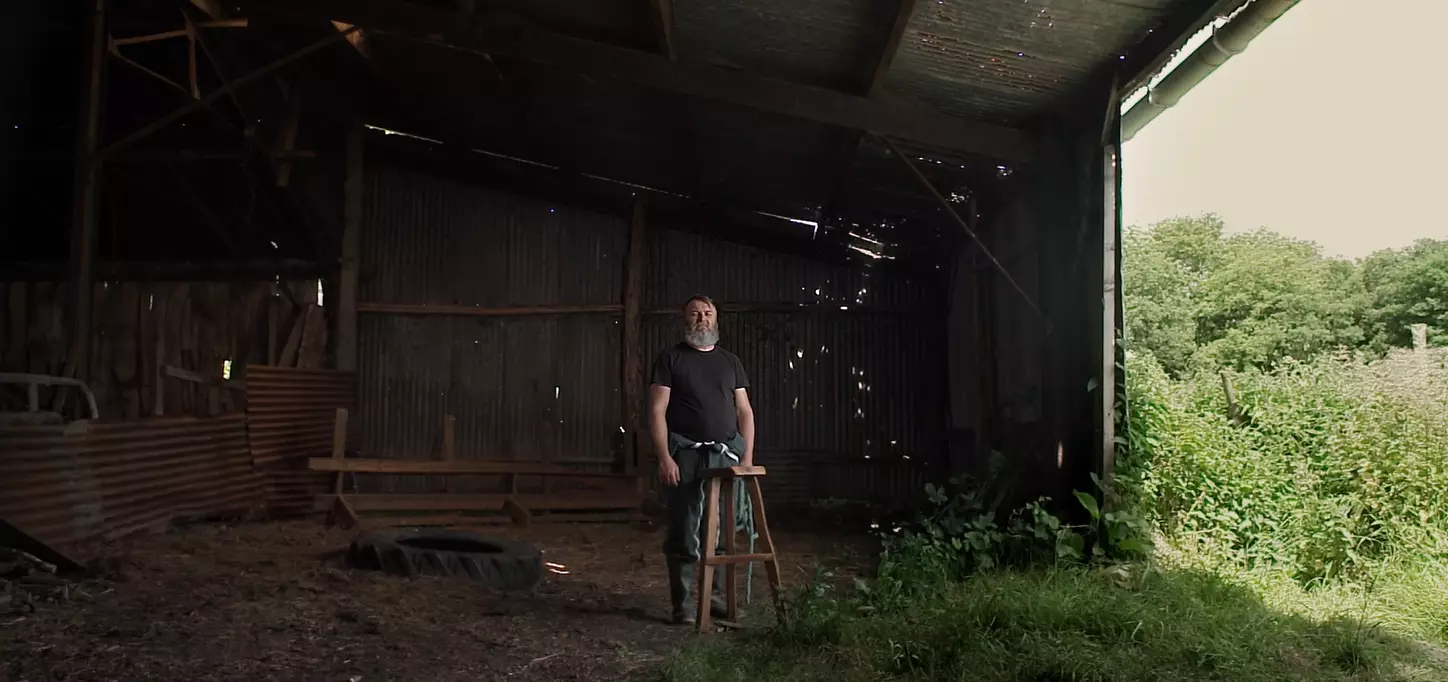
The sequence with Maggie required special treatment: the natural light entering through the barn’s large door was diffused and controlled to highlight the man and his animal. After the livestock lorry had left, the character found himself alone, a silhouette, in the middle of a space that had become immense.
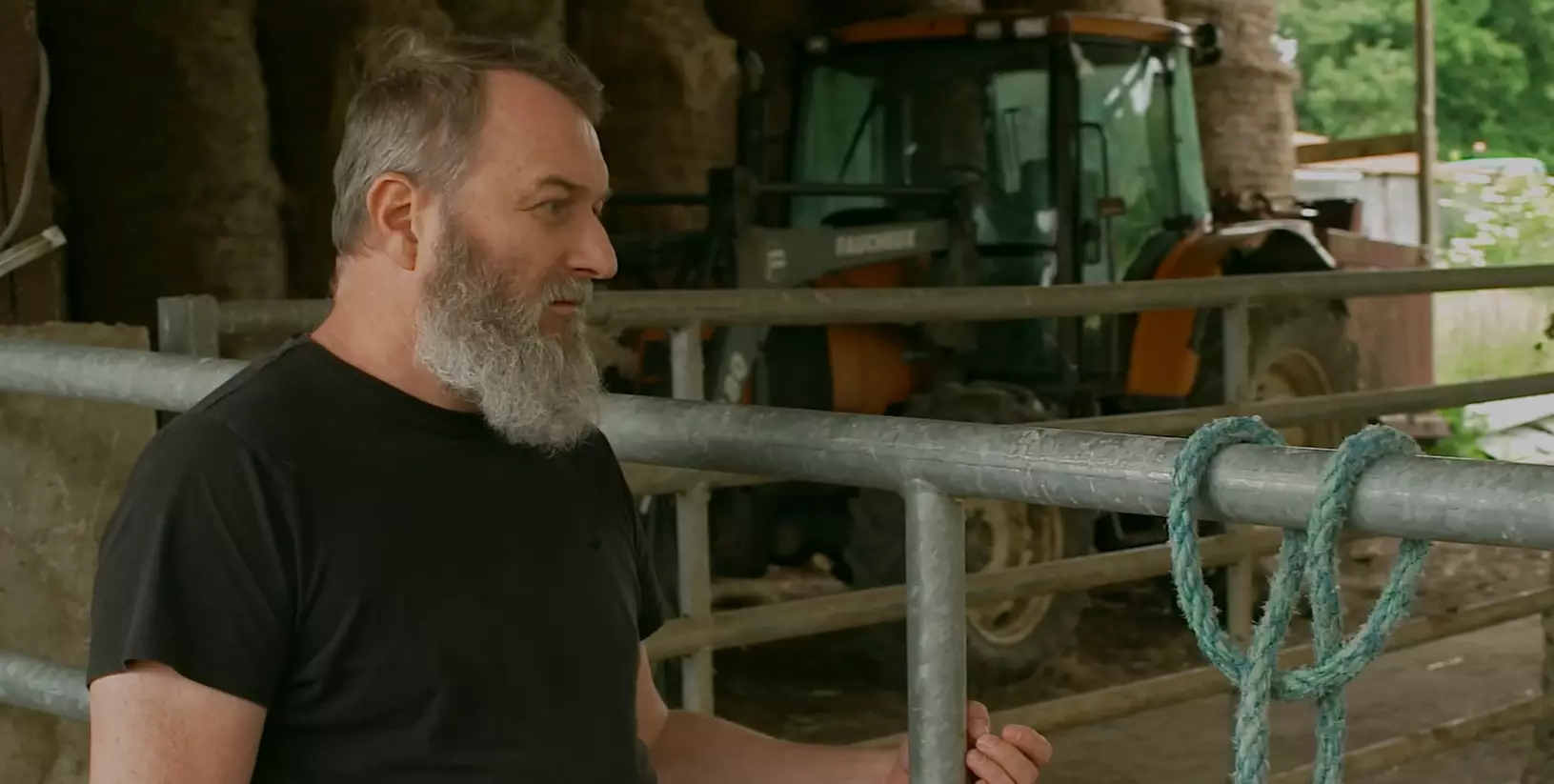
Compositions designed to convey a sense of loneliness
The framing largely relied on long, contemplative static shots. The landscapes, fields and empty spaces served to emphasise the contrast between the immensity of nature and Sylvain’s isolation. His entries into and exits from the frame also contributed to this sense of solitude.
The camera moved closer to the character when he was speaking to Maggie, creating a sense of intimacy before retreating to a certain distance once more. Close-ups of his hands, bills, letters and the clock also punctuated the film, lending particular significance to the objects that conveyed his situation.
For the final scene, a gradual camera movement accompanied Maggie’s departure, without explicitly showing Sylvain’s reaction. This choice helped to preserve the narrative’s subtlety and allowed the viewer to understand the situation through the images that followed.
Sound: an essential element of storytelling
The sound design played an equally important role. The aim was to bring the viewer closer to Sylvain by letting them hear his movements and the sounds around him. In particular, a lavalier microphone was used to capture his movements as closely as possible.
The ticking of the clock, the sounds of the farm, the wind and the silences all helped to create a heavy atmosphere. The soundtrack also evolved as the film progressed, shifting from a more stifled atmosphere to a clearer perception of the surroundings.
A collaborative effort right through to post-production
Following these three days of filming, work continued in post-production. The editing was carried out in Premiere Pro, followed by colour grading, sound mixing in Pro Tools and the creation of the credits in After Effects. Each stage helped to harmonise the picture and sound to fulfil the original vision.
From set preparation to the final sound adjustments, Maggie was the result of a team effort in which every department played a part in creating a unified atmosphere. Behind this short film lies a shared aim: to tell, in a restrained manner, the story of the plight of the farming world and to pay tribute to those who, at times, find themselves facing their difficulties alone.
Crédits
Technical team
Production : Yaëlle Gueguen
Marie Reynaud : First assistant director
Head of Casting : Armin Bauer
2nd assistant director : Armin Bauer
Script : Lilou Chardon
Production Manager : Léonie Guinoiseau
Stage Manager : Noah Lenouvel
Assistant Manager : Sidonie Pinaud
Head of Communications : Chloé Jouanneau
Communications Assistant : Lilou Chardon
Communications Assistant : Evaëlle Noury-Gomis
Communications Assistant : Arthur Mention
Props assistant : Maïwenn Mahéo
Head Set Designer : Dirwan Bernier
Head Costume Designer : Chloé Jouanneau
Director of Photography : Anatole Planchenault
Framing technician : Evaëlle Noury-Gomis
Senior First Assistant : Aidan Fondse
2nd Executive Assistant : Léopold Fouché
Chief Electrician : Eluan Lejehan
Electrician : Lucille Dayan
Chief Stage Manager : Antoine Brefer
Stagehand : Arthur Mention
Sound Engineer : Mathys Le Floch
Perchman : Mathias Hebras
Composer : Aidan Fondse
Head of Post-Production : Sidonie Pinaud
Editor : Mathias Hebras
Calibrator : Dirwan Bernier
Blender : Mathys Le Floch
General Manager : Arthur Mention