Midnight
INFOS
- thème Fiction
- formation 3rd year
- durée 08:00
SYNOPSIS
In a forest shrouded in darkness, a man flees from an unsettling creature and, as he runs, discovers children’s drawings that force him to confront the traumas of his past and guide him towards his inner child. Together, they are drawn into a realm where memories and fears come to life. To escape the monsters that haunt him, the man will have to confront the source of his pain and accept what he has long sought to flee.
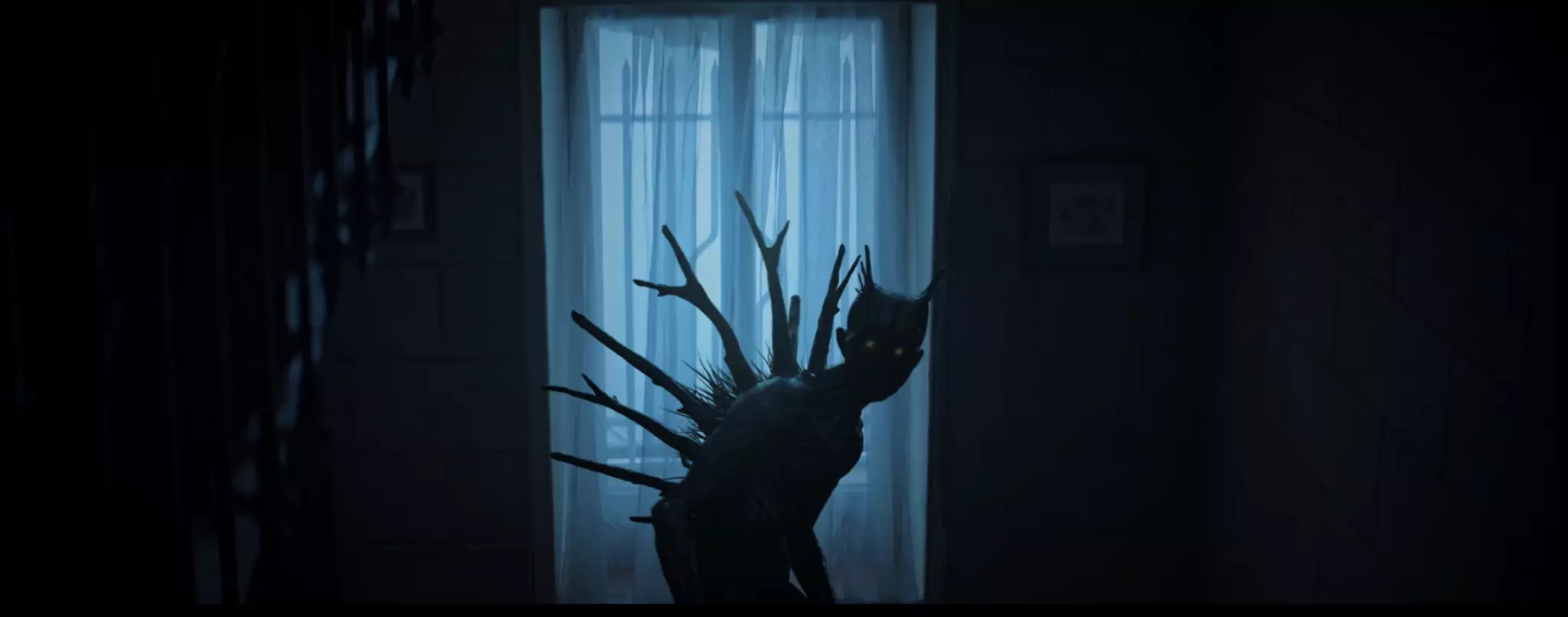
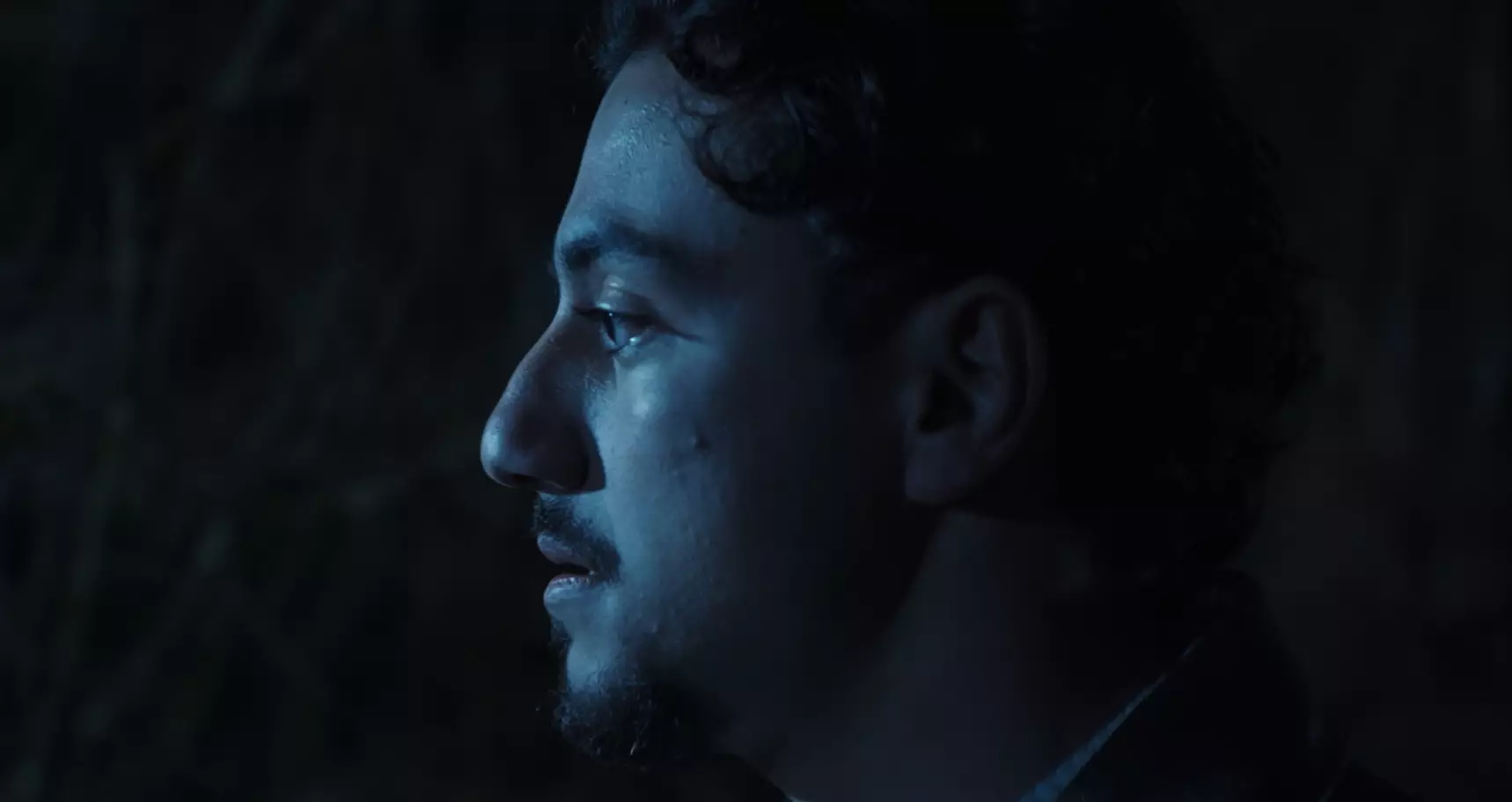
Creating a life-sized nightmare
From the forest at night to a house steeped in memories, the MINUIT teams create a world in which every choice of image, setting and sound reflects the character’s inner state.
How do you give visible form to trauma? How do you bring a monster to life without showing it in its entirety? And how do you transform a forest, a door or a child’s bedroom into fragments of a tormented subconscious? For the short film MINUIT, directed by Paul Navarro, these questions lie at the heart of the film’s creation. The artistic and technical choices do not merely serve to create a horror atmosphere: each, in its own way, narrates the protagonist’s psychological journey.
A style of direction based on suggestion
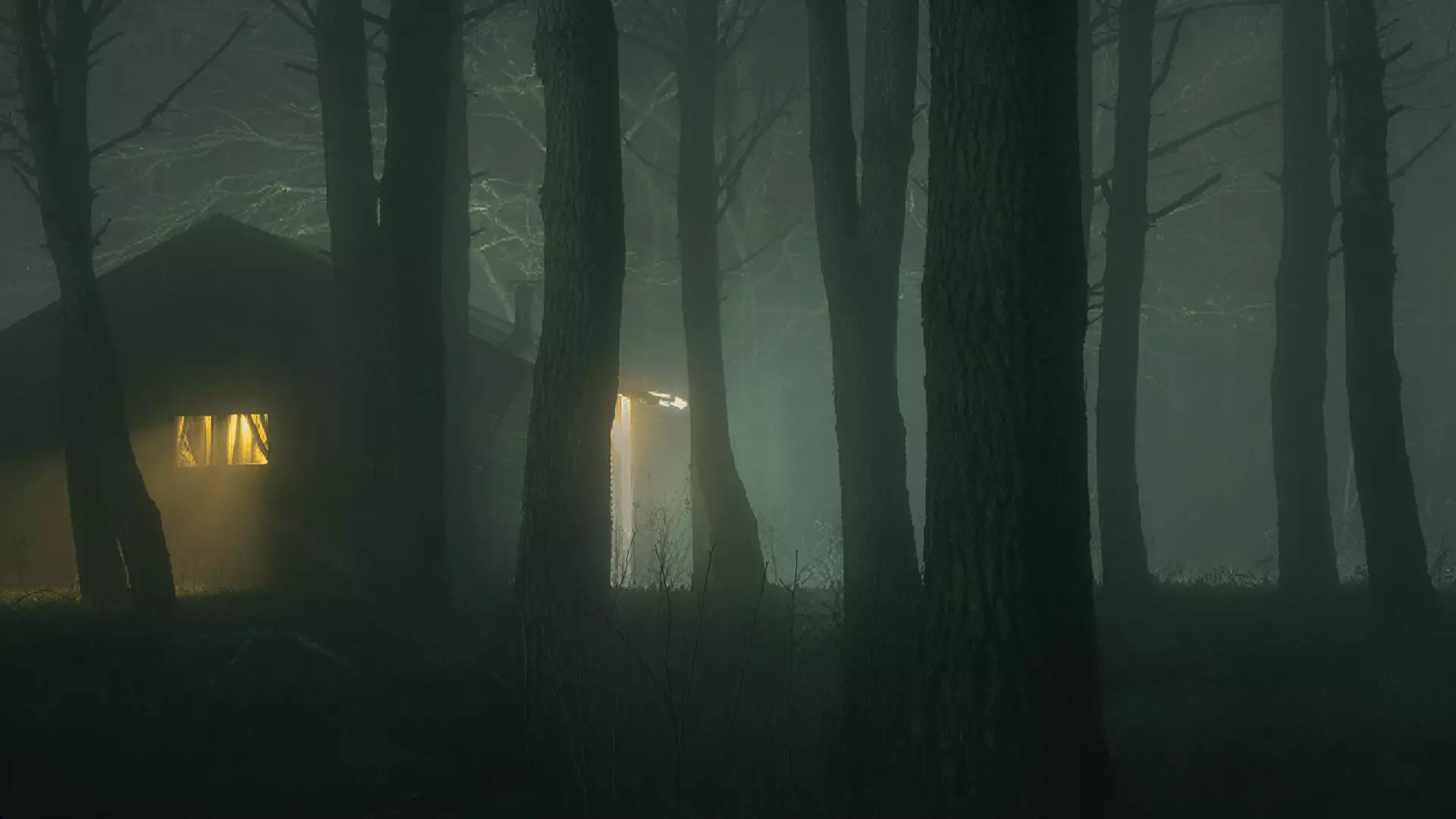
In his director’s statement, Paul Navarro envisions the forest as a character in its own right. Dense, dark and unstable, it becomes an extension of the unconscious mind of the man it shelters. The trees, the shadows and the empty spaces left within the frame maintain the sense that a presence could emerge at any moment.
The aim is not to pile on jump scares or sudden appearances, but to instil a lasting sense of unease. The monster often remains partially concealed: a silhouette against the light, a fragment of a body, a shadow or a fleeting movement. Inspired in particular by *Sleepy Hollow* and Tim Burton’s *The Nightmare Before Christmas*, the visual approach seeks to create a distorted, misty and almost unreal world.
The lighting design also draws inspiration from Jordan Peele’s *Get Out*, whilst the camera movements and the duration of certain shots borrow from the conventions of the slasher genre, particularly *Halloween*. The sense of menace is thus built up as much by what the viewer does not see as by what appears on screen.
Three spaces to tell the story of the same conflict
The artistic direction is based on three distinct environments: the forest, the VOID and the childhood home. Each corresponds to a stage of the inner journey.
In the forest, exposed roots, twisted branches and misshapen trunks lend the landscape a hostile feel. The child’s drawings, scattered across the ground, become the tangible traces of a painful memory. Their motifs — monstrous silhouettes, disjointed figures and unsettling shapes — reflect the way the child perceived their parents’ divorce.
The VOID constitutes a visual break. This empty, dark space, devoid of any points of reference, contains a single wooden door. Isolated in the midst of nothingness, it becomes a symbolic threshold between two states of consciousness. Its appearance also marks an evolution in the project as it was being developed, as explained in the director of photography Antoni Martinez’s statement of intent.
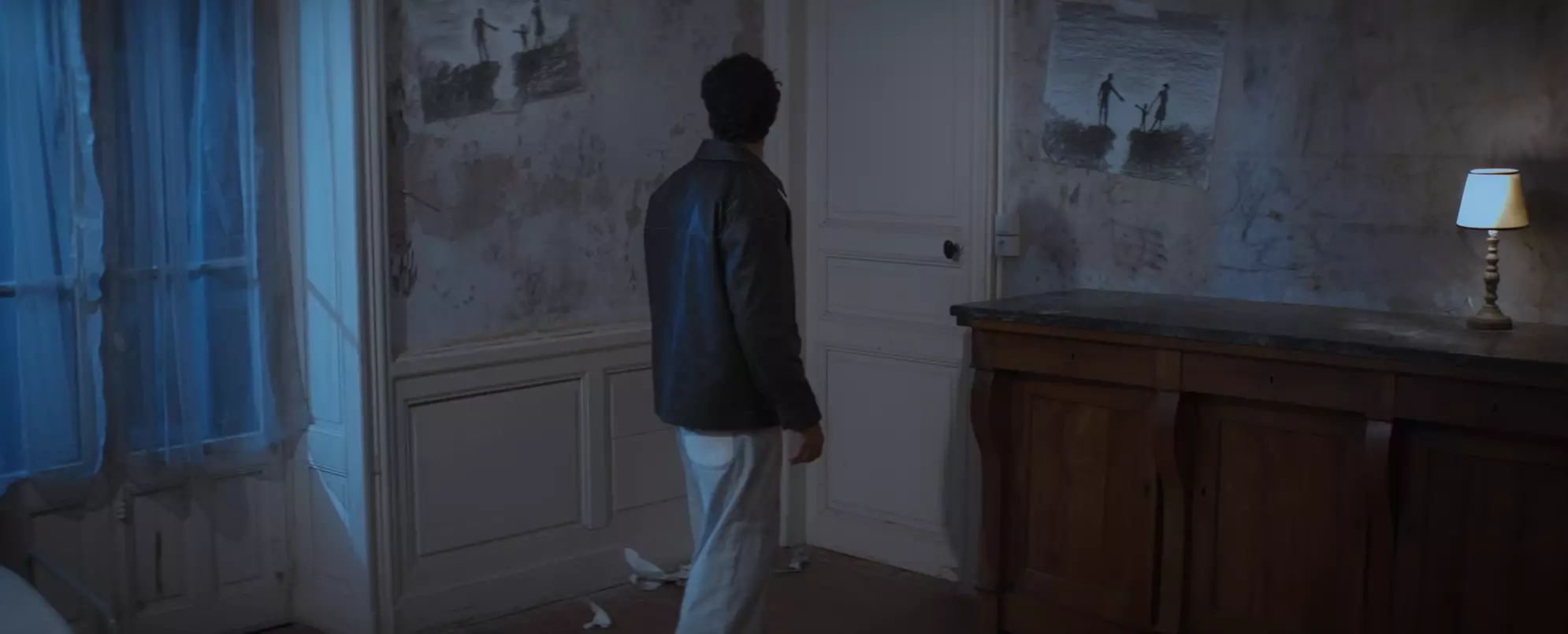
Finally, the family home is conceived as a place that is both familiar and unsettling. Furniture covered in sheets, tarnished objects and dark rooms evoke a frozen memory. Large roots emerge near the entrance and spread out against the foundations, establishing a direct visual link with the forest. Upstairs, the child’s bedroom encapsulates the film’s emotional weight. Almost empty, it bears the marks of the past through the drawings and handprints on the walls.
Mila Thoyer, the production designer, thus conceives the sets as extensions of the protagonist’s psychological state.
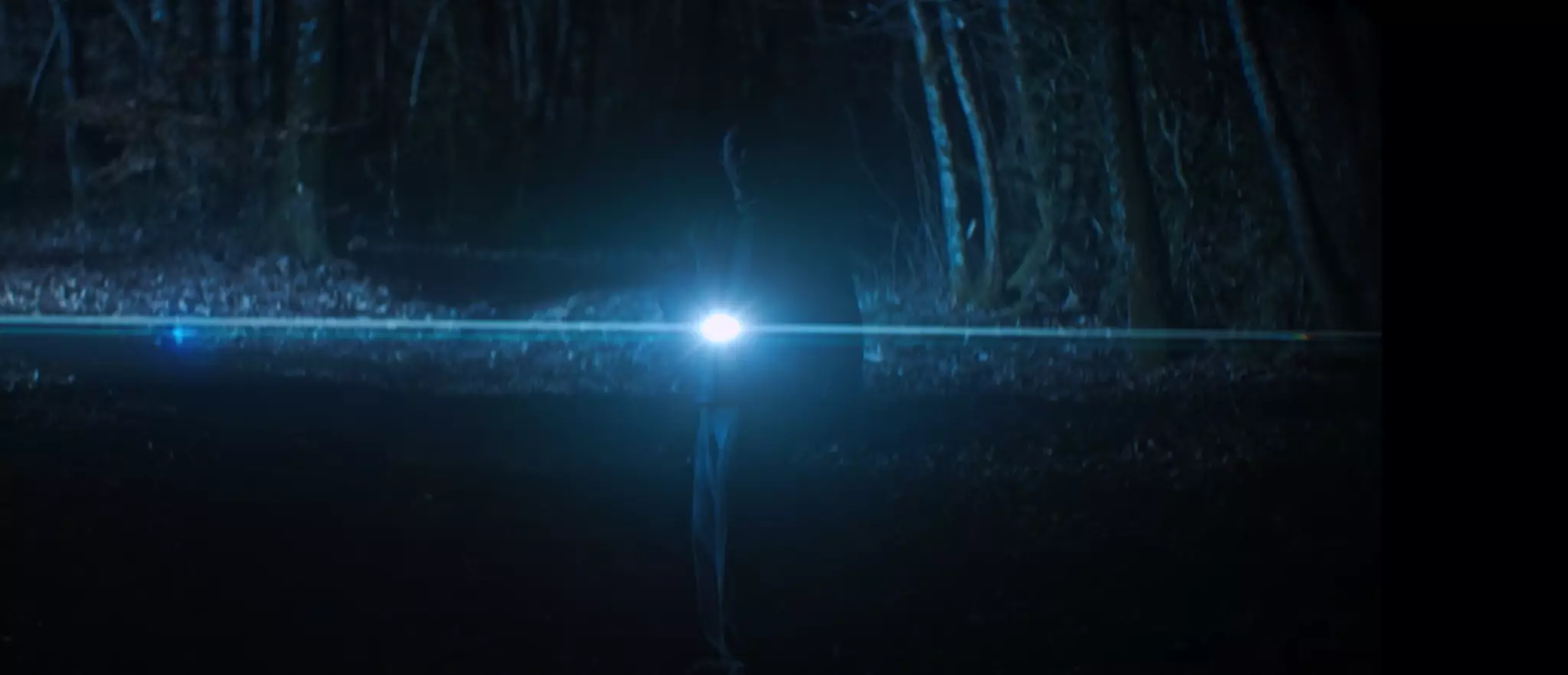
A light that changes with fear
For Antoni Martinez, director of photography and camera operator, the challenge is to convey this inner journey through lighting and framing.
In the forest, the crew plans to simulate moonlight using Skypanel projectors and a four-metre-by-four-metre diffusion screen. This setup must illuminate various depths of the set whilst retaining large areas of shadow. The use of Blazar X 1.5 anamorphic lenses helps to distort the perspective and allows the crew to play with the edges of the frame, where a presence might be lurking.
The camera movements also support this creative approach: tracking shots from behind, reverse tracking shots, shots facing the character, and perspectives associated with the monster all reinforce the sense of being hunted.
Inside the house, the lighting becomes more diffuse, but the shadows remain pronounced. The child’s bedroom is an exception: it is initially conceived as a protective cocoon, bathed in soft light and almost devoid of contrast. When the monster approaches, this protection vanishes. The ambient lights go out and moonlight floods the room. This change in lighting thus embodies the character’s loss of security.
Sound: the monster’s invisible presence
In *Minuit*, sound does more than simply accompany the images: it plays a direct part in the narrative.
Victor Mourlan and Sam Quiles have developed a soundscape that combines music, ambient sounds and organic textures. The VOID is characterised in particular by heavy bass, shrill sounds, liquid textures, metallic noises and distorted voices. Words sometimes seem mumbled or stripped of their meaning, as if language itself were dissolving within this mental space.
The music evolves in tandem with the character. Initially built around synthesisers and delicate sounds, punctuated by timbres evoking childhood, it gradually gains in intensity and roughness. A more rock-inspired aesthetic emerges as Marco sinks deeper into his inner conflict. This evolution reflects a shift from fear to confrontation, and then to a form of resistance.
Footsteps, breathing, the rustling of paper, muffled family arguments and the sounds associated with the monster’s appearance all combine to form a veritable emotional map. The viewer sometimes hears the threat even before they can see it.
Three nights to bring the project to life
The production of Minuit requires particularly rigorous organisation, with filming taking place entirely at night, spread over three consecutive nights, involving a crew of around thirty people.
The first night is spent in the forest, in a remote area with no access to the mains electricity supply. Generators are needed to power the equipment. The second night takes place in the house, where the crew’s movements must be organised whilst minimising disruption to the neighbourhood. The final night is dedicated to the VOID.
The presence of a young, underage actress also posed a significant challenge: specific supervision, adherence to statutory working hours and the constant presence of a designated person responsible for her wellbeing… These arrangements were put in place by the students in preparation for the shoot.
Finally, the crew took care to implement an eco-production approach: sharing transport, carpooling, hiring equipment, and reusing or recycling props and set elements.
A collaborative creation exploring the intimate
From set design to sound design, via lighting and visual effects, *Minuit* is underpinned by a single aim: to make visible what is going on inside a character. The various technical departments therefore do not work in isolation from the narrative; they become its instruments.
For the team, in the words of the sound team, this short film represents the culmination of ideas that have matured over the course of their careers and their friendship. Despite the constraints of budget, time and night-time filming, the ambition remained to construct a coherent world, where visual and auditory horror reveals a deeply human story.
Behind the monsters, shadows and drawings, *Minuit* ultimately tells the story of an attempt at reconciliation with oneself. This is also what guided its creation: every artistic choice must help convey this inner struggle, until the moment when fear ceases, for an instant, to haunt the character.
Crédits
Cast List
In the role of the adult : Deyran Aydogdu
In the role of the child : Maël Polo-Rigal
Technical Specifications
Director : Paul Navarro
Production Manager : Hugo Tardieu
First assistant director : Mael Astier
Second assistant director : Camille Dabonneville
Script : Emma Le Dorze
General Manager : Elissa Benisty
Assistant Stage Manager : Nicolas Carcassonne
Assistant Stage Manager : Yanis Arnichand
Childcare Manager : Thomas Rascalou
Head of Casting : Ronan Saves
Director of Photography : Antoni Martinez
Camera operator : Antoni Martinez
First camera assistant : Elsa Rimlinger
Second camera assistant : Constance Bigey
Chief Electrician : Rémi Tropé
Electrician : Pablo Lansade
Electrician : Erine Vitoria
Electrician : Nawelle Burguet
Chief Machinist : Ronan Saves
Stagehand : Gauthier Noguera
Stagehand : Mathieu Guglielmi
DIT : Sam Quiles
Sound mixer : Victor Mourlan
Sound engineer : Victor Mourlan
Composer : Victor Mourlan
First OPS Assistant : Sam Quiles
Head of Post-Production : Paul Navarro
Head Editor : Paul Navarro
VFX Supervisor : Paul Navarro and Thibaut Miossec
Colour Grader : Antoni Martinez
Credits : Sam Quiles
Artistic Director : Noah Navarro
Head Set Designer : Mila Thoyer
Head Costume Designer : Dorian Falquet
Head Make-up Artist : Jeanne Itié
Set photographer : Laura Rebillard
3D Animation (ESMA)
Modelling : Michel Knopp
Lighting : Michel Knopp
Texturing : Michel Knopp
Look Development : Michel Knopp
Animation : Loris Borras
Animation : Morgane Daccache
Rigging : Alexis Wong
CFX Artist : Alexis Wong