The Sound of Machines
INFOS
- thème Documentary
- formation 3rd year
- durée 3:31


Creating an industrial symphony
How can one give cinematic form to a noise that we hear every day without really listening to it? How can one transform the clamour of a factory into a musical composition whilst retaining its oppressive quality? With *Le Bruit des Machines*, Geoffrey Pardou, Tom Brohan, Giovanni Coussot and Marion Amouillin have created an experimental documentary in which every technical and artistic choice contributes to a single ambition: to convey the alienation of factory workers through an immersive visual and auditory experience.
Behind these three minutes of film lies a significant amount of formal research, structured around several complementary strands. Image, sound, colour grading and editing are not merely independent technical elements. They work together to accompany a single progression: that of the gradual erasure of the individual in the face of the machine.

Inspiration drawn directly from the world of manual labour
The project originated from a personal experience. Geoffrey Pardou and Tom Brohan drew some of their inspiration from their respective experiences of factory work. Geoffrey, in particular, was deeply affected by a summer spent working on an assembly line. It was a repetitive, demanding and noisy daily routine, the sensations of which fuelled the initial ideas for the documentary.
This experience forms the starting point for an artistic approach that seeks not so much to explain how a factory operates as to capture its atmosphere. The constant noise, the repetition of movements and the imposing presence of the machines become the raw materials of the film.
The team therefore set out to convey a sensation through film: that of an environment whose rhythm eventually imposes itself on those who work there. This intention runs through the entire project and guides everything from framing choices to sound design and the structure of the editing.

The image: depicting the gradual disappearance of the individual
One of the documentary’s key artistic choices lies in the evolution of its visual style. The cinematography gradually reflects the diminishing presence of people within their industrial environment.
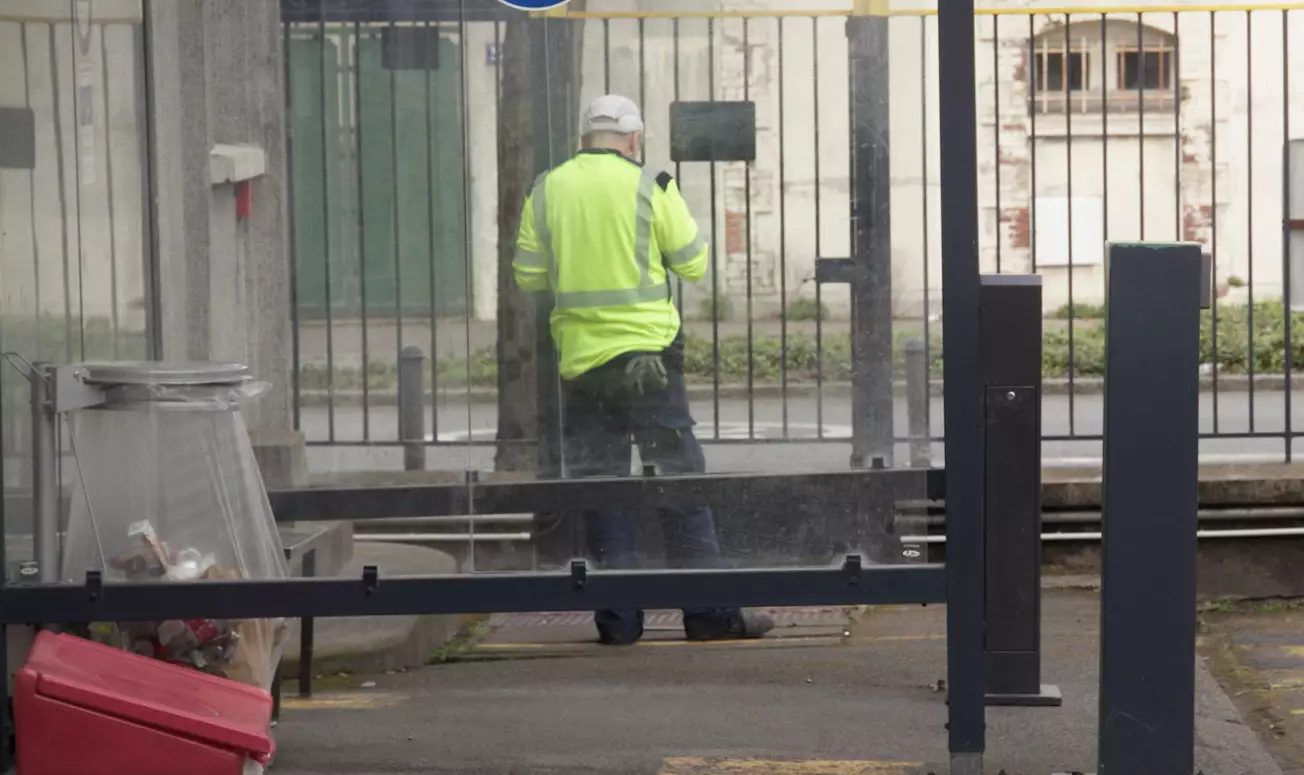
At the start of the film, close-ups place the workers centre stage. Human figures fill the frame, allowing the viewer to immediately recognise the presence of individuals within the factory. But this sense of proximity gradually shifts. The camera pulls back, revealing wider shots in which the workers appear increasingly small in comparison to the industrial structures.
This shift in scale visually conveys the power dynamic that develops between man and machine. The environment gradually gains the upper hand, to the point where it gives the impression of absorbing the individuals within it.
The choice of the 2.39:1 widescreen aspect ratio reinforces this sensation. By stretching the horizontal space, it accentuates the impression that the human figures are being overwhelmed by their surroundings. The workers thus appear trapped within an industrial architecture that seems to tower over them.
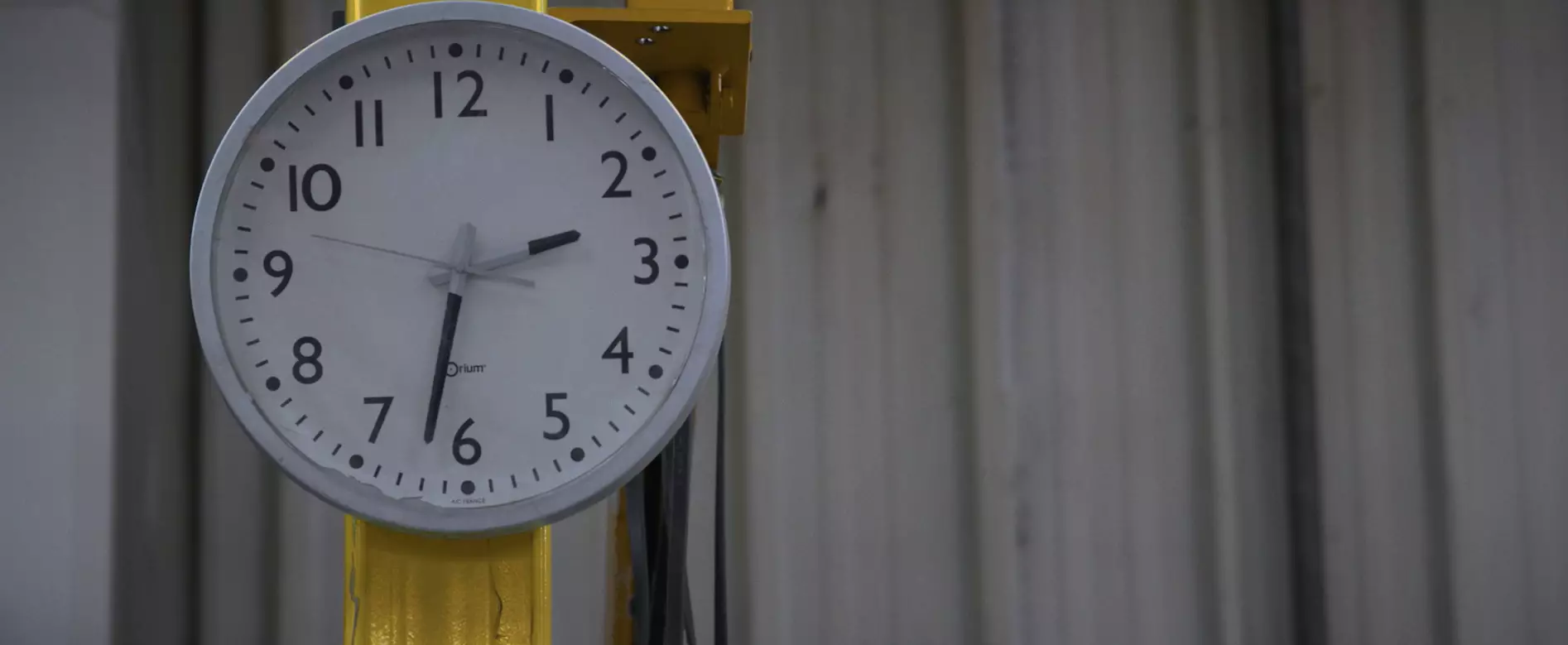
The film also favours static shots, combined with short to medium focal lengths. This approach emphasises the repetitiveness and inevitability of factory work. The absence of camera movement reinforces the impression of an unchanging daily routine, in which actions are repeated without any real break.
Certain optical choices, however, disrupt this apparent stability. The use of wide-angle, fisheye and tilt-shift lenses allows the director to play with perspectives and distort proportions. These distortions are not merely an aesthetic choice: they reflect the impact of the industrial environment on the workers’ perception.
Through these choices, Geoffrey Pardou, the director of photography, develops an image that oscillates between documentary observation and a more abstract representation of the factory. His work seeks to reveal the power and strangeness of the machines, notably by positioning the camera as close as possible to where they operate.
Sound: turning noise into music
Whilst the imagery conveys the industrial environment’s gradual hold over humanity, the sound forms the very heart of the installation. In *Le Bruit des Machines*, the sounds recorded in factories are not simply used to recreate a realistic atmosphere. They become the raw material for an original musical composition.
The sound design is based on the transformation of mechanical sounds through various processing techniques: reverb, distortion, pitch shifting and sampling. The hammering of the presses, the creaking of the gears and the vibrations of the machines are reworked to create a musical rhythm structured by a beat machine.
This approach results in a techno composition built entirely from factory noises. The outcome creates an immersive soundscape, in which industrial sounds gradually become musical elements.
Yet this transformation deliberately retains a certain ambiguity. The music possesses a hypnotic, almost infectious quality, whilst maintaining a sense of oppression. The mechanical rhythm becomes haunting and serves as a constant reminder of the workers’ repetitive movements.
This work relies in particular on the complementary talents of Geoffrey Pardou and Giovanni Coussot. Geoffrey composes the soundtrack and transforms raw sounds into musical material. Giovanni, for his part, is responsible for sound recording on set. He captures the various acoustic textures of the factory, which then serve as the basis for the composition.
The collaboration between the two enables the creation of a coherent soundscape, in which industrial noise is no longer merely an ambient element, but becomes a genuine cinematic language.
Calibration: between raw material and abstraction
The visual work continues in post-production through colour grading. The aim is to enhance the sense of immersion whilst giving the images a distinctive aesthetic identity.
Contrasts are accentuated to bring out the textures and different materials that make up the industrial environment. Experiments are also carried out with colour saturation, in a quest to strike a balance between hyperrealism and abstraction.
This approach allows the raw materiality of the factory to be preserved whilst conveying the sensory distortions caused by the repetition of labour. The images remain rooted in a concrete world, but their treatment sometimes lends them an almost unreal quality.
Giovanni Coussot, who is responsible for the film’s colour grading, thus plays a full part in shaping its visual identity. His work is not limited to harmonising the images: it supports the overall artistic vision and reinforces the documentary’s oppressive atmosphere.
He also designs an original typeface, which extends this aesthetic universe to the film’s graphic design.

Editing: gradually trapping the viewer in a loop
Editing forms the final major pillar of this formal exploration. Handled by Tom Brohan, it accompanies the gradual intensification of the audio and visual elements.
One of the main aims is to convey a sense of confinement. To achieve this, the editing makes particular use of superimposed images and split-screen techniques. The characters gradually find themselves trapped within the frame, as if they were losing any possibility of escaping their surroundings.
Repetition is also a central principle in the film’s structure. Certain shots reappear, sometimes sped up, sometimes slowed down. This recurrence of the same images creates a sense of a loop and reinforces the impression that time has come to a standstill.
This technique directly echoes the daily lives of the workers, whose movements are repeated hour after hour. The editing therefore does not merely depict this repetitiveness: it makes the viewer feel it.
By playing with variations in speed, superimpositions and the recurrence of images, Tom Brohan gives concrete form to the idea of temporal imprisonment. His work as editor and visual effects supervisor thus contributes to the coherence of the film as a whole.

A collaborative production process in pursuit of a shared vision
Whilst *Le Bruit des Machines* is underpinned by a strong artistic vision, its production also reflects a genuine collaborative effort.
Marion Amouillin joined the project after Geoffrey Pardou and Tom Brohan presented their idea to her. Impressed by their vision, she became involved as co-director and took charge of production management. In particular, she was responsible for sourcing factories, liaising with partners and organising the shoots. She also acted as assistant director to facilitate coordination on set.
The team thus brought together a range of complementary skills: directing, cinematography, sound recording, music composition, editing, visual effects, colour grading and production.
Filming took place over five days, in two factories, following five months of preparation. Post-production involved 73 days’ work. The project was carried out on a budget of 321 euros and with the support of 26 donors.
These figures illustrate the resources mobilised to bring this experimental project to life, as part of the final-year project at Cinécréatis Nantes.
Beyond its aesthetic ambition, *Le Bruit des Machines* above all bears witness to a shared determination: to make the language of cinema a direct extension of its subject. Every element of the film contributes to the same exploration of humanity’s place in the industrial world.
The imagery gradually distances the individual; the sound engulfs them in a haunting mechanical rhythm; the colour grading distorts their perception of the environment; and the editing traps them in an endless loop. These various artistic intentions thus converge to create a coherent experience, in which form and content become one.
For behind this mechanical symphony lies a profoundly human question: what becomes of the individual when their daily life is entirely dictated by the rhythm of machines? It is by giving this question a sonic and visual form that the documentary finds its true uniqueness.
Crédits
Technical team
Directors : Marion Amouillin, Tom Brohan, Giovanni Coussot, Geoffrey Pardou.
Production Manager : Marion Amouillin
Assistant Director : Marion Amouillin
Director of Photography : Geoffrey Pardou
Composer : Geoffrey Pardou
Perchman : Giovanni Coussot
Graphic designer : Giovanni Coussot
Calibrator : Giovanni Coussot
Editor : Tom Brohan
VFX Artist : Tom Brohan