There are filmmakers we admire for their technical mastery. Others for their radicalism. Still others for their ability to challenge the language of cinema. Steven Spielberg, however, belongs to a rarer category: filmmakers whose films seem to have shaped the way several generations view the world.
We might have discovered *E.T.* as children, *Jurassic Park* with the family, *Jaws* a little too young, *Indiana Jones* on a Sunday afternoon, *Schindler’s List* at secondary school, and *Saving Private Ryan* later on, with a different perspective on war. Each film leaves a different mark. Some fill us with wonder. Some unsettle us. Some move us deeply. But almost all have one thing in common: they speak to something very simple within us.
Not necessarily to our intellect. Not just to our love of spectacle. Rather, to a more intimate, more ancient part of us: our fear of being abandoned, our need to believe in something, our fascination with the unknown, our struggle to become adults without completely losing the child we once were.
Perhaps that is Spielberg’s true secret. His films are not just popular because they are effective. They are popular because they know how to strike the right chord. The one where the viewer is no longer just watching a story, but recognises an emotion.
The filmmaker of childhood – but not just for children
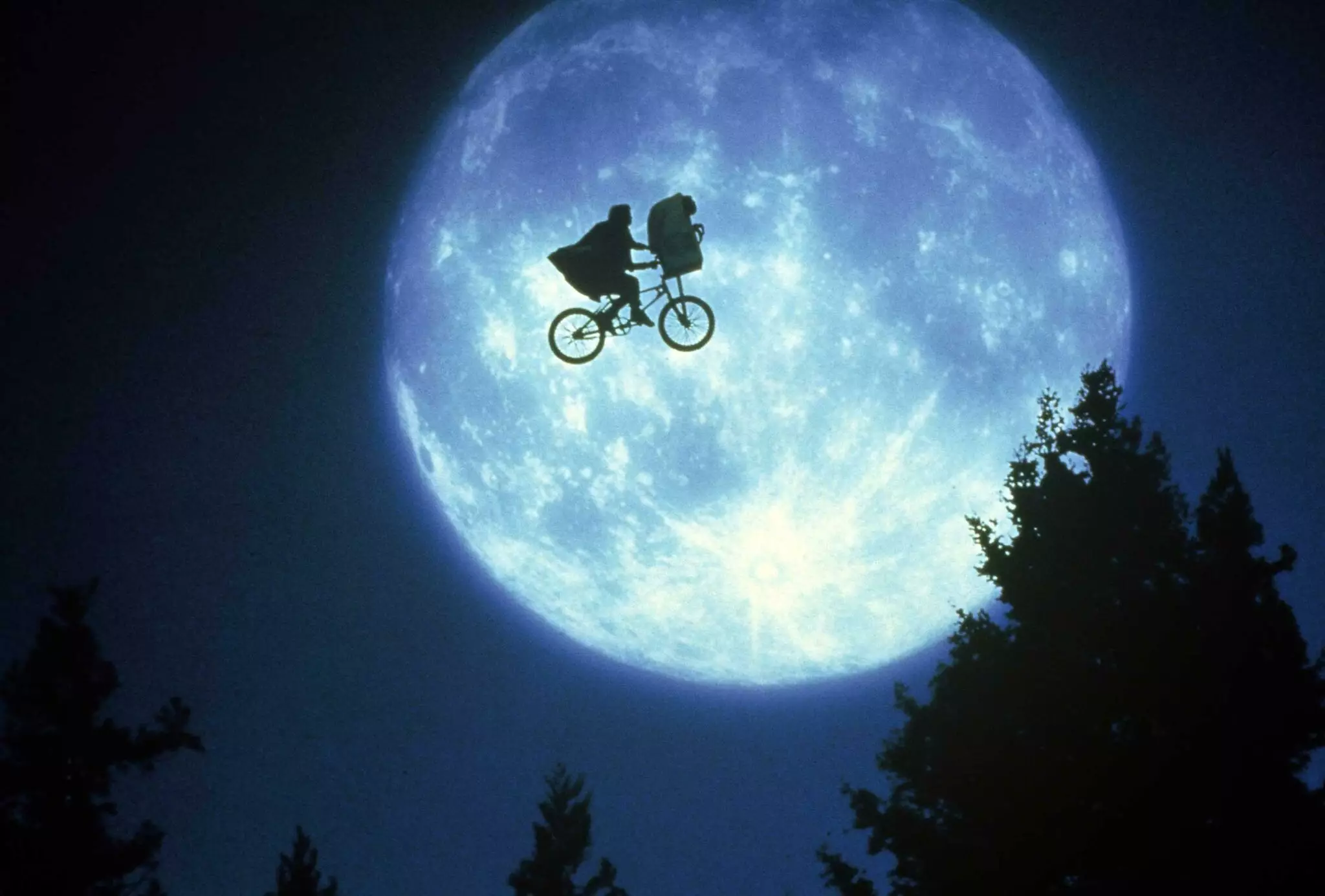
When we talk about Spielberg, we often think of childhood. E.T., of course, remains one of the most obvious examples. The story is simple: a child meets a creature from another world, hides it, loves it, and then has to accept letting it go. But behind the science fiction, the film above all tells of a universal experience: attachment and separation.
E.T. is not just an alien. He becomes the imaginary friend we’d like to keep forever. The one who understands without judging. The one who transforms an ordinary house into a secret refuge. The one who gives the child the feeling that there is something greater than everyday life, family arguments and the absence of a father.
This is where Spielberg gets it just right. He doesn’t portray childhood as a cute backdrop. He portrays it as an intense world – sometimes funny, sometimes cruel, often misunderstood by adults. The children in his films aren’t secondary characters there merely to tug at the audience’s heartstrings. They are often the only ones who can clearly see what adults refuse to look at.
In *Jurassic Park*, it is also the children who best embody the audience’s reaction. They are afraid, they are fascinated, they run, they hide, they watch the dinosaurs with that mixture of dread and wonder that perfectly sums up Spielberg’s cinema. The famous shot of the glass of water trembling before the T-Rex arrives works because it stirs up a very primal fear: something immense is approaching, and we cannot yet see it.
In Spielberg’s films, childhood is never entirely reassuring. It is marked by absence, danger, incomprehension and loneliness. Yet it also remains the place where the imagination can save the day.

Ordinary characters facing the extraordinary
Another of Spielberg’s great strengths is his ability to place highly relatable characters in situations that are completely beyond their control.
In Jaws, the hero is not an invincible adventurer. He is a police chief who is afraid of water. He must face not only a shark, but also political cowardice, collective denial and pressure from a town that would rather protect its tourist season than its residents. The film works because the threat is spectacular, yet the human situation is very real: what do you do when everyone downplays a danger you can sense coming?
In Close Encounters of the Third Kind, the characters are confronted with a mystery that transcends their everyday lives. They do not understand what is happening to them, but they sense that something is calling to them. Here again, Spielberg does not start with an exceptional hero. He starts with an ordinary, almost run-of-the-mill man who becomes obsessed with a vision. The fantastical bursts into everyday life, and it is precisely this contrast that makes the story believable.
Spielberg likes characters who aren’t ready. People who didn’t ask to be swept up in a great adventure. Children, parents, police officers, scientists, soldiers – people overwhelmed by events. They are no better than the viewer. They are just like the viewer.
This is a significant difference from many contemporary blockbusters. In many films today, the characters seem to have been tailor-made for action: they know how to fight, fly, survive and take a beating. In Spielberg’s films, even when the spectacle is immense, the characters retain a very human vulnerability. They scream. They hesitate. They doubt. They sometimes make the wrong choices. And that is why we follow them.
Fear as a gateway to emotion
Spielberg is often associated with a sense of wonder. That’s true. But his films also rely heavily on fear. A direct, physical, almost childlike fear.
The fear of what we cannot see in Jaws. The fear of being abandoned in E.T. The fear of being pursued in Jurassic Park. The fear of war in Saving Private Ryan. The fear of persecution in Schindler’s List. The fear of losing one’s child, one’s father, one’s home, one’s innocence.
What makes Spielberg so effective is that he never treats fear as a mere device for creating suspense. It becomes a gateway to emotion. We’re afraid because we care about the characters. We’re awestruck because we were worried in the first place. We breathe asigh of reliefbecausewe’ve felt the danger.
In *Jurassic Park*, the kitchen scene with the velociraptors still works today because it’s based on a very simple situation: two children have to hide. No need for complicated dialogue. No need to spend ten minutes explaining what’s at stake. The staging is enough. The glances, the reflections, the sounds, the breaths. Spielberg knows exactly where to place the camera so that the viewer shares the characters’ panic.
This ability to make the audience feel something before they fully understand it is one of the defining features of his cinema. For him, emotion doesn’t come solely from the script. It comes from the pacing, the framing, the lighting, the movement, and the way a character looks up at something beyond their control.
Looking Up
There is a very Spielbergian gesture: a character looks up, mouth slightly open, eyes filled with fear or wonder. This shot recurs frequently in his films. It might be a spaceship, a dinosaur, a light, a threat, a miracle or a catastrophe.
This gaze is almost a signature. It sums up Spielberg’s relationship with cinema: the world is vaster than we are. It can terrify us, but it can also make us feel greater.
It is no coincidence that so many of his films feature characters confronted by something greater than themselves. The shark in *Jaws*, the aliens in *Close Encounters of the Third Kind*, the dinosaurs in *Jurassic Park*, the war in *Saving Private Ryan*, the historical horror in *Schindler’s List*, and family memory in *The Fabelmans*.
In Spielberg’s work, spectacle is never merely a means of impressing. It serves to remind us of the individual’s smallness in the face of the world. But this smallness is not necessarily humiliating. It can also become a source of beauty. To feel small is sometimes to rediscover one’s capacity for wonder.
Spielberg’s films invite us to look up. It may be simple. It may even be naïve, some might say. But it is also what many films have lost: that belief in the power of an image to evoke an immediate emotion.
Broken families: a subtle yet central theme
Behind the grand adventures, the monsters, the dinosaurs and the spaceships, there is a much more intimate theme in Spielberg’s work: the family. More specifically, the fragile, separated, blended, absent or incomplete family.
In *E.T.*, the father is absent. In *Close Encounters of the Third Kind*, the main character’s obsession destroys his home. In *Indiana Jones and the Last Crusade*, the relationship between father and son becomes the emotional heart of the film. In *A.I. Artificial Intelligence*, an artificial child desperately seeks a mother’s love. In *Catch Me If You Can*, the protagonist is also fleeing the breakdown of his family. In *The Fabelmans*, Spielberg returns directly to his parents’ separation and the birth of his relationship with cinema.
This theme is essential. It explains why his films are never merely spectacular spectacles. They often speak of a void. An absent father. An unreachable mother. A fractured home. A childhood that must be built despite the adults’ silences.
This is also why viewers identify with the characters. Many filmgoers do not know what it is like to flee from a T-Rex or to encounter an alien. On the other hand, many know what it’s like to want to be understood, protected, loved and seen. Many know what it’s like to feel that a family isn’t always as solid as it ought to be.
Spielberg transforms these intimate vulnerabilities into popular stories. That is his great strength. He takes a simple wound and gives it a mythological form.
A style of filmmaking that has sometimes been criticised for its emotional sensibility
Spielberg has sometimes been criticised for his penchant for emotion, or even sentimentality. He is accused of trying too hard to move the audience, of overemphasising certain effects, and of seeking to elicit tears or a climactic finale. This criticism is understandable depending on the film. But it also reveals something quite telling: in a certain critical culture, direct emotion is sometimes viewed with suspicion.
Yet Spielberg has never shied away from this emotion. He does not seek to hide it behind an ironic detachment. He embraces the grand gesture, the swelling music, the illuminated face, the embrace, the departure, the return, the revelation. He still believes that cinema can move us head-on.
This sincerity may rub some people up the wrong way. It may seem too heavy-handed. But it also explains why his films remain so powerful for a section of the audience. Spielberg isn’t afraid of being straightforward. He isn’t afraid of speaking to everyone. And speaking to everyone, when done well, is not a weakness. It is, in fact, one of the most difficult things to achieve.
It takes immense precision to evoke a simple emotion. Making people cry artificially is fairly easy. Making them feel something that lingers for years is far less so.
Cinema as a refuge
*The Fabelmans*, one of his most personal films, allows us to reinterpret his entire body of work in a new light. In it, we see a young boy discovering cinema, first as a game, then as a tool for understanding his family, and finally as a way of confronting reality. The camera becomes a refuge, but also a weapon. It enables pain to be transformed into a story.
Perhaps this, at its heart, is what Spielberg has always been telling us: cinema does not eliminate fear, loss or chaos. It gives them form. It allows us to look at things that would be too difficult to face head-on.
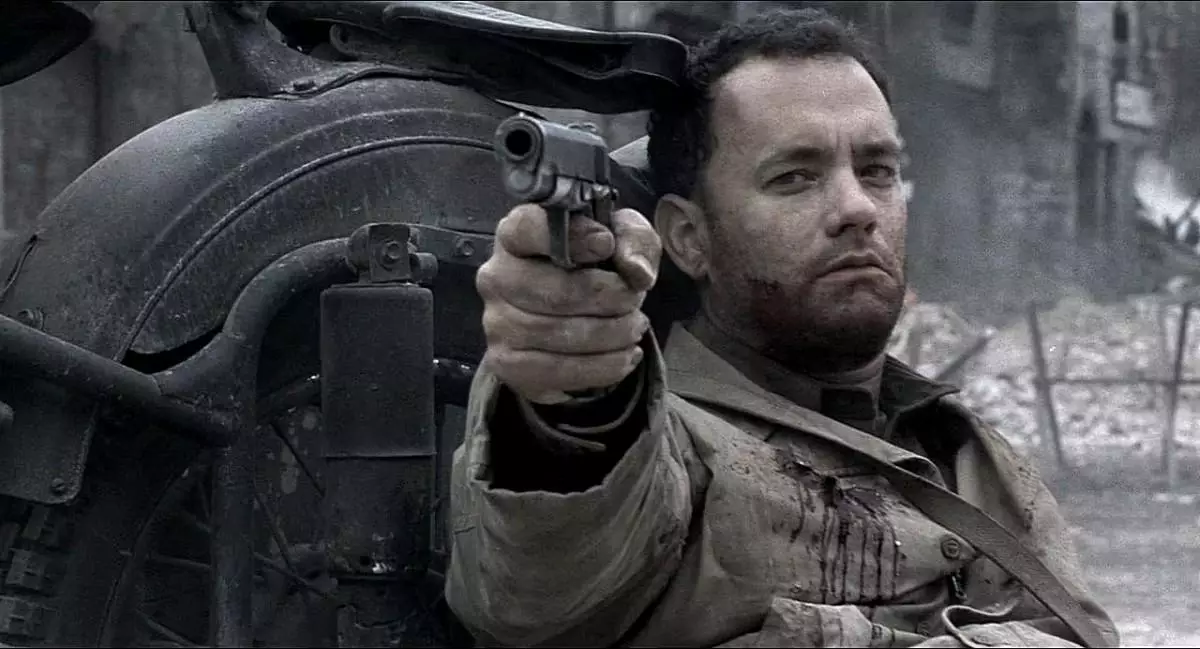
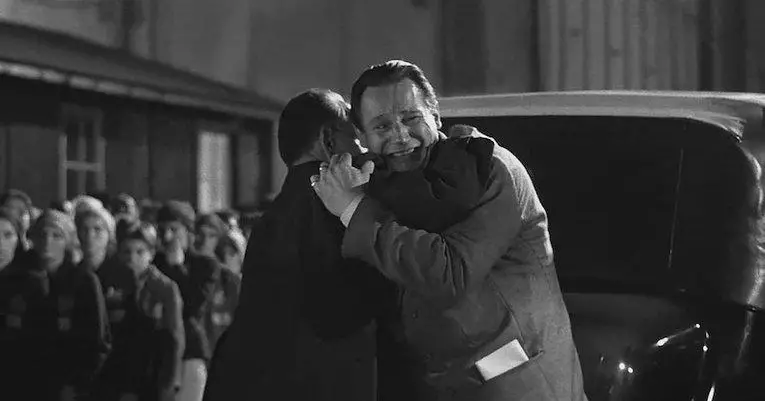
In *E.T.*, the child transforms his loneliness into a magical encounter. In *Jurassic Park*, our fascination with science and progress turns into a cautionary tale. In *Schindler’s List*, cinema attempts to convey the horror without exhausting it. In *Saving Private Ryan*, the direction seeks to restore a human dimension to a war often reduced to heroic imagery.
Spielberg is therefore not merely a filmmaker of family entertainment. He is the filmmaker of emotional memory. He knows that images shape us. That certain scenes become personal memories, even when they belong to fictional characters. We remember the bicycle flying past the moon. The glass of water that trembles. The gate at Jurassic Park. The red coat in Schindler’s List. The beach landing in *Saving Private Ryan*. These images linger because they are simple, powerful and instantly recognisable.
Why we identify so strongly with his films
If Spielberg’s films appeal to so many generations, it is not simply because they are spectacular. It is because they almost always stem from a simple, instantly recognisable emotion. Behind the dinosaurs, aliens, adventures or grand historical narratives, there is often a child who feels alone, a parent who wants to protect their loved ones, an adult who realises they don’t have everything under control, or an ordinary character forced to see the world in a different light.
It is this emotional simplicity that makes his films so accessible. Spielberg does not ask the viewer to first come to terms with a complex universe. He places them in a clear, human situation: the fear of losing someone, the need to be loved, the fascination with what is beyond our grasp, the difficulty in accepting that the world is changing faster than we are. His films are moving because they give a spectacular form to very intimate feelings.
We do not, therefore, identify with his characters because they have extraordinary adventures. We identify with them because they react as we might react when faced with the extraordinary: with fear, wonder, awkwardness, courage at times, and that persistent desire to believe that there is still something worth saving.
A popular filmmaker, and therefore an essential one
Steven Spielberg has sometimes been reduced to his commercial success, as if massive popularity automatically made a work less profound. This is a mistake. His films have shaped the collective imagination because he has managed to combine three dimensions rarely brought together with such consistency: spectacle, emotion and accessibility.
He knows how to tell a story. He knows how to frame a shot. He knows how to scare. He knows how to inspire wonder. He knows how to speak to children without patronising them, and to adults without asking them to give up their childlike side.
One might prefer more radical, darker or more experimental filmmakers. But few directors have influenced our relationship with images to such an extent. Few have created so many instantly recognisable scenes. Few have understood so well that popular cinema does not need to be simplistic to be accessible.
Spielberg moves us because he films things we are all familiar with, even when he disguises them as extraordinary adventures. He films fear, longing, wonder, loss, family and imperfect courage. He films that very special moment when we feel tiny in the face of the world, yet still capable of believing in it.
And perhaps that is why his films endure. Because they don’t ask us to be any cleverer than we are. They simply ask us to remember how we felt the first time the cinema seemed larger than life.