Crawler
INFOS
- thème Fiction
- formation 3rd year
SYNOPSIS
What if the results of our internet searches were collected by humans? Karl, an overworked office worker, is tasked by his boss with quickly gathering some documents. But in the maze of corridors teeming with equally busy staff and the labyrinthine libraries, this simple task could prove more complicated than expected…
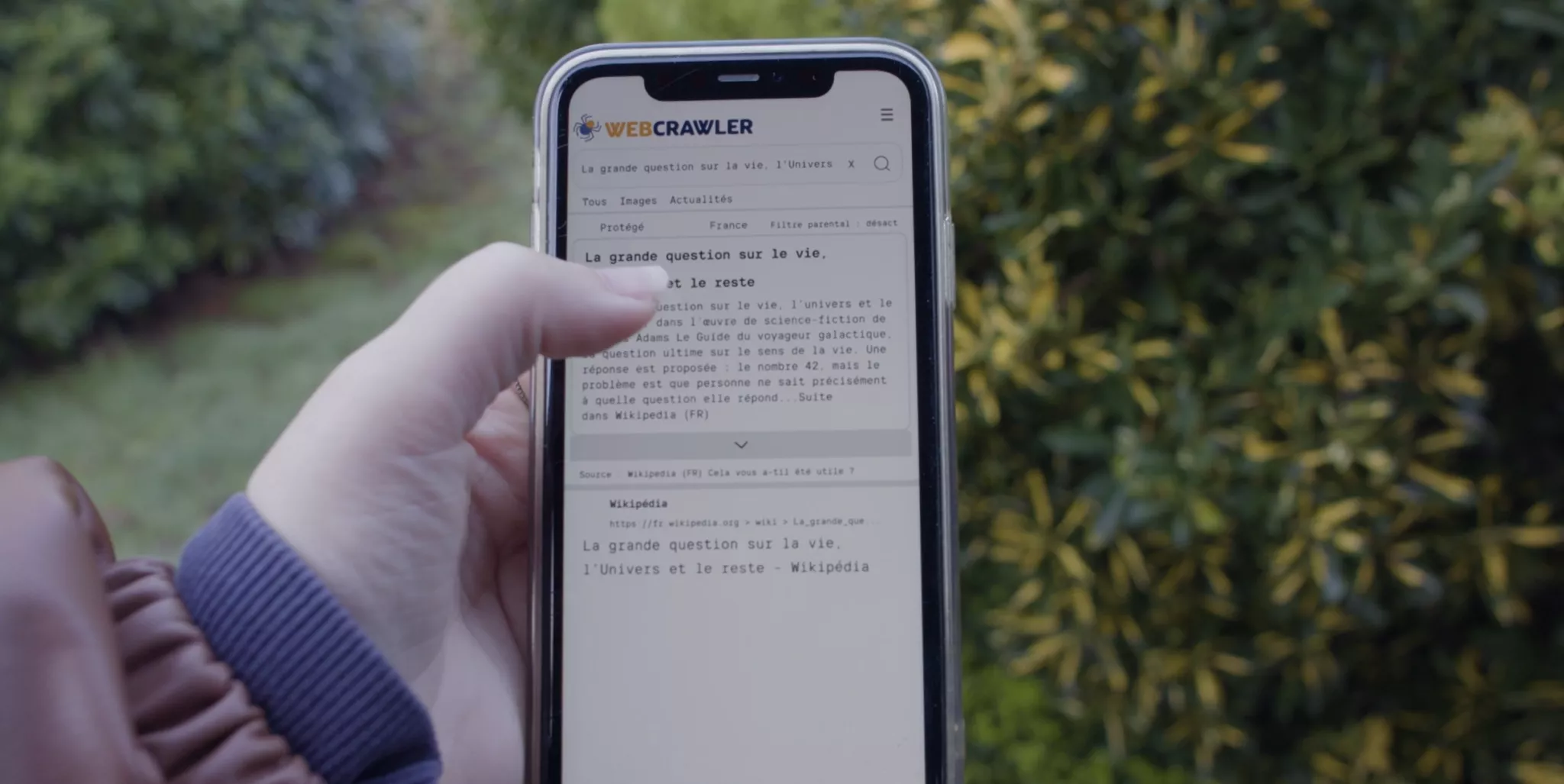
How can you depict the internet without showing a single computer? This is the artistic and technical challenge taken up by *CRAWLER*, the short film directed by Cian Tschaen. Starting from a simple idea – personifying the mechanisms of an online search – the film imagines a vast complex of offices, archives and corridors teeming with busy employees. Behind this unique concept lies a collaborative effort in which each department contributes to bringing to life a world that does not exist.

An idea born out of a desire to pass on knowledge
Cian Tschaen, who initiated the project, aims to take an educational approach, whilst moving away from the conventions of the traditional documentary. His intention is to share knowledge about how the web works, whilst emphasising humour, adventure and fiction. Rather than explaining IT protocols directly, he chooses to transform them into characters and real-life situations.
This approach dictates a fundamental rule: the world depicted must not belong to any clearly identifiable era. Old machines, fax machines, paper documents and digital references coexist in a deliberately timeless universe. The absence of computers on screen allows the web to be brought to life without confining its representation to a traditional computer interface.
Imagine a building with no end
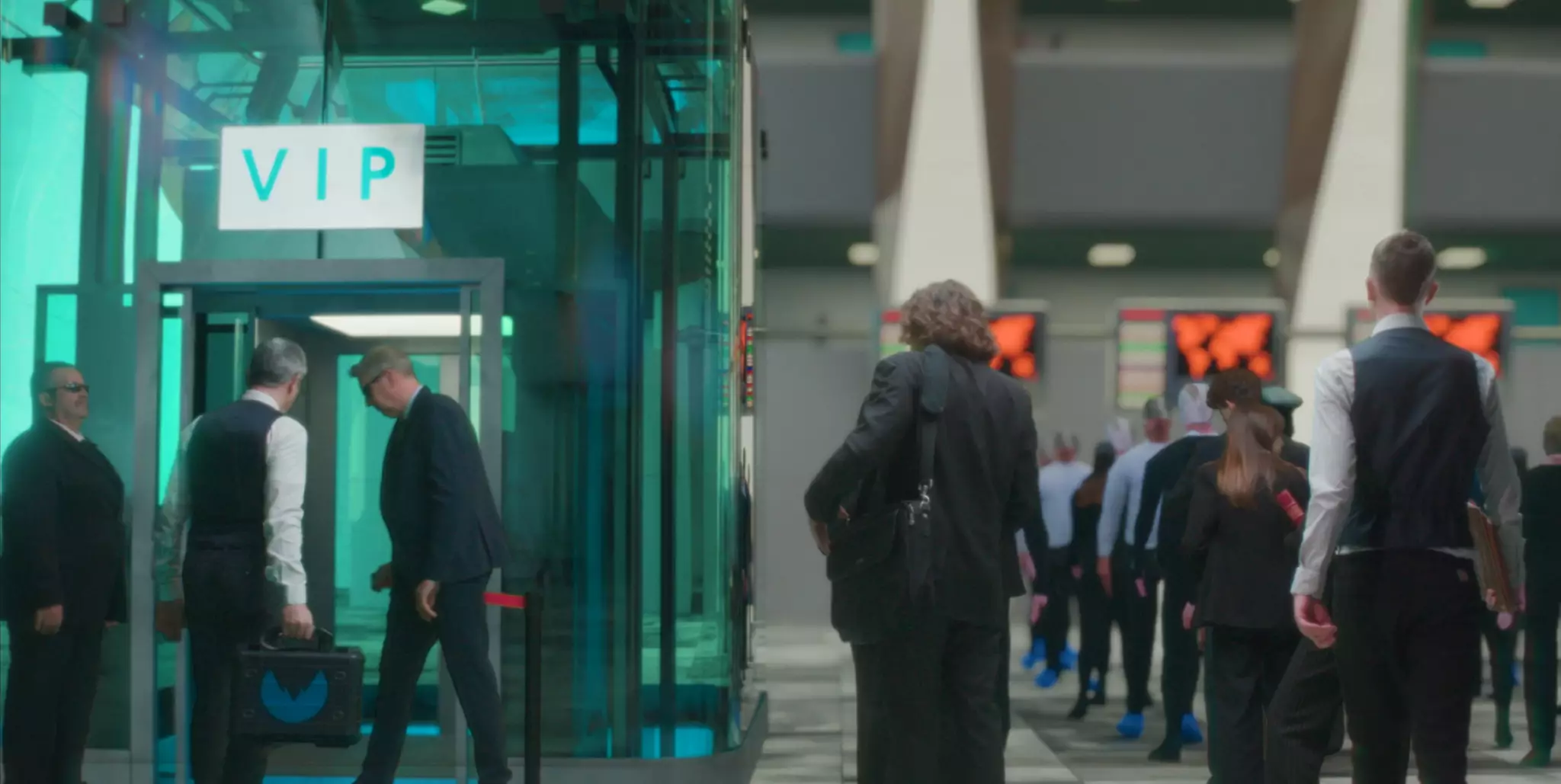
The artistic direction is based on a monumental architecture, comprising repetitive corridors, vast halls and archive libraries. The spaces must give the impression of a dead-end structure, where information flows continuously. The contrast with the lush green park in the final scene highlights the separation between the fictional representation of the web and the real world.
To make these locations believable despite production constraints, the team combines real sets with green-screen backgrounds. The corridors and smaller spaces can be filmed in existing buildings, particularly those near the school. The oversized halls, which are more difficult to find or build, are digitally enhanced.
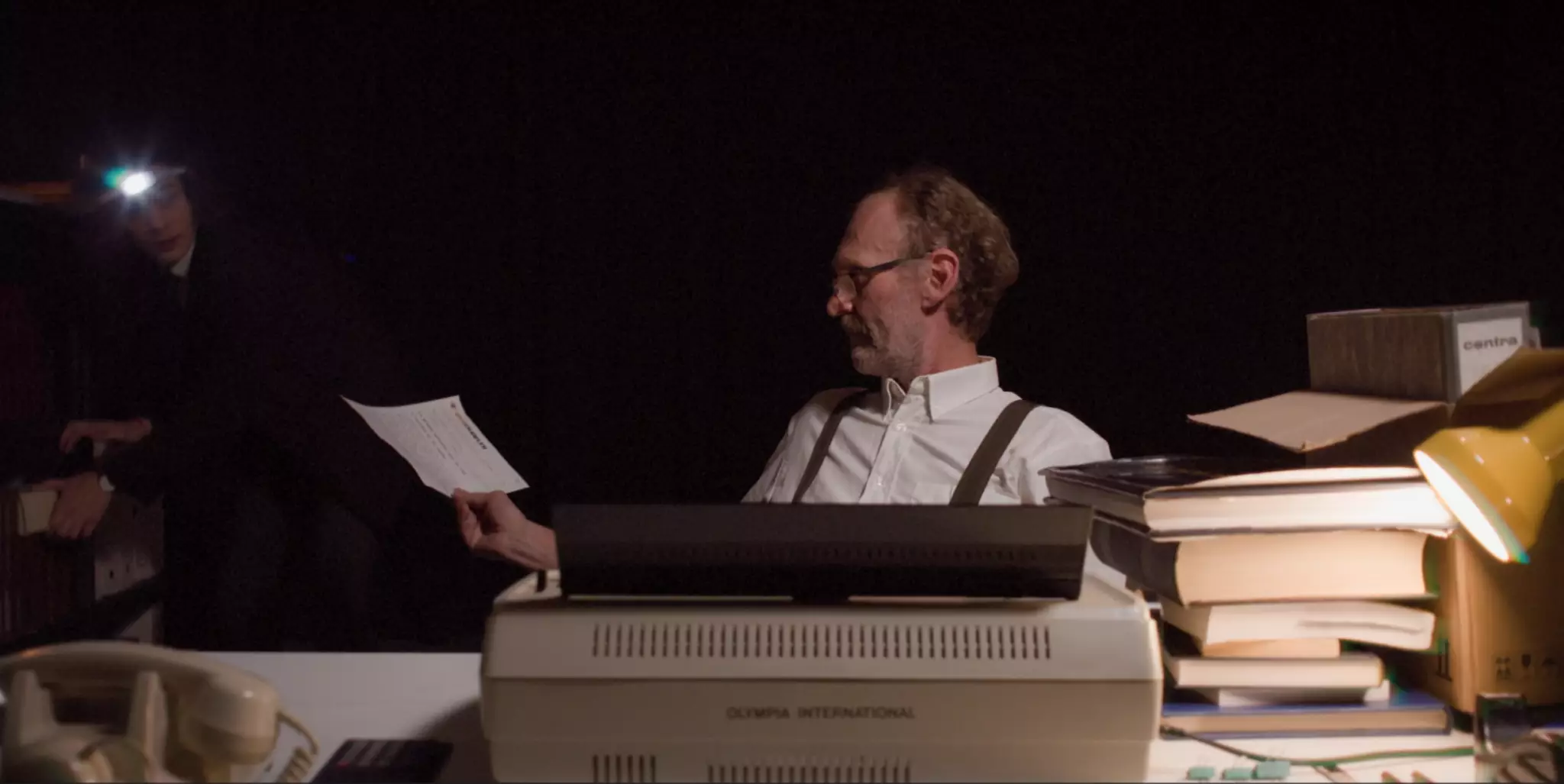
The set design plays an essential narrative role. The offices reflect the characters’ personalities: Sally Chandra’s is cluttered with files, whilst the scribe’s is organised with almost obsessive precision. Books, filing cabinets, keys, maps and old machines lend a tangible quality to the computer system. Even the props made specifically for the film contribute to this illusion, blending objects from different eras into a coherent whole.
Composing the image and mastering the light
The framing technique favours static shots, symmetrical compositions and wide-angle lenses. These choices convey the immensity of the locations and allow the viewer to observe several actions simultaneously. The extras are therefore not merely elements of the set: their movements give the impression that thousands of activities are taking place in parallel.
The lighting enhances this sense of strangeness. The aim is to create a luminous atmosphere, using predominantly cool colour temperatures and a few shades of green inspired, in particular, by the world of *The Matrix*. The objective is to maintain a world that is surprising yet benevolent, without veering into an overtly dystopian aesthetic.

Visual effects at the heart of the production
Visual effects are one of the film’s main challenges. The project involved more than fifteen shots requiring digital work. It was necessary to extend spaces, create impossible architectural structures and enhance the presence of the crowd, whilst maintaining visual continuity between the real sets and the computer-generated environments.
Preparations for this begin right from the start of filming. Shots are planned in consultation with the VFX supervisors, camera movements are kept to a minimum in the relevant shots, and the technical details required to reconstruct the sets are recorded with precision. The lighting of the green screen and the management of objects reflecting this colour must also be carefully controlled to facilitate compositing in post-production.
Giving voice to the vastness
Sound complements what the image cannot show. In the lobbies and corridors, footsteps, distant conversations, the rustling of clothes and echoing announcements must suggest activity taking place off-screen. Sound design becomes particularly important for sequences shot against a green screen, where no real crowd is on hand to provide a natural atmosphere.
The music, for its part, draws its inspiration from trackers – those historic computer music composition programmes. This reference extends the interplay of time periods that runs throughout the film.
A collaborative creation
The editing must ultimately strike a balance between a sense of vastness and the comic rhythm. Shots can be drawn out to reveal the settings, then speed up as Karl tackles one task and obstacle after another. The punchline is a key challenge: it must reveal the meaning of the journey without erasing the clues sown earlier.
From the screenplay to the props, from lighting to sound, via visual effects and post-production, *Crawler* relies on constant dialogue between the various film disciplines. The limited budget, the difficulty in finding suitable locations and the large number of characters all require foresight and adaptability. It is precisely this collaboration that makes it possible to transform an abstract idea into a visual and auditory experience.
Beyond its concept, Crawler is thus a production adventure: that of a team seeking to make the invisible visible and to remind us, through cinema, that the internet remains a tool that can be explored, understood and questioned.
Crédits
Technical Specifications
Director : Cian Tschaen
Screenwriters : Adriane Dupuis, Chloé Jouanneau, Cian Tschaen
An original idea from : Cian Tschaen
Director of Photography : Lucille Dayan
Camera operator : Jules Glaymann
1st Assistant Camera Operator : Lénaïg Dutemple
Chief Electrician : Lucille Dayan
Electrician : Anatole Planchenault
Temporary electrician : Gaëtan Bricaud
Chief Stage Manager : Antoine Breger
Additional engine driver : Aidan Fondse
Head of Sound Operations : Arthur Mention & Lucas Lescouarch
Perchman / Sound Assistant : Mathias Hebras
VFX Supervisor : Arthur Mention
VFX Assistant : Ewen Garat
Head of Production : Louis Le Rouzic
Production Assistant : Cholé Jouanneau
General Manager : Ewen Garat
Assistant Stage Manager : Louis Le Rouzic
Production Assistants : Gwendall Le Bail & Elwen Pondemer
Additional staff from the production department : Enzo Mereno
1st production meeting : Chloé Jouanneau
2nd Assistant Director : Adriane Dupuis
Head of Casting & Extras Coordinator : Adriane Dupuis
Assistant: Extra Coordinator : Dimitri Jarnoux
Script : Louis Le Rouzic
Head of Decoration : Lilou Chardon
Decor Ass. : Maïwenn Mahéo & Lucie Chardon
Props manager : Maïwenn Mahéo
Head Costume Designer : Adriane Dupuis
Head of Make-up and Hair : Emma Hercouet
Head Editor : Mathias Hebras
Sound Mixer : Mathias Hebras
Head of Post-Production : Arthur Mention
VFX Specialist : Arthur Mention
Assistant VFX Supervisor : Cian Tschaen
3D Designer : Cian Tschaen
Graphic Designer – Compositing : Arthur Mention
VFX support : Camille Olivard, Chiara Orlando, Clémentine Cabit, Elwen Pondemer
Calibrator : Mathias Hebras
General graphic designer : Cian Tschaen
Generic creator : Elwen Pondemer
Communications Officer : Louis Le Rouzic
Social Media Manager : Arthur Mention
Graphic designer : Arthur Mention
Set photographer : Ewen Garat
Original music composed by : Cian Tschaen
Cast List
Karl : Arthur Pligot
Sally : Dani Melgoza
Lysis : Alana Cany
Scribe : Pierre Le Balleur
The Cookie Man : Aidan Fondse
Nerd 1 : Astrid Hemart
Nerd 2 : Gabriel Tesson
Nerd 3 : Cian Tschaen
Teenager : Annaik Leborgne
Teenager : Melvil Fagnère
Avast Security Agent : Clémentine Pagniez