What his signature style reveals about the film industry
There are directors whose style you recognise almost immediately, sometimes even before the plot has really got going. Quentin Tarantino is one of them. A conversation that drags on a little too long, music that seems slightly out of place, a character who is too calm in a worrying situation, an ordinary scene that begins to feel menacing: within a few minutes, the viewer realises they are in a highly stylised world.
In*Reservoir Dogs*, the opening scene brings several men together around a table. They talk about Madonna, tips, and almost insignificant details. One might think the scene delays the film’s start. In reality, it already sets the stage for everything: the tone, the power dynamics, the humour, the tension, and the way each character finds their place within the group.
In*Pulp Fiction*, Vincent Vega and Jules Winnfield discuss burgers, foot massages and cultural differences between Europe and the United States before entering a flat where the situation is about to take a dramatic turn. Here again, the action doesn’t kick off straight away. It is set up by the rhythm of the dialogue, by the characters’ strange nonchalance, and by the contrast between the banality of the conversation and the violence of what is to follow.
What makes Tarantino’s style recognisable, therefore, is not merely down to a few outward signs, such as black suits, iconic soundtracks or scenes of violence. His signature style stems from a much more precise combination of elements. It is based on a particular way of writing dialogue, building tension, choosing music, organising the editing, constructing sets, directing actors and playing with the history of cinema.
This is why his films are interesting to analyse when discussing the craft of filmmaking. Not because he should be regarded as an absolute model, nor because his style is beyond question. But because his films highlight choices that other films sometimes seek to keep more discreet.
Dialogues that establish the characters before the plot unfolds
In Tarantino’s films, dialogue isn’t just there to drive the plot forward. First and foremost, it creates a sense of presence. The characters come to life through the way they speak, digress, contradict one another, avoid the real issue or take control of a conversation.
In*Pulp Fiction*, the discussion about the ‘Royale with Cheese’ has remained famous because it immediately gives a distinct character to the duo formed by Vincent and Jules. The two men are not yet defined by what they are about to do, but by the way they pass the time before springing into action. They chat like two colleagues on their way to work, except that their job involves threatening and killing people. It is this incongruity that sets the tone of the film.
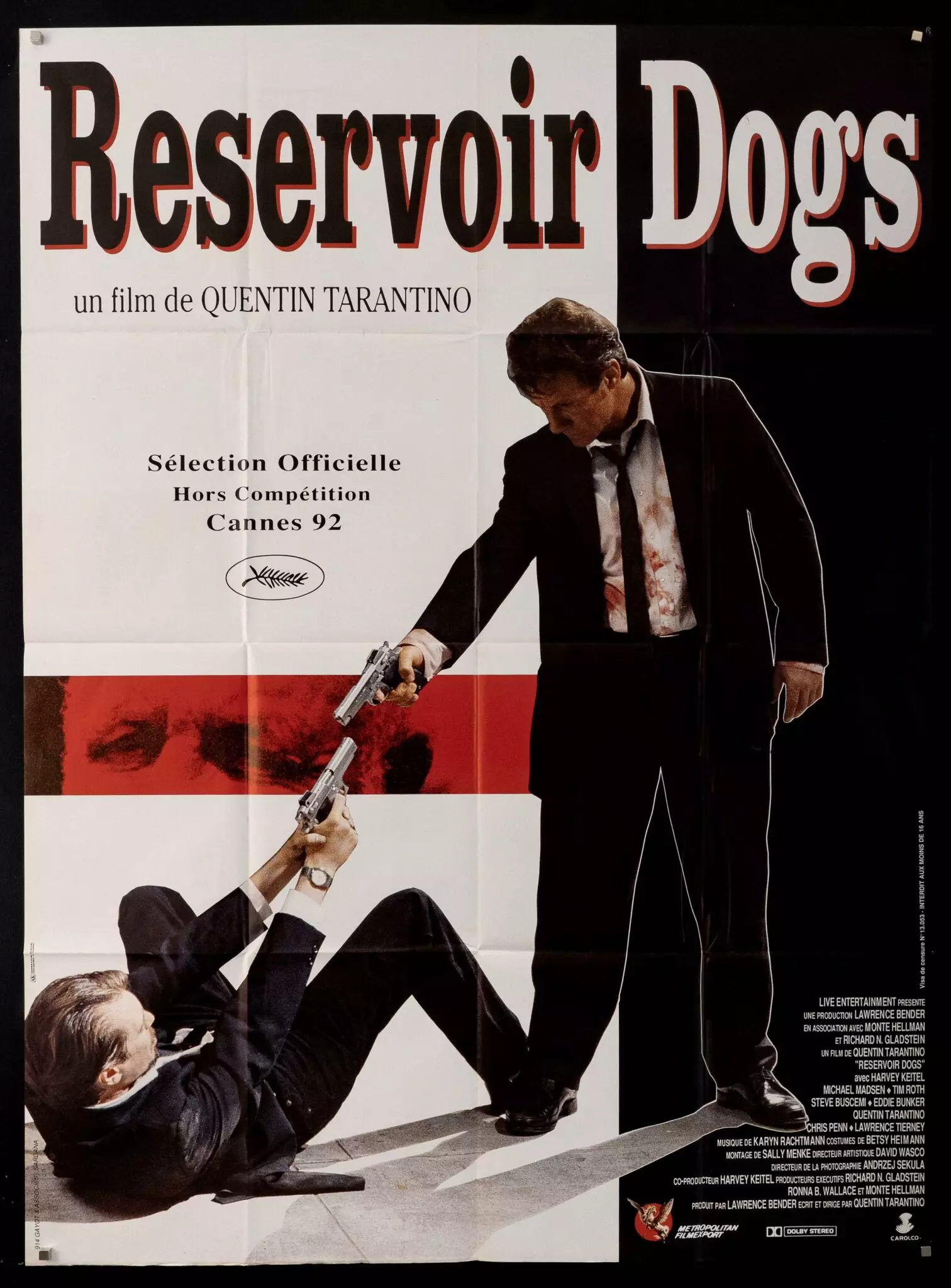
In*Reservoir Dogs*, the tipping scene works in much the same way. Mr Pink refuses to leave a tip; the others react, and each takes a stance. The scene might seem trivial, but it already reveals a lot about the characters: their relationship with the group, their selfishness, their sense of loyalty, and their need to justify themselves or impose their point of view. The heist hasn’t yet taken place on screen, but the tensions are already there.
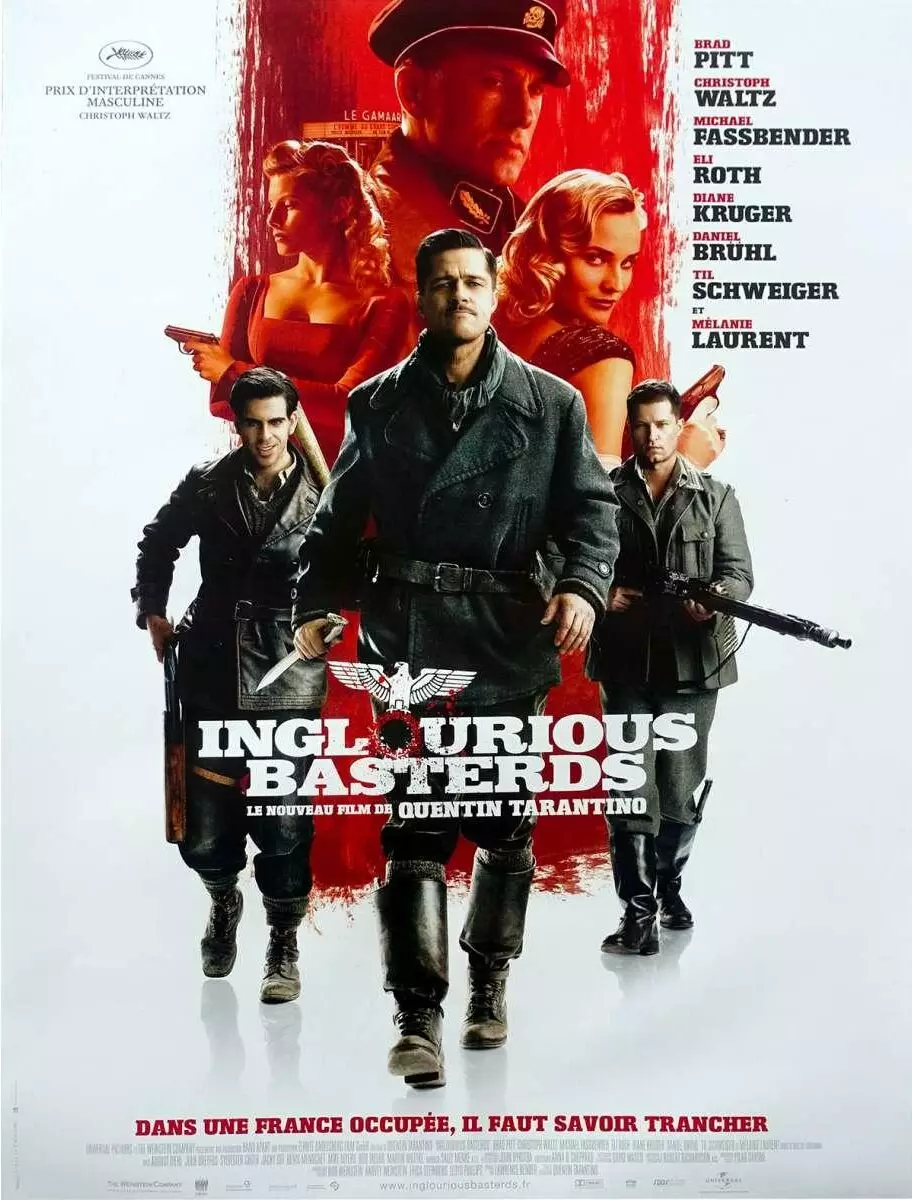
The opening scene of*Inglourious Basterds*takes this principle much further. Hans Landa arrives at a French farm and strikes up a very polite conversation with the farmer, Perrier LaPadite. He speaks calmly, asks for milk, and is courteous. Yet every sentence adds to the tension. The viewer gradually realises that this politeness is a strategy. Landa knows or suspects something, and the dialogue becomes a form of interrogation.
For a screenwriter, these scenes serve as a reminder that dialogue is not merely about conveying information. It can create unease, reveal a character’s personality, shift the viewer’s attention or set the stage for a breakdown. What matters is not only what the characters say, but what they are trying to hide, obtain or provoke.
Tension that builds up before the explosion
Tarantino is often associated with violence. This is understandable, but reductive. What stands out most in his best scenes is not just the moment when the violence erupts. It is everything that precedes it.
In*Inglourious Basterds*, the tavern scene is constructed with precision. The characters chat, drink, play a part, and test their accents and identities. The danger does not stem from a spectacular action, but from a detail that could give someone away. When the British character slips up whilst ordering three drinks, the turning point becomes inevitable. The scene has taken the time to set its trap, which makes the final explosion all the more powerful.
In*Django Unchained*, the dinner at Calvin Candie’s house also builds tension in this way. The scene relies on glances, silences, the seating arrangements around the table, and pretences. Django, Schultz, Candie and Stephen do not always say what they really think. Each is playing a part. The setting is elegant, but social and physical violence is everywhere. It is in the words, in the gestures, in the domination, even before it appears overtly.
The Hateful Eighttakes up this sameapproach within an almost enclosed space. Much of the film takes place in a haberdashery cut off by snow. The characters are trapped together, suspecting one another, lying or biding their time. The setting becomes a space of constant tension. The film demonstrates very effectively that a single location can be enough to create powerful dramatic intensity, provided that the screenplay, direction and the actors’ performances all work in unison.
This approach to building suspense for the audience is directly linked to the direction. The director does not merely film a written scene. He or she orchestrates the perception of danger. They decide when to show a face, how long to let a silence last, which character to place at the centre of attention, what information to reveal to the audience and what information to withhold.
Editing as a form of storytelling
Editing is one of the most important elements of Tarantino’s style. In*Pulp Fiction*, the fragmented narrative is not merely a decorative effect. The film does not follow the chronological order of events. It progresses in blocks, through flashbacks and breaks. This structure alters the way we perceive the characters and situations.
Vincent Vega, for example, dies during the film, only to reappear later because the narrative returns to an earlier point in time. The viewer does not follow a conventional narrative arc. They gradually piece together the connections between the scenes. This choice gives the film a distinctive, almost circular energy, where certain situations resonate differently depending on the order in which they are presented.
In*Kill Bill*, the editing is organised into chapters and shifts in tone. The film shifts from choreographed fight scenes to animated sequences, from a samurai film to a Western, from a revenge story to a live-action manga. This structure allows Tarantino to embrace the mix of influences without attempting to standardise everything. The film does not hide its seams; it transforms them into a narrative principle.
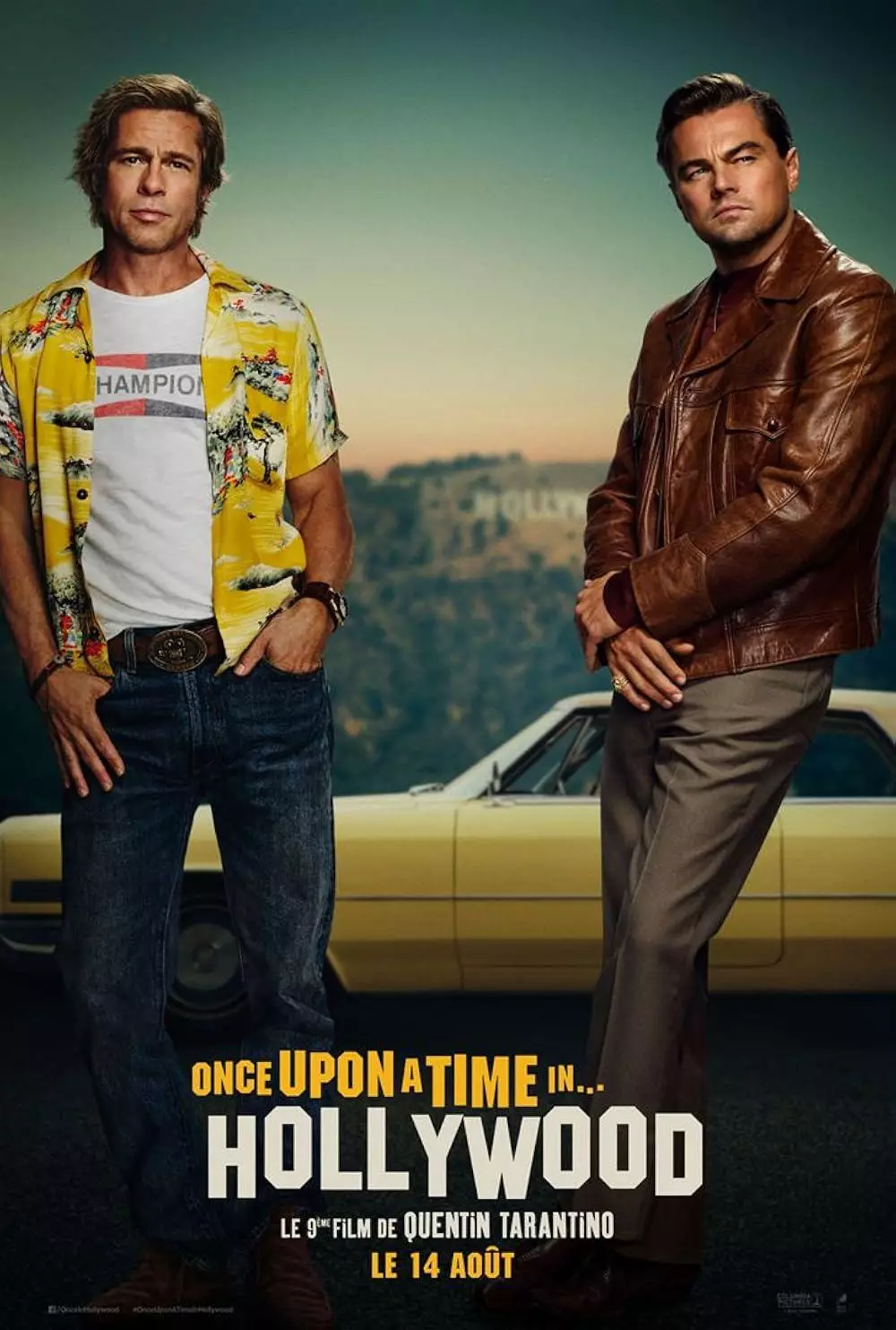
In*Once Upon a Time in Hollywood*, the editing is less fragmented, but it makes extensive use of meandering sequences and moments of anticipation. The film follows Rick Dalton, Cliff Booth and Sharon Tate through moments that are at times very simple: a car journey, a day’s filming, a trip to the cinema. The pace gives the impression that time has stood still, before the narrative converges with – and then abruptly diverges from – the real-life story.
The editing here serves as a reminder that a film is not made solely on set. It is during editing that the pacing, the breaks, the actual duration of a scene and the order in which the viewer receives the information are decided. The editor does not merely assemble images. He gives the film its emotional structure.
Music as a directorial device
Music is one of the most immediate hallmarks of Tarantino’s films. It is not merely there to accompany emotion. It often lends a certain attitude to a scene, sometimes running counter to what the images seem to show.
In*Reservoir Dogs*, the use of ‘Stuck in the Middle with You’ during the torture scene has become iconic. The track is light-hearted, almost cheerful, whilst the scene is brutal. The contrast creates a sense of unease more potent than that of traditional dramatic music. The music does not emphasise the violence; it creates a sense of dissonance.
In*Pulp Fiction*, the opening with “Misirlou” immediately sets the tone. The track gives the film a sense of edginess, a pop feel, and a cinematic vibe that is heavily referenced yet accessible. The soundtrack contributes just as much to the film’s identity as the dialogue or the costumes.
In*Kill Bill*, the musical choices complement the blend of genres. We hear references to Westerns, Asian cinema and revenge films. The music allows the film to shift from one world to another without seeking strict realistic coherence. Tarantino does not always aim for historical or cultural accuracy in the scenes. He is after the cinematic effect.
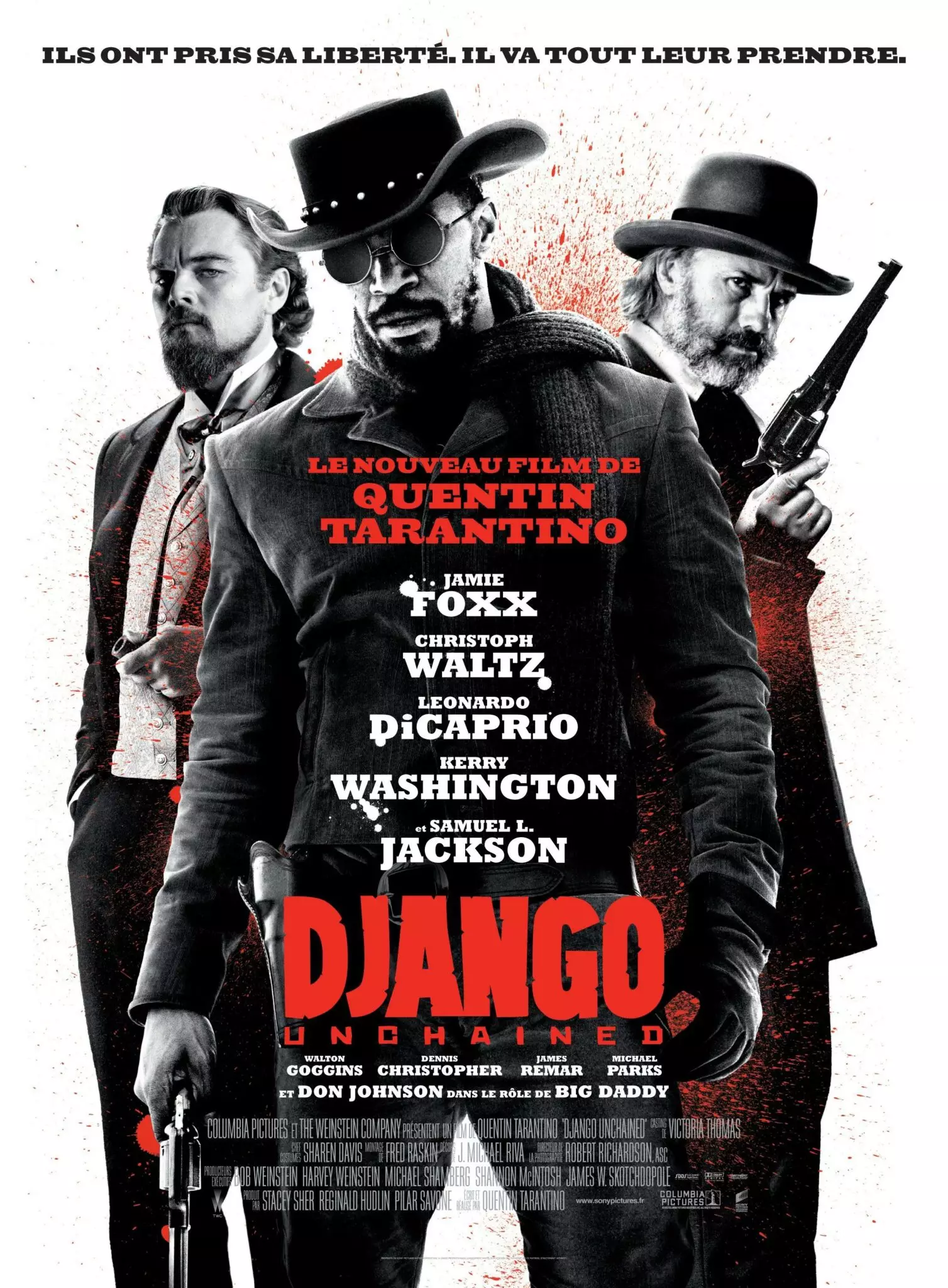
In*Django Unchained*, this choice is even more evident, with tracks that may deliberately seem anachronistic. This approach may divide opinion, but it clearly demonstrates that music is conceived as a narrative tool. It does not simply serve as a backdrop to the images; it alters the way the viewer perceives them.
For those working in sound, this is a very telling example. The same scene can take on a completely different meaning depending on the track chosen, the volume level, the silence that precedes it, or the way the music enters and exits the sequence.
References that become the stuff of cinema
Tarantino is known for his love of cinema. His films draw on spaghetti westerns, film noir, kung fu, blaxploitation, exploitation films, B-movies, American crime thrillers and Japanese cinema. But the appeal isn’t merely in recognising the references. That would quickly become a mere game of spot-the-reference.
What matters is the way these references are transformed. *Kill Bill*does not merely reference samurai or kung-fu films. It blends them with a comic-book aesthetic, a revenge narrative, an iconic heroine and a distinct flair for choreography. The result does not resemble a copy, but rather a hybrid work.
Jackie Brownreveals another facet of this approach. The film engages with blaxploitation, notably through the presence of Pam Grier, but it is much more measured thanPulp FictionorKill Bill. The pace is more melancholic, the characters more weary, the stakes more adult. It is perhaps one of the films in which Tarantino appears least demonstrative, and precisely one of those that best demonstrate that his signature style does not rest solely on excess.
*Death Proof*embraces the stylistic exercise centred on exploitation cinema and car films to a greater extent. The film is at times uneven, but it offers an insight into his taste for popular forms, genres considered minor, B-movie narratives and textural effects. Tarantino draws on these conventions, but reworks them through his own obsessions: dialogue, bodies, menace, and the time that stretches out before the crash.
For a film student, the lesson is not simply to accumulate references. The real question is what to do with them. A reference is only of interest if it serves an intention, a point of view, a scene or a character.
Costumes, sets and props: creating a world that is instantly recognisable
Tarantino’s signature style is also evident in the characters’ silhouettes and the settings. In*Reservoir Dogs*, the black costumes create an instantly recognisable group image. They lend a sense of unity to the characters whilst reinforcing their anonymity. In*Pulp Fiction*, Vincent and Jules’ costumes establish, right from the opening scenes, a sense of criminal elegance that is almost absurd in its normality.
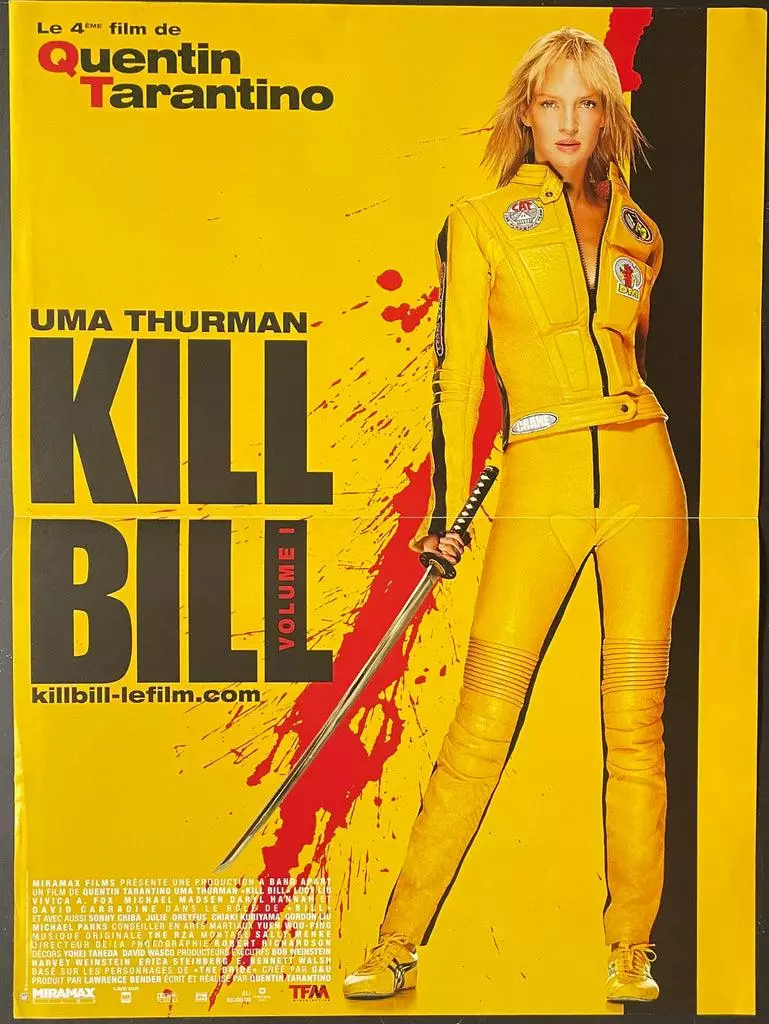
In*Kill Bill*, the yellow jumpsuit worn by the Bride is a clear nod to Bruce Lee, but it also becomes the character’s defining image. The costume conveys the reference, the revenge, the transformation of the body into a weapon, and the almost mythological dimension of the narrative.
In*Django Unchained*, the costumes reflect the main character’s evolution. Django evolves from a freed man, still caught up in the conventions imposed by others, into a figure of vengeance who chooses his own appearance and role. The clothes are not merely decorative; they play a part in shaping the character.
The sets play the same role. The diner in*Pulp Fiction*, the farm in*Inglourious Basterds*, the plantation in*Django Unchained*, the haberdashery in*The Hateful Eight*and the Los Angeles of*Once Upon a Time in Hollywood*are not mere backdrops. They are dramatic spaces. They shape power dynamics, movement, confrontations and tension.
Art direction thus gives the film a concrete identity. It makes the world immediately comprehensible, even when it is stylised. It helps the viewer understand, without explanation, what kind of world they are entering.
Directing actors: finding the right balance
Tarantino’s films are highly scripted, at times almost theatrical. The dialogue is lengthy, the situations are stylised, and the characters can be over-the-top. In this context, directing the actors becomes essential. If the performance is too exaggerated, the scene can descend into caricature. If it is too neutral, the style loses its impact.
Christoph Waltz, in*Inglourious Basterds*, strikes a formidable balance with Hans Landa. The character is polite, cultured and smiling, yet constantly menacing. The performance relies on a very precise control of tone, gaze and rhythm. He doesn’t need to shout to be unsettling.
Samuel L. Jackson, in*Pulp Fiction*, gives Jules a presence that is at once funny, dangerous and almost mystical. The character could simply be brutal, but the actor imbues him with a strange depth, particularly in the way he undergoes a kind of moral revelation as the film progresses.
Uma Thurman, in*Kill Bill*, has to navigate several emotional registers at once. The Bride is a heroine seeking revenge, an iconic figure, a wounded body, a mother, a survivor. The film relies heavily on her ability to shift from pure cinematic imagery to a more intimate emotional expression.
Leonardo DiCaprio, in*Django Unchained*, portrays Calvin Candie as a worldly, violent character, at times ridiculous in his vanity, yet genuinely dangerous. Here again, the performance does not rely on a single note. He must convey the character’s power, ignorance, cruelty and theatricality.
These examples show that directing actors is not an afterthought. It makes a world credible that, on paper, might seem too scripted or too full of references. It gives substance to the style.
A signature style is not a formula
One might think that all it takes to create ‘a Tarantino film’ is to borrow a few elements: long dialogue, vintage music, a fragmented narrative, striking costumes, a few cinephile references and sudden violence. This is precisely where many imitations fall short.
Tarantino’s signature style does not stem from a mere sum of visible ingredients. It rests on the coherence between these elements. The dialogue, editing, music, costumes, sets and direction of the actors all move in the same direction. They create a unique relationship with time, tension, dialogue, film genres and the viewer’s enjoyment.
It is this coherence that makes his films so instantly recognisable. It does not mean that all his films are exactly alike.*Jackie Brown*does not have the same pace as*Kill Bill*.*The Hateful Eight*does not evoke the same feeling as*Once Upon a Time in Hollywood*. But we find the same attention to the duration of scenes, to dialogue as a power dynamic, to reimagined references, to music as a directorial device, and to characters who always seem aware that they belong to a cinematic world.
For aspiring professionals, this is undoubtedly the most useful lesson. A style cannot be decreed. It is built through concrete choices: the placement of the camera, the duration of a shot, the rhythm of a dialogue, the exact moment of a cut, the choice of a piece of music, the texture of a set, the way an actor inhabits the silence.
What Tarantino reveals about the craft of filmmaking
If Tarantino’s films are instantly recognisable within three minutes, it is because every layer of their craftsmanship is so distinct. The screenplay gives the characters an immediately recognisable voice. The direction transforms conversations into scenes of tension. The editing organises the narrative as an experience, not merely as a chronology. The music creates contrasts and distinctive soundscapes. The costumes, sets and props make the characters and locations instantly memorable. The actors lend a human presence to highly stylised figures.
This is where his films provide an excellent starting point for discussing the craft of filmmaking. Even when a film bears a director’s distinct stamp, that stamp is the result of a collective effort. It brings together screenwriting, cinematography, sound, editing, lighting, set design, costumes, props, production, location scouting, acting and post-production.
Recognising a Tarantino film, therefore, is not simply a matter of recognising a famous name in the credits. It is about perceiving a creative process – a way of coordinating different professions around a shared vision. It is also about understanding that a film is never limited to its story. It exists through its form, its rhythm, its choice of perspective, and the way it organises what the viewer sees, hears, anticipates and understands.
For those who want to work in cinema, the question is not about trying to imitate Tarantino. That would probably be the quickest way to produce an artificial result. The most interesting question lies elsewhere: how do you develop a personal vision, precise enough that every choice genuinely serves the film?
Perhaps this is what his best films demonstrate most clearly. A cinematic signature does not emerge simply because a director piles on recognisable effects. It emerges when the screenplay, direction, editing, sound, set design, costumes and the actors’ performances all end up speaking the same language.