Chef opérateur - promotion 2019
Théo Fauger
Théo Fauger: Inheriting and Reinventing the Image
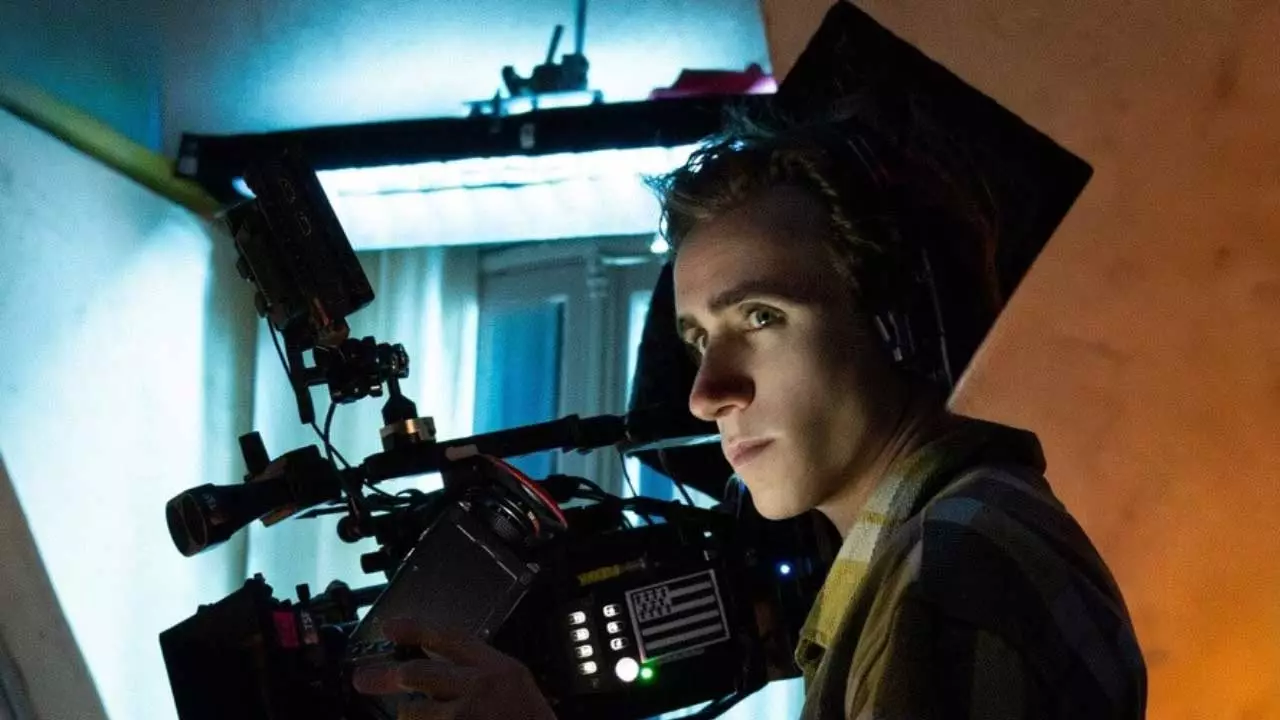
A cinematographer and CinéCréatis alumnus, Théo Fauger has made the creation of images his life’s purpose. Balancing narrative filmmaking, the invention of optical tools, and reflections on the growing role of artificial intelligence, he has forged a distinctive career in an industry he views with both clear-eyed realism and genuine enthusiasm.
Telling Stories, Serving a Vision
What has always driven Théo Fauger is the art of creating images and the way they serve a story. Above all, his role is to understand a director’s vision and translate it as faithfully as possible onto the screen. Today, he primarily works on fiction projects, particularly short films, a format that remains his favorite creative playground.
Feature film opportunities are now beginning to emerge, thanks to directors he has collaborated with for several years who are now backed by established production companies. He acknowledges, however, that securing a first feature is one of the most challenging milestones in a cinematographer’s career.
“Once you’ve crossed that threshold, things become a little more accessible.”
An Inventor Behind the Camera
What truly sets Théo Fauger apart is his development of custom optical tools for filmmaking.
“I designed a mirror-based system that sits in front of the camera. It creates visual effects directly in-camera by overlaying two angles with a transparent, layered effect.”
The first prototype dates back around four years, at a time when the concept was still entirely original.
Protected by a patent granting him exclusive rights to the technology, the device has enabled him to meet leading figures in the film industry and gain access to high-profile productions. For the past year and a half, he has been working alongside an engineer, and just over six months ago he founded a company dedicated to manufacturing the system professionally for distribution through camera rental houses. Pre-orders are nearing completion, and the first production units will soon be manufactured.
He considers this a pivotal stage in the project. The device is also set to be showcased in Los Angeles at Cine Gear, the industry’s leading annual exhibition for filmmaking technology and innovation.
Projects with Big Ambitions
The standout project of the year for Théo Fauger is La Cage, filmed in Nantes in January with director Victor Cesca, another CinéCréatis alumnus. Featuring a carefully selected cast and ambitious visual effects and production design, the film takes place almost entirely inside an elevator built specifically for the production, where a monkey attempts to escape from its cage.
Still in post-production, the film has yet to reveal all its secrets, even to its cinematographer, who prefers to remain cautious. As he points out, a film continues to evolve until the very end of its production and then through its reception by audiences. Nevertheless, he is confident in the final result and hopes it will be both entertaining and widely accessible while showcasing a strong visual identity and thoughtful cinematic direction.
The Turning Point: Les Scintillements
If one project marked a genuine turning point in his career, it was the short film Les Scintillements, produced just two years after graduating from CinéCréatis. It was for this film that he built his very first optical invention, a device that would later become central to much of his professional journey.
The ambitious shoot took place both on the summit of Mont Blanc and in the streets of Paris at night, requiring demanding technical setups for a young cinematographer still at the beginning of his career. The project also received support from France’s National Centre for Cinema (CNC), making the experience even more significant.
An Industry Under Pressure
Having graduated in 2019, Théo Fauger saw his career disrupted almost immediately by the COVID-19 pandemic the following year. While he acknowledges that he lacks the long-term perspective of professionals who have worked in the industry for decades, the conclusion he shares with more experienced colleagues is unmistakable: the film industry is facing a difficult period, shaped by geopolitical tensions, economic uncertainty, and profound market changes.
He observes an industry increasingly driven by financial considerations, where producers are sometimes seen more as investors than as creative partners. At the same time, the workforce continues to grow as filmmaking tools become more accessible and film schools graduate increasing numbers of young professionals each year, all competing in a tightening job market.
The result, in his view, is a paradox: some highly sought-after professionals work continuously, while others struggle to secure contracts. Ironically, his own career has continued to expand despite these challenging conditions.
Artificial Intelligence: Another Tool in the Toolbox
Passionate about technology, Théo Fauger takes a balanced view of artificial intelligence’s growing role in filmmaking. He believes AI primarily threatens occupations that lie somewhere between pure execution and creativity, whereas highly artistic professions are more likely to benefit from it as an additional tool rather than see it as a replacement.
Creating visually impressive images is becoming increasingly accessible, but generating truly original ideas remains, in his opinion, an inherently human craft. Experimentation, making things by hand, and engaging directly with physical materials remain the best ways to discover something genuinely unexpected.
He experienced AI firsthand during the production of La Cage. When the planned prosthetic makeup for the monkey character proved unsuccessful during filming, the team urgently turned to an AI specialist. An actor performed the role on set using a lightweight form of motion capture without dedicated equipment before being digitally transformed into the monkey during post-production.
The solution proved effective but labor-intensive. Achieving convincing eye movements, precise timing, seamless continuity, and realistic integration into live-action footage still presents significant challenges. According to Théo Fauger, these limitations are less about the technology itself than about where investment is currently focused: consumer applications rather than the specific demands of professional filmmaking.
Discipline, Curiosity, and Knowing When to Say No
Asked about the qualities required to succeed in the industry, Théo Fauger places discipline above all else.
Frequently approached by students seeking internships, he has noticed that generic application messages rarely make an impression, unlike those that demonstrate genuine interest in the person being contacted. The same principle applies on set, where attentive, curious professionals who are eager to learn naturally stand out.
He also warns against being too accommodating. While flexibility may seem like an advantage early in a career, constantly accepting difficult working conditions ultimately harms both the individual and the quality of the work.
He prefers collaborating with people who are capable of establishing clear boundaries regarding schedules and working conditions. Although doing so requires confidence, he believes it often distinguishes those who build sustainable careers from those who eventually burn out.
A Market in Transition
Théo Fauger notes that filmmaking technology is becoming increasingly accessible, allowing high-quality results to be achieved at lower costs across many types of productions, including commercials, branded content, and corporate films. The trade-off, however, is often smaller crews and lower technical expectations.
He also highlights the growing influence of YouTube and emerging digital formats. Several CinéCréatis alumni founded Orage Studio, a post-production company that works notably with content creator Squeezie on productions whose budgets sometimes exceed those of traditional advertising campaigns.
Regarding international opportunities, he remains cautious. Apart from working in Morocco, he has had limited experience abroad. However, he believes France continues to offer a strong filmmaking ecosystem—with world-class equipment, studios, and highly skilled crews—making it one of Europe’s most attractive production hubs.
Advice for Future Graduates
If he were advising a student beginning film studies today, Théo Fauger would first ask a simple question: is filmmaking a genuine passion, or simply an appealing alternative to a conventional office job?
The competition, uncertainty, and inevitable setbacks require deep motivation. At the same time, he strongly rejects the idea that passion should be used to justify poor working conditions.
His final advice can be summed up in a few principles he considers universal:
“Be curious. Take an interest in other people. Stay open-minded. Keep learning. Be disciplined. Set high standards for yourself, and know where to draw the line. That’s the balance that matters to me: having genuine ambition without losing yourself in the industry.”