Specialist film cameraman
The framework guarantor
Under the guidance of the director and cinematographer, the cameraman starts and stops the camera, but must also find the best angles and shots.
Here’s what you need to know about their tasks, training and skills, among other information.
Role and missions
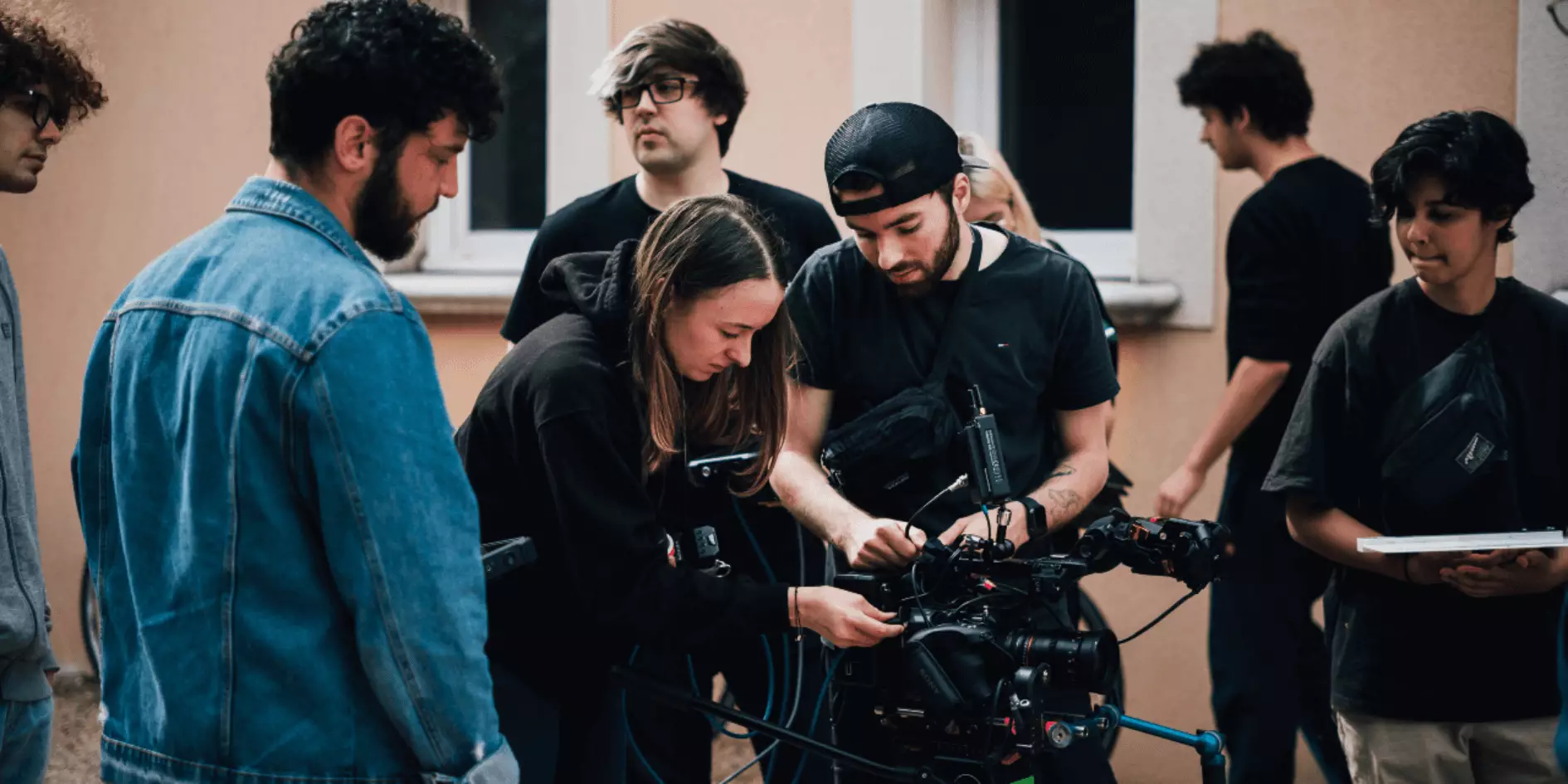
During filming, the film cameraman is responsible for ensuring that the image is in focus, that the camera is mobile and that the best angles are found for the shots. Under the guidance of the director and the director of photography, they must anticipate the actors’ movements.
In charge of framing images, they know how to define the limits of the visual field recorded by the camera. They work in strict compliance with the instructions given by the cinematographer and director.
The director will often tell them what to do before each scene. When shooting, they follow the actors’ movements and are able to vary the shots (American shot, wide shot, etc.) while also ensuring that the image is sharp and stable.
Diplomas and training
To become a specialist film cameraman, it is essential to follow a course of study related to the image professions, such as the audiovisual course at the CinéCréatis school, which lasts 3 years and enables you to specialise in your chosen field in the final year.
Numerous private audiovisual schools offering 2 or 3 year courses after the baccalauréat offer you the chance to become a film cameraman, but beware, they are often very expensive and of uneven quality. It’s better to opt for a solid training programme and to do as many work placements as possible, as these are essential for learning the trade.
Skills and qualities required
A good cameraman specialising in film is humble. As part of a team, they comply with the director’s or cinematographer’s requests without batting an eyelid. They also have good interpersonal skills, so they can put the person being filmed at ease.
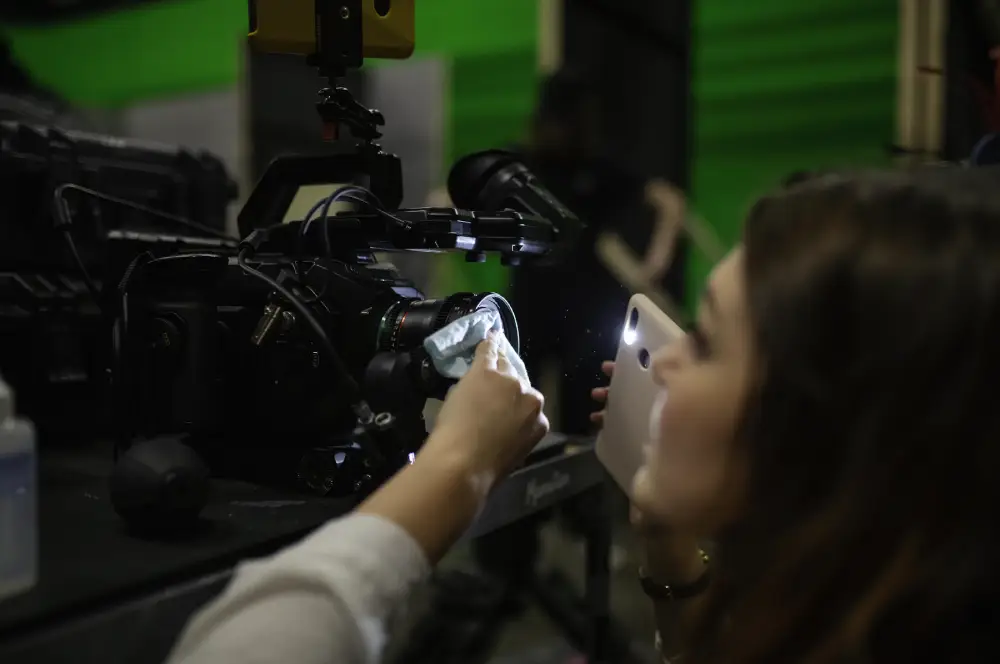
Responsible for the frame, they are familiar with all types of equipment, keep abreast of developments and are rigorous in the processing of images.
During demanding shoots, the cinematographer must have good physical stamina in order to carry the camera on the shoulder (fortunately they are becoming lighter and lighter), sometimes in unstable situations.
Careers and career opportunities
It can be difficult to get started as a film cameraman. That’s why we strongly recommend that you do as many work placements and professional projects as possible. To enter the film industry, you will need to have worked as a first assistant on three feature films.
You shouldn’t be afraid to start at the bottom of your career. Many film cameramen have started their careers as assistant cameramen, just to prove themselves.
Finally, in this business, professionals tend to always call on the same people, preferring to work together as a “family”. This means that an address book is very important, and it is advisable to build one up as early as possible.
Salary expectations
The majority of cinematographers work on a casual basis, and are paid according to the time they work, by the hour, by the day or even by the half-day. As a beginner, you can expect to earn between €1,200 and €1,800 gross per week.