What if, behind every search carried out on the internet, there were a vast human organisation? With “Crawler”, Cian Tschaen offers a vision of the web that is as surprising as it is amusing. Set against the backdrop of a labyrinthine bureaucratic world, the film transforms an everyday action into a real adventure, blending science fiction, visual comedy and references to computer science.
An ordinary quest in an extraordinary world
The story follows Karl Pinkerton, a young office worker who is clearly worn out by his job. One day, his boss, Sally Chandra, entrusts him with an urgent task: to collect a list of documents and deliver them to their destination as quickly as possible. A task that, at first glance, seems perfectly mundane. However, Karl has no idea of the journey that lies ahead.
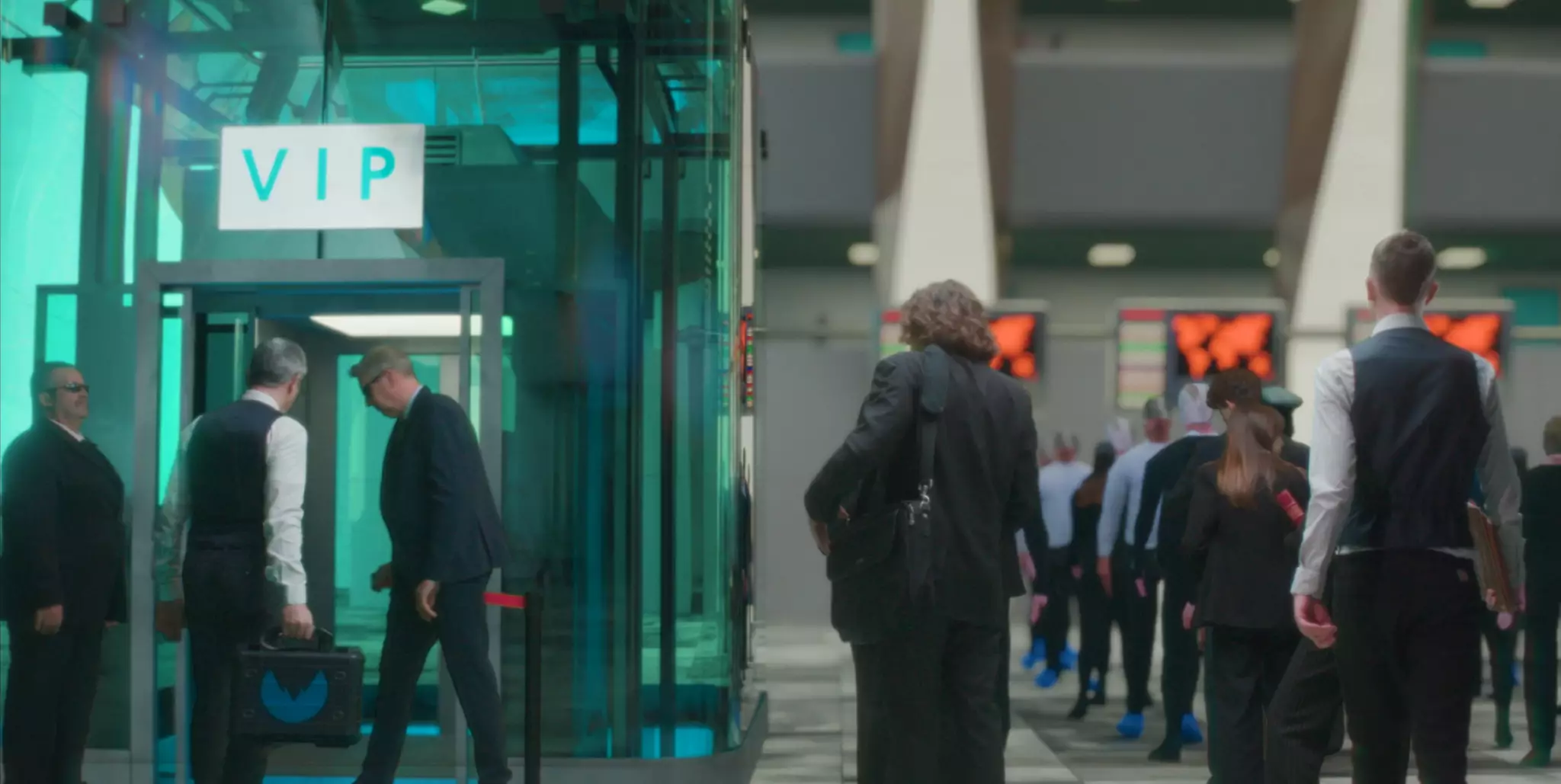
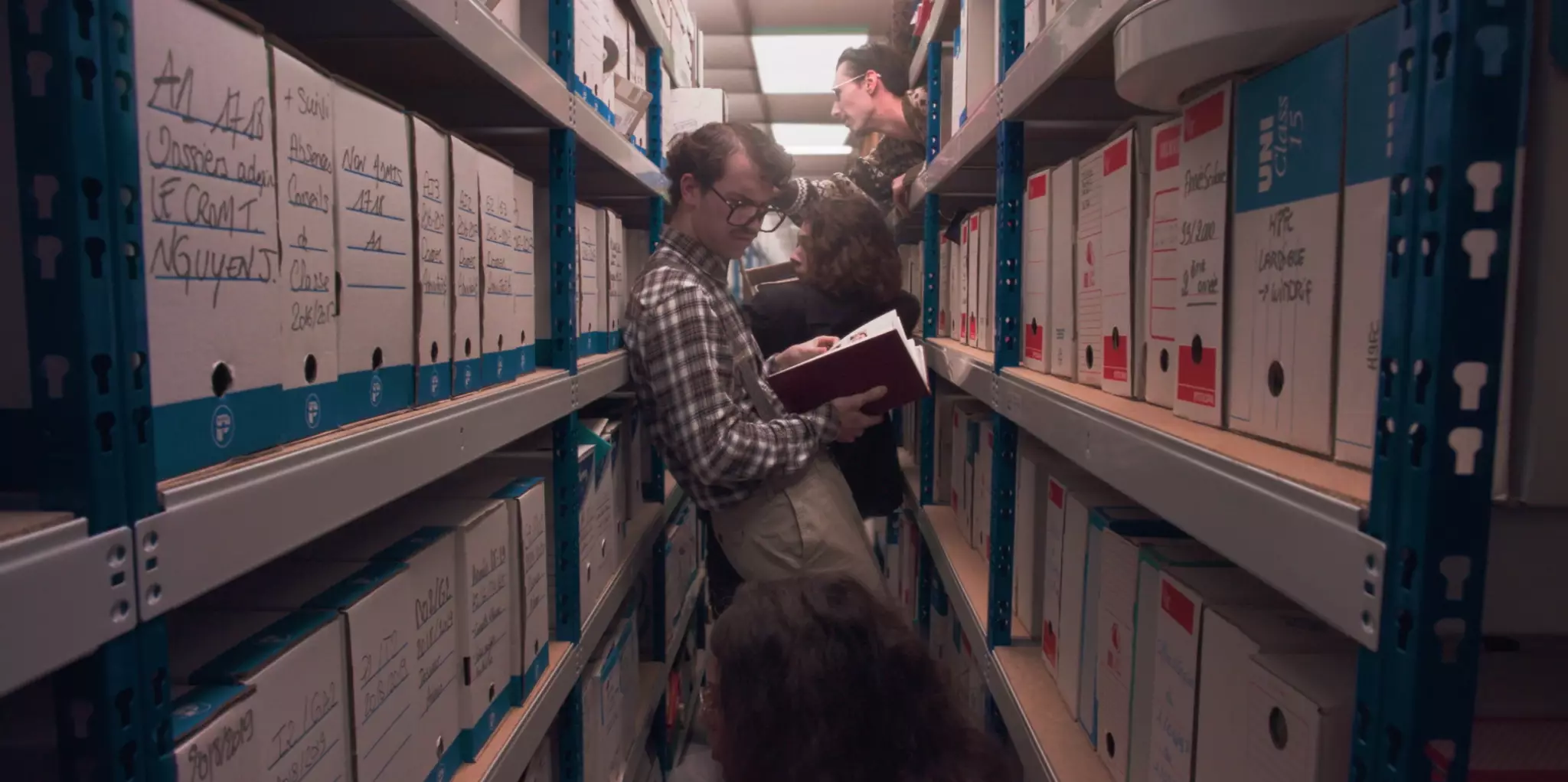
As soon as he leaves Sally’s office, he finds himself in a maze of endless corridors, crowded lobbies and archive libraries that seem to go on forever. Everywhere, staff are bustling about, passing one another and going about their own business. To retrieve each document, Karl must follow directions, obtain authorisation and pass through various checkpoints. The obstacles pile up, the detours multiply and time is running out.
His journey is punctuated by absurd situations: a door numbered 404, a persistent employee who insists he take some biscuits, and security guards tasked with monitoring the passageways. Behind these comical scenes, a broader logic gradually emerges. For this sprawling administration is not merely a building: it represents the workings of the web.
Karl’s journey finally takes on its full meaning when he sends the collected documents by fax. In a transition between this analogue world and a smartphone screen, the viewer sees a teenager eager to check the results of his internet search. The long journey we have just followed actually corresponds to the invisible process behind an online search query.
The Internet: a world to explore
One of the unique aspects of *Crawler* lies in the way it brings to life a system that is usually abstract. Rather than showing computer screens or offering a theoretical explanation, the film chooses to personify the workings of the web. Employees, counters, archives and procedures all become elements of an imaginary world that evokes a gigantic corporation.
This approach allows the film to tackle a technical subject without sacrificing the enjoyment of the story. IT references are woven into the narrative and the sets, sometimes subtly, sometimes through instantly recognisable gags. The 404 error, security measures and even old-fashioned communication tools all contribute to the creation of a world where every detail can reveal a new facet of the internet.
The film also plays on the contrast between the simplicity of the initial request and the complexity of carrying it out. For the teenager, getting an answer should only take a few seconds. For Karl, this same task involves a series of steps, checks and movements. This contrast invites the viewer to look at an action they perform every day in a new light, often without thinking about the mechanisms that make it possible.

A visual style that blends science fiction and bureaucracy
The visual world of *Crawler* plays a key part in this experience. The monumental architecture, repetitive corridors and windowless spaces create the impression of a place that defies familiar reference points. The film blends eras and technologies: typewriters, fax machines and paper documents sit alongside contemporary references to the digital network.
The direction favours geometric compositions, wide shots and a precise arrangement of characters within the space. The crowds bring this environment to life and suggest a constant bustle that extends beyond the frame of the shot. The lighting, sets and visual effects help to create a strange world, though one that is by no means intended to be threatening.
Sound also plays an essential role. Footsteps, distant conversations, announcements and computer sounds all contribute to the impression of a vast, constantly shifting space. Together, these elements accompany the shifts in rhythm and reinforce the feeling of being immersed at the heart of a collective mechanism.
A playful adventure that sparks curiosity
With Crawler, Cian Tschaen seeks to convey knowledge in a different way. The film is not presented as an online course, but as an adventure whose plot twists are gradually revealed. Humour and a sense of the absurd make it possible to tackle complex concepts without weighing down the narrative.
The final revelation even encourages viewers to revisit earlier scenes and spot the clues scattered throughout the sets. Behind the apparent absurdity of certain situations lies a carefully crafted structure, designed to make you want to watch the film again.
Optimistic, offbeat and playful, *Crawler* ultimately reminds us that digital technologies are not magic: they are based on systems, protocols and mechanisms that we can seek to understand. By transforming an internet search into a bureaucratic odyssey, the short film invites us to rediscover a sense of curiosity about tools that have become indispensable. It’s an original way of looking at the web from a different angle, whilst having fun with its astonishing complexity.