Setting up a facility dedicated to the production of films and visual content is a demanding entrepreneurial venture. This process requires specialist management skills, in-depth knowledge of the audiovisual production industry and rigorous organisation to create a high-performance workspace suited to the demands of modern film shoots. It involves setting up a fully-fledged production facility, which requires substantial investment. Building such a project goes far beyond simply purchasing cameras. It demands first-rate spatial, acoustic, electrical and logistical planning to meet the expectations of the technical teams.
Defining your film studio project
Before committing to any investment, it is essential to clarify the company’s commercial positioning. The director must determine whether the business will focus on the production of feature films, television dramas, advertising films, music videos or content for social media. This focus will determine subsequent logistical choices. A set dedicated to advertising will require impeccable cycloramas, whilst a space designed for drama production will prioritise ceiling height and sound insulation.
Market research helps to identify local competition, assess directors’ needs and define a relevant service offering. The project must specify whether the business will focus on renting out bare spaces, or whether it will incorporate technical support services to position itself as a fully-fledged production company. Geographical location is a decisive factor. A balance must be struck between proximity to urban centres – to facilitate crew travel – and the necessary distance to ensure acceptable land costs and the absence of external noise pollution.
Essential equipment for setting up your own film studio
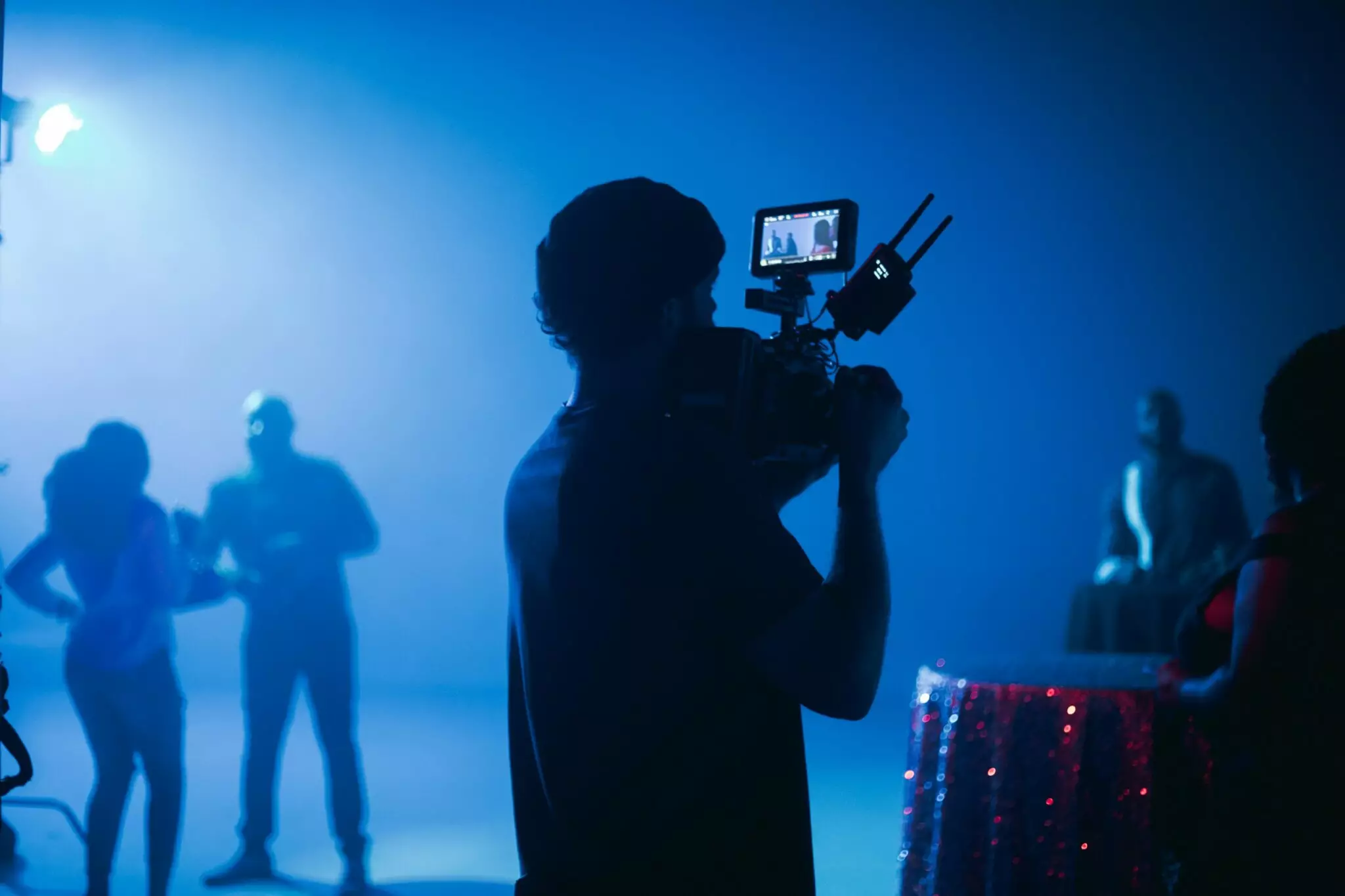
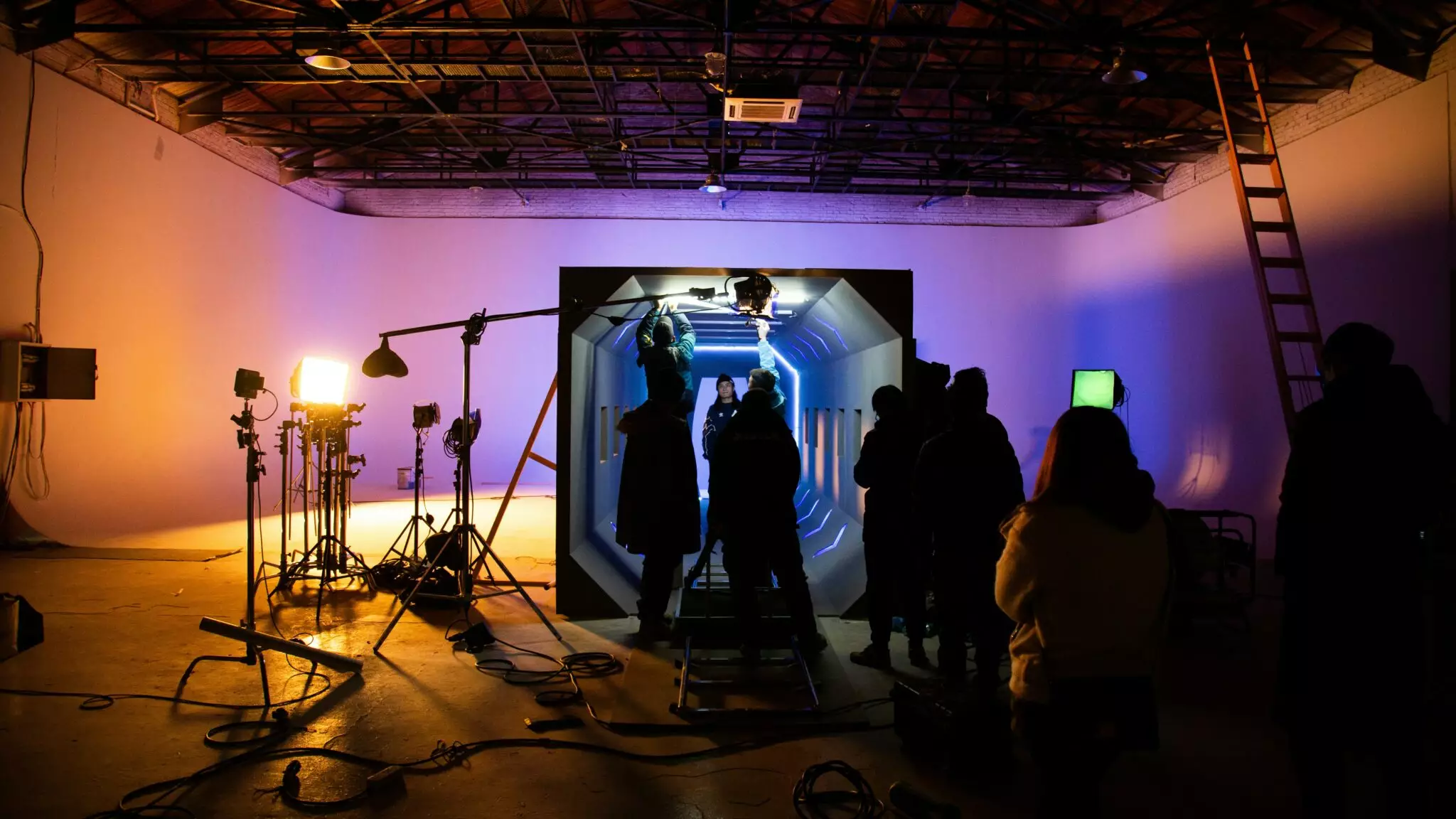
The technical set-up of a film set requires a careful selection of professional equipment. The lighting system is one of the most critical elements. It requires the installation of a motorised technical grid on the ceiling, capable of supporting heavy loads. High-powered, adjustable LED spotlights, colour gels, diffusers and suspended mounting structures must be provided to shape the light according to the requirements of the scene. The electrical supply must be sized accordingly, with a high-capacity three-phase power supply.
The acoustics of the premises are a key factor in the production’s success. Soundproofing of the walls helps to prevent external noise disturbance and ensures sound recording of impeccable clarity. The air-conditioning system must be designed to operate quietly, or be capable of being switched off quickly between takes. The interior fittings include the construction of a cyclorama painted in green with inlaid details or in white.
The acquisition of high-definition cameras, cinema-quality lenses, rigging systems and post-production workstations completes the essential infrastructure. Ancillary spaces must not be overlooked: well-lit make-up rooms, changing rooms, rest areas for extras, offices equipped with ultra-high-speed internet connections, and secure storage areas for sensitive equipment.
What budget should you set aside to set up your own film studio?
The initial investment required to open such a space is substantial. The costs are divided between purchasing or renting large premises with high ceilings, soundproofing work, bringing the electrical systems up to standard, and purchasing the necessary technical equipment. The start-up budget for a medium-sized facility generally ranges from several hundred thousand euros to a few million for a top-of-the-range setup. Fitting out the studio set itself is a major financial outlay if you wish to meet international filming standards.
It is also important to factor in ongoing running costs. These include significant energy consumption associated with lighting systems and air conditioning, specific comprehensive insurance covering valuable equipment, and regular preventive maintenance of technical equipment. Setting aside a solid working capital is essential to get through the first few months of operation before the first customers become regulars. The business model must factor in the studio’s occupancy rate, bearing in mind that an empty set generates fixed costs that cannot be reduced.
What financial support is available for a film studio project?
There are numerous support schemes available to assist with the establishment of a production company or the development of audiovisual infrastructure. At national level, the Centre National du Cinéma et de l’Image Animée (CNC) offers specific grants and targeted funding aimed at modernising France’s technical production facilities and maintaining its competitiveness. Preparing these applications requires absolute administrative rigour and a detailed business plan covering several years.
Local authorities and regional councils also have specific support funds to attract film shoots to their areas and boost local employment. The presence of a modern studio is often seen as a key attraction for regions. Interest-free loans, bank guarantees provided by financial institutions specialising in the cultural industries, and tax credit schemes round out the range of financing solutions available to entrepreneurs.
Mistakes to avoid when setting up a film studio
The main mistake is to underestimate the importance of acoustics and electrical infrastructure in favour of the venue’s aesthetics or the purchase of state-of-the-art cameras. A studio that is perfectly equipped with state-of-the-art camera equipment but suffers from poor sound insulation will inevitably be shunned by professionals, as the cost of corrective audio post-production proves prohibitive. Similarly, an undersized electrical supply will cause unexpected power cuts when powerful light sources are switched on simultaneously.
Another common pitfall lies in the bulk purchase of ultra-modern filming equipment that depreciates very rapidly on the market. The replacement cycle for digital cameras is short. Opting for scalable hire or limiting purchases to durable essential equipment such as heavy machinery, tracks, projector stands, light modifiers and high-quality cabling represents a far more sensible financial strategy for preserving your initial cash flow. It is also essential to anticipate detailed logistical issues: a loading bay that is too narrow or access doors that cannot accommodate large sets will put set designers off.
What legal structure should you choose when setting up an audiovisual production company?
The choice of legal status is crucial for protecting the entrepreneur’s assets, optimising tax arrangements and ensuring flexibility in the company’s financial management. For a project involving several partners and requiring substantial investment, the Simplified Joint-Stock Company (SAS) or the Limited Liability Company (LLC) are the structures most commonly chosen in the cultural and audiovisual industry.
These legal forms allow for the precise structuring of share capital, facilitate the entry of future industrial investors, and limit the founders’ financial liability to the amount of their initial contributions. They provide a suitable tax framework for receiving public funding, managing VAT, and the specific remuneration of copyright royalties relating to the works developed. Corporate governance is another crucial aspect: the chosen legal status must allow for the smooth and compliant management of short-term contracts, particularly the employment of casual workers in the entertainment sector, for whom the rules on registration and social security contributions differ entirely from the general scheme. Consulting a chartered accountant specialising in audiovisual law is absolutely essential.
What training do you need to set up your own film studio?
Running such a business requires a dual set of specialist skills: a strong managerial vision coupled with a thorough technical understanding of the industrial processes involved in film production. It is not enough simply to have business acumen; you must understand the language of cinematographers, the constraints faced by sound engineers and the specifications set by production managers. Undertaking a high-level specialised course is strongly recommended to acquire the versatility that is essential in the field and to establish your credibility amongst industry professionals.
To establish the legitimacy of your project, gain a firm grasp of the challenges involved in audiovisual production and acquire the necessary technical expertise, it is recommended that you undertake acomprehensivefilm and audiovisual training programme. A structured course enables you to master all stages of production, understand the practical expectations of film crews and effectively manage the day-to-day running of your future technical facilities. This type of programme also allows you to build an initial network of collaborators, technicians and creative professionals. A professional network is the true cornerstone of a studio’s commercial success.