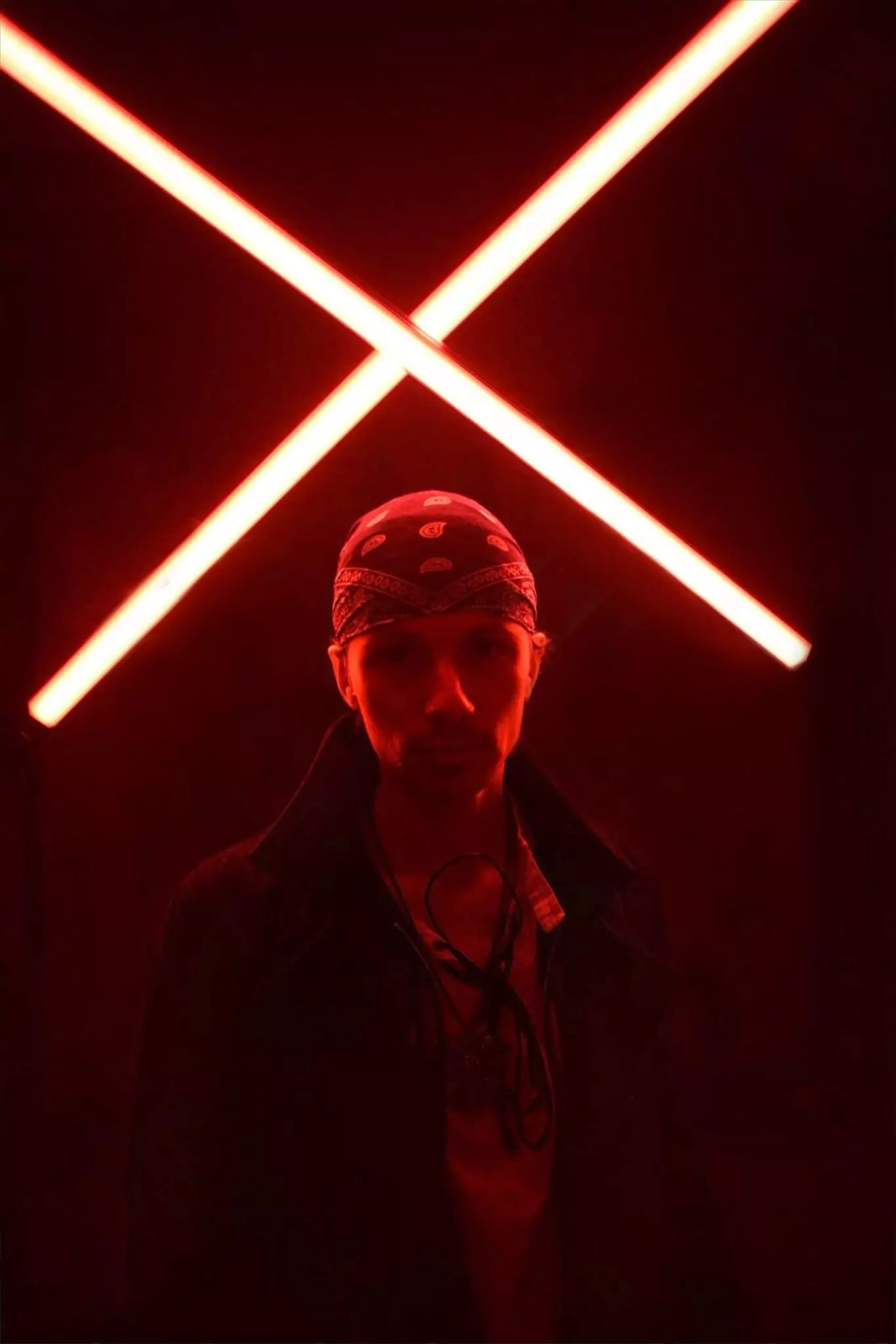
Géraud Mottais, who graduated from CinéCréatis in Nantes in 2020, has since been working in post-production at Digital District. Most recently, he worked on the video clip Fils de joie by Belgian artist Stromae. Here’s a look back at his post-graduation experience and his latest creations.
Can you tell us about your career since completing your training?
When I left school, the industry as a whole was going through a slump due to Covid, so I spent a few months looking for work. I was contacted in December 2020 by a VFX post-producer with whom I’d worked on an internship between my second and third years at Mac Guff studio in Paris. He’d since gone to Digital District and was looking for graphic designers to work on feature films. I started working for them at the beginning of January 2021 and stayed for 3 months. I then worked for a few days at the Digiteyes studio on the film Warsaw 83, an affair of state, and then I went to Mathematic for a few weeks to work on X-Ambassador’s My Own Monster video and an advert. Digital District then called me back to work on the trailer for the video game Humankind, and the projects just kept coming and I’ve been there for almost a year now.
You work at Digital District. Can you tell us a bit about your job and what you do?
I’m a digital compositor. It’s a very specialised job, but at the same time it encompasses a lot of things. We’re at the end of the production chain for a fake shot. Our role is to recover all the elements that have been shot, created digitally in 3d or 2d, and assemble them to make the final image. This can be something very basic, like deleting a microphone that you can see in the image, or relatively complex, like integrating an actor into an entirely digital environment. The aim is to create the most realistic image possible while respecting the director’s choices. To take a telling example, we are responsible for replacing the blue or green backgrounds that can be seen in the making-of sequences. We can also be responsible for developing and proposing the aesthetics of a shot or sequence, so that the image corresponds to what the director wants to tell.
Can you tell us about some of the clips, adverts and films you’ve worked on in the past?
I’ve mainly worked on fiction. In addition to the projects mentioned above, I’ve completed Le loup et le lion, Les bodins, Je te veux moi non plus, La Abuela, Les Folies Fermières, Coupez!, Burning Days, and the Netflix series Drôle. There’s also Les Liaisons Dangereuses 2.0 coming this summer on Netflix, as well as three other films and a historical series for which I don’t yet have any dates.
You worked on Stromae’s latest video, Fils de joie, what was your role? What were the challenges of this clip?
Fils de joie was a bit special because I wasn’t part of the original team. I came on board during the course of the project and only worked on it for a few days. The project was very ambitious in terms of the amount of retouching that had to be done and the number of shots that had to be faked. The video shows Stromae giving a speech in front of a huge crowd and a military-style parade. There were 500 extras on the shoot, which is a lot of people to manage, but it doesn’t look like much in the image. So we added the crowd digitally. There was also this huge statue in the middle of the park, which was added in 3D, and the top of the archway in front of which the stage is located was also changed. A number of technical elements and technicians in the image have also been removed.
I was mainly concerned with integrating the digital crowd into the park, making sure that the 3D people blended in as much as possible with the real extras. Having a certain number of people already in the image gave us a good starting point for knowing what it should look like. We also used reference images of large crowds taken at festivals or presidential inaugurations to match reality as closely as possible. Once we were happy with the result, we had to apply it to all the other shots in the clip and make sure that everything remained consistent. The VFX supervisor took our shots and reworked them on Flame to harmonise everything. I also took care of two shots where the prostitutes lay the coffin inside the statue. These are shots that could be considered typical for compositing, as the statue didn’t exist, so the extras were filmed in the open air and had to be integrated into the 3D statue.
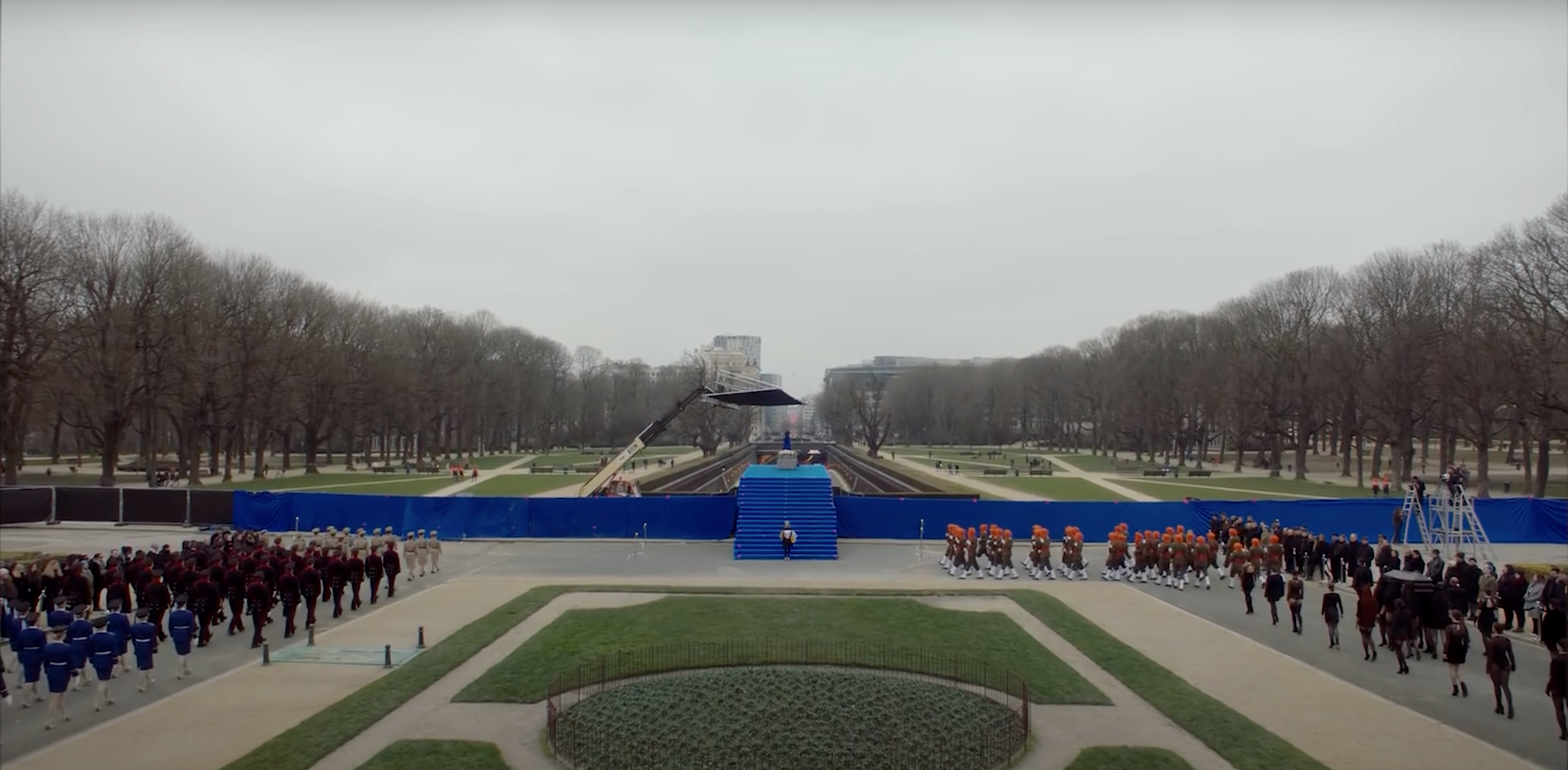
Crowd shot before Géraud’s intervention
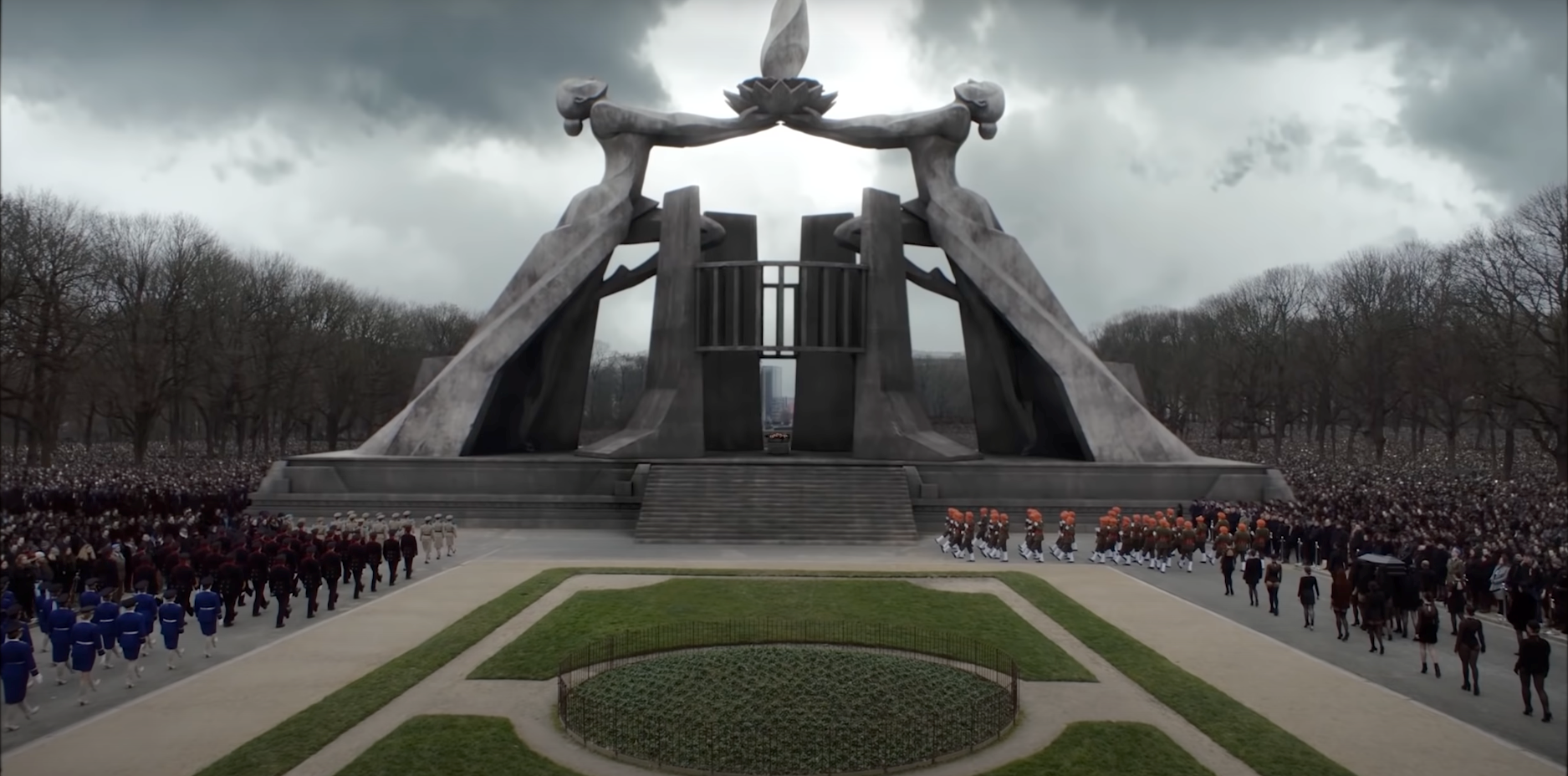
Crowd shot after Géraud’s intervention
What do you like best about your work?
I find that post-production really allows you to delve into the secrets and workings of the audiovisual industry, to understand how the image is created. There’s something very satisfying about starting with the raw shot image and ending up with the image that will be seen by the viewer, with the possibility of going completely beyond the limits of the real world. Compositing also brings with it a whole host of challenges to be solved, and for me this is one of the pillars of the profession, principally the resolution of artistic and technical problems.
Watch the making-of video for the Stromae clip on which Géraud worked: https: //www.youtube.com/watch?v=e80eF804lNg