
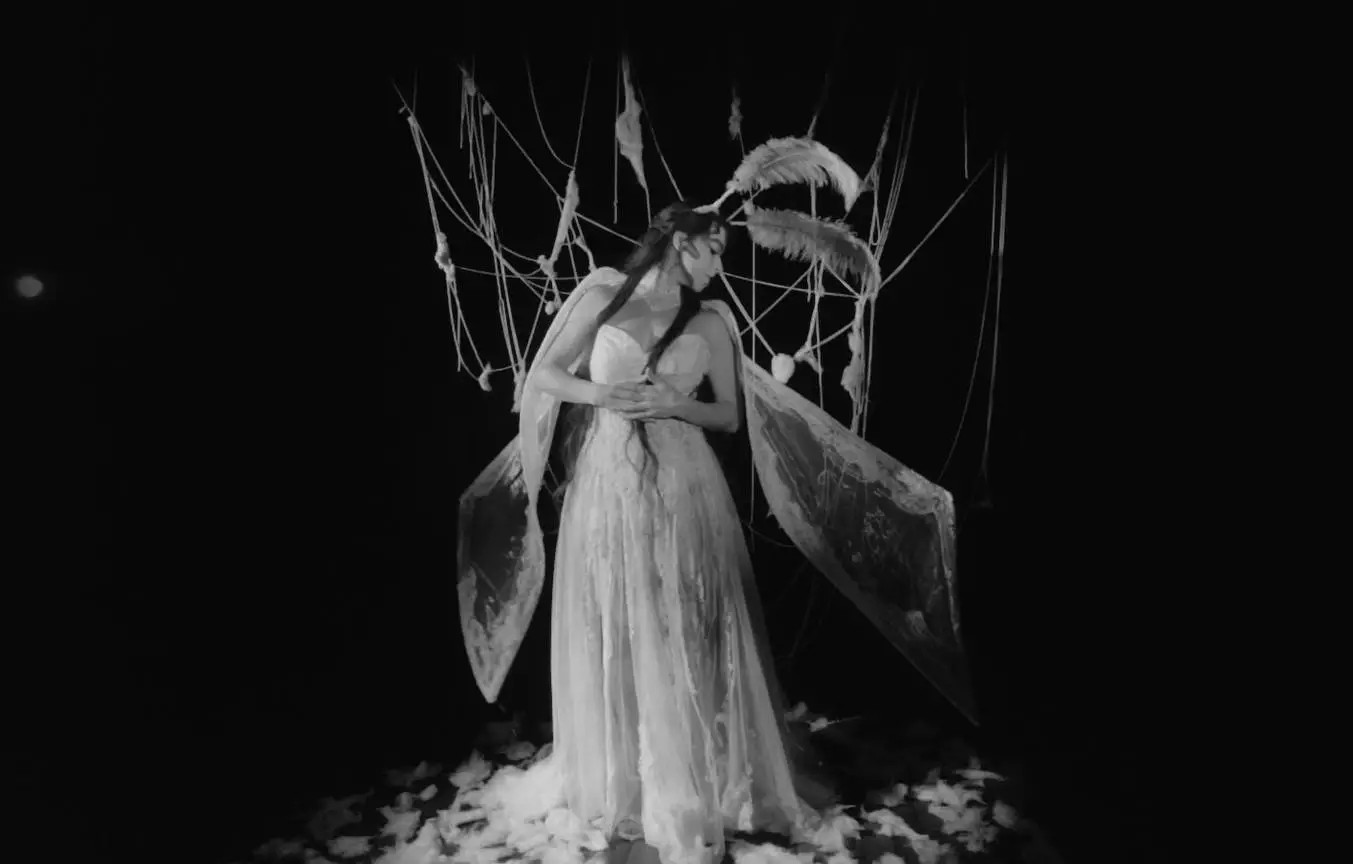
A scenario constructed like a lucid dream
The story follows Mary, a young woman plunged into a lucid dream. Asleep in a huge cocoon on a theatre stage, she goes through a series of nightmarish scenes that reflect back to her the violence of her life.
Each sequence, constructed like a fragment of the unconscious, pushes Mary to relive the pain she is trying to bury. She oscillates between submission and revolt, until she finds the strength to emerge from her cocoon and be reborn with butterfly wings.

Metamorphosis: from trauma to light
The film is permeated by a strong symbolism: that of the silk butterfly, or rather the moth, a nocturnal creature that the director associates with her own trajectory. Unlike the sun butterfly, the moth lives in the shadows, attracted by the slightest glimmer of light it can find. It’s a powerful metaphor for resilience in the dark, for the hidden beauty of shattered beings, and for the inner struggle to reach the light.
Mary is that moth: wounded, haunted, but determined to survive and transform.

A gothic, expressionist and theatrical aesthetic
Marie Viennois claims a visual universe inspired by gothic cinema (Burton, Coppola, Del Toro) and the classics of silent fantasy, such as Nosferatu or Frankenstein. The film is shot in black and white, with high contrasts, on entirely hand-made sets, with a deliberate theatricality, where the costumes and staging tell as much of the story as the images.
The aesthetic is a blend of artifice, papier-mâché, freak show and a form of raw spectacularism reminiscent of Méliès. Mary alternates between playing an immobile, sacrificial Virgin Mary, a glittering 1920s boxer and a gothic figure wrapped in silk.
Every costume, every set, becomes an extension of her psychic state.
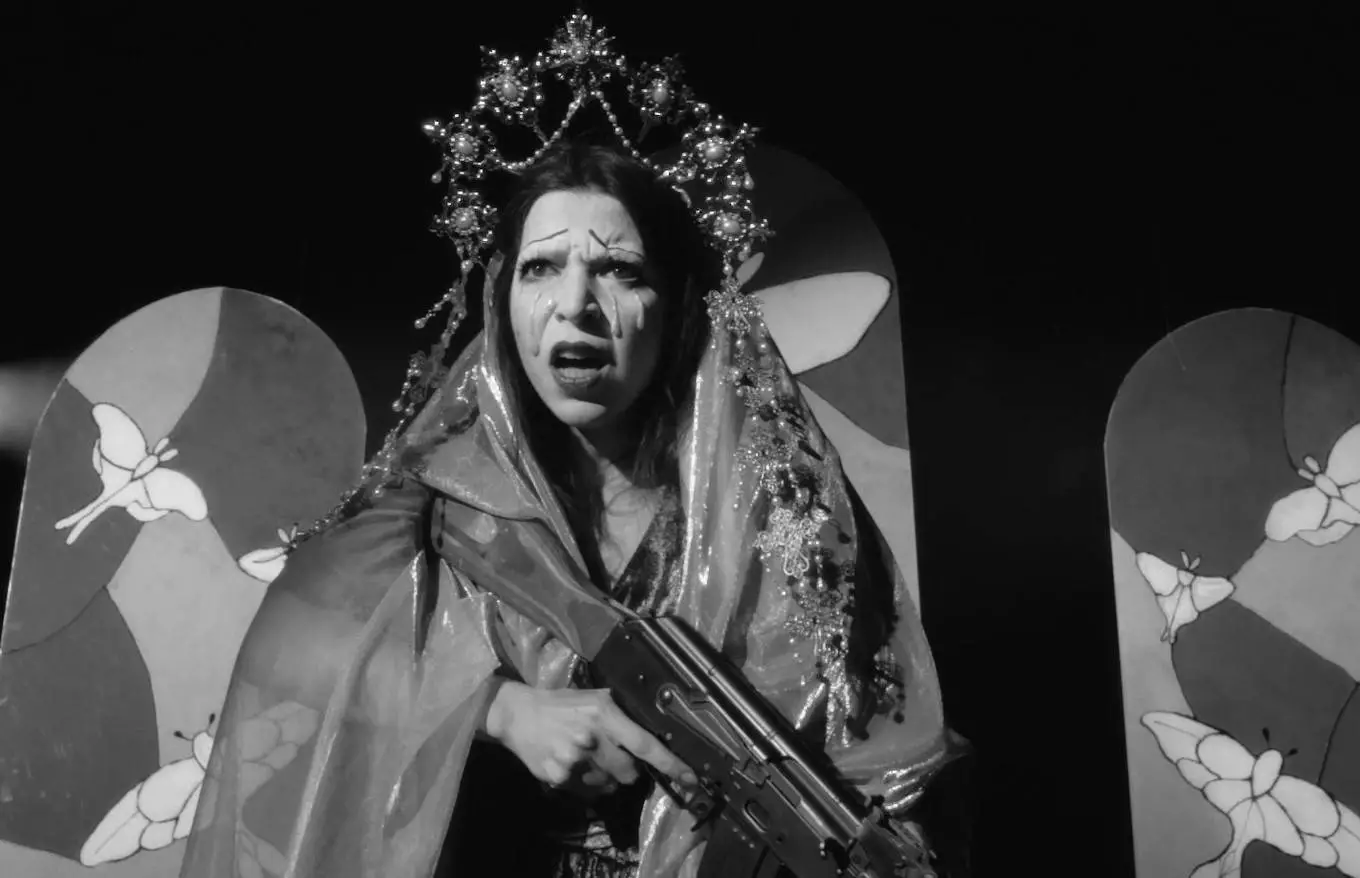
A silent film where bodies speak
In this dialogue-free short, Luciana Crouz delivers an intense physical and emotional performance. Her highly expressive performance oscillates between vulnerability and rage. The film relies entirely on facial expression, exaggerated movements and choreography between Mary and her demons.
This absence of words reinforces the universal and introspective aspect of the story: what Mary is going through could be experienced by anyone bearing their wounds in silence.

An artistic and human challenge
Shot in the Cinécréatis studio over three days, the film required meticulous set construction, demanding cinematography focusing on high-contrast light, essential post-production work and a stop-motion interpolation of a handmade butterfly, a deliberate nod to traditional cinema.
The film is fuelled by the intimate experience of Marie Viennois, becoming an outlet, an artistic therapy, and a self-portrait distorted by the prism of dreams.
The emotion of the project is amplified by the story of its production: the tragic death of Léna, the film’s set designer and a close friend of the director. The team decided to continue filming in her honour. Le Papillon de Soi is dedicated to her, a gesture that gives the film an even more poignant dimension.