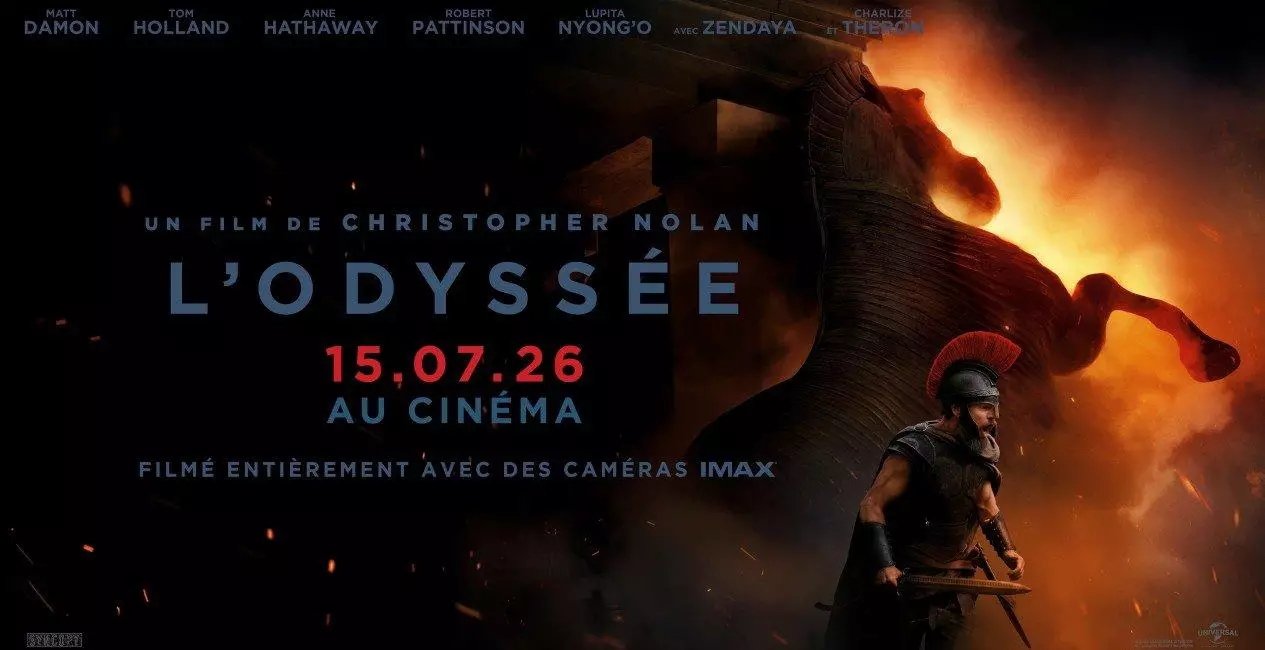
Christopher Nolan’s *Odyssey*: when an ancient myth meets cinema’s most ambitious technology
Christopher Nolan’s Odyssey has been showing in cinemas since 15 July. Eagerly awaited by film lovers worldwide, the new film from the directorof *Interstellar*, *Dunkirk* and *Oppenheimer* reimagines one of the greatest tales of ancient literature through spectacular cinematography and innovative technical choices.
Adapted from Homer’s famous epic, *The Odyssey* recounts the long journey of Odysseus, determined to return to Ithaca after the Trojan War. But beyond this mythological adventure, Christopher Nolan has created a work that also pushes the boundaries of contemporary cinema. The first feature film shot entirely on IMAX film cameras, the film combines technological innovation with fidelity to a story dating back nearly 3,000 years.
A look behind the scenes at an extraordinary project, where every technical feat is designed to serve one of the greatest stories ever told.
A 3,000-year-old tale that continues to inspire cinema
For nearly three millennia, *The Odyssey* has stood the test of time without losing any of its power. This seminal tale by Homer, which recounts Odysseus’s long journey home to Ithaca after the Trojan War, continues to inspire writers, artists and filmmakers.
Long before blockbusters and major Hollywood franchises, *The Odyssey* had already laid the foundations for the modern adventure story. A hero confronted by fantastical creatures, a series of trials, storms, capricious gods and a single goal: to return home. In Odysseus, Homer created a complex character whose journey is as much an inner one as it is a geographical one.
A profoundly human myth
Whilst the Cyclopes, the Sirens and Circe have left their mark on the collective imagination, *The Odyssey* is, above all, a universal story. Behind the mythological creatures lie themes that span the centuries: absence, temptation, the quest for identity, loyalty and the desire to find one’s place in the world.
It is precisely this modernity that interests Christopher Nolan. His ambition is not merely to retell the adventures of Odysseus, but to make the audience feel the full emotional depth of the story, without ever sacrificing its spectacular nature.
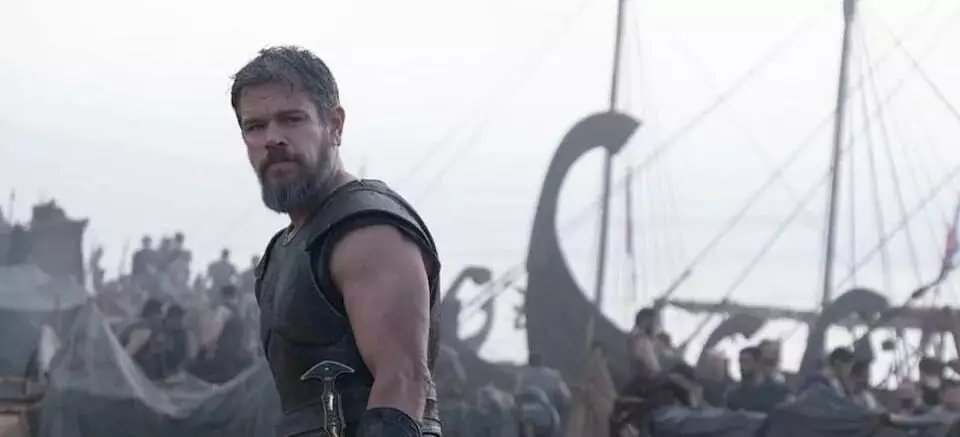
Christopher Nolan’s daring gamble
Adapting one of the greatest works of Western literature is a huge challenge. For the director, the aim is clear: to transform this ancient poem into a truly immersive experience.
True to his vision of cinema, Christopher Nolan relies on practical effects and spectacular staging rather than over-reliance on computer-generated imagery. As in his previous films, technology is not a showcase of technical prowess, but a tool in the service of the story.
A groundbreaking shoot on IMAX film
To bring this ambition to life, *The Odyssey* becomes the first feature film shot entirely with IMAX film cameras.
Each frame is recorded on 65 mm film, the surface area of which is nearly ten times that of the traditional 35 mm format. This process offers exceptional image quality, remarkable depth of field and a level of detail rarely achieved in cinema.
At a time when the majority of productions use digital cameras, this choice demonstrates Christopher Nolan’s commitment to film.
Staggering figures
This artistic choice comes with some impressive constraints.
Each IMAX reel contains around 305 metres of film, but allows for only 2 minutes and 57 seconds of filming. A single reel, including its can, weighs nearly 4.5 kg and costs around 1,600 euros.
On the scale of the entire shoot, the figures become spectacular: over 2 million feet of IMAX film are said to have been used, equivalent to more than 600 kilometres of film. This represents nearly 100 hours of potential footage, which will then be meticulously selected to create the final cut.
Unconventional cameras
Filming in IMAX is about more than just getting a better picture. These cameras are particularly heavy, bulky and noisy, which makes filming dialogue scenes difficult.
For *The Odyssey*, the technical teams developed a major soundproofing system. Once installed in its acoustic housing, the camera rig weighs over 136 kg, requiring specific logistics for every shot.
When technology serves the narrative
Large-format film, new IMAX cameras, acoustic systems, optical systems… All these innovations share a single aim: to immerse the viewer at the heart of Odysseus’s journey.
For Christopher Nolan, technology is never an end in itself. It always supports a directorial vision and seeks to enhance emotion rather than replace it.
With *The Odyssey*, the director demonstrates once again that the oldest stories can still push the boundaries of contemporary cinema. A fascinating encounter between a myth dating back nearly 3,000 years and the most ambitious technologies of the silver screen, reminding us that great stories have never ceased to evolve alongside the means of their time.