A shower, a meal with colleagues, a figure standing facing a wall. Some of the most memorable scenes in horror films begin in almost ordinary situations. Then a gesture, a cut or an apparition turns the film on its head – and our expectations along with it. The danger takes a form we hadn’t anticipated, or strikes at a moment when we thought we could breathe a sigh of relief.
To mark Halloween, we look back at four sequences that have helped to redefine the conventions of the genre: the shower scene in *Psycho*, the climax of *Night of the Living Dead*, the mealin *Alien* and the final images of *The Blair Witch Project*. They do not all scare us in the same way. One shatters our trust in the narrative; another turns rescue into a threat; the others transform the body and the camera into spaces where any sense of control becomes fragile.
Looking at them from a creative perspective helps us understand why they remain so powerful. Their effectiveness stems from the relationship between what the viewer knows, what they think they know, and what they discover too late. Behind the shock, decisions regarding the screenplay, direction, acting, editing and sound shape this experience.
Warning: this article reveals key scenes and plot twists.
Psycho: the main character is no longer safe
A narrative twist set up in advance
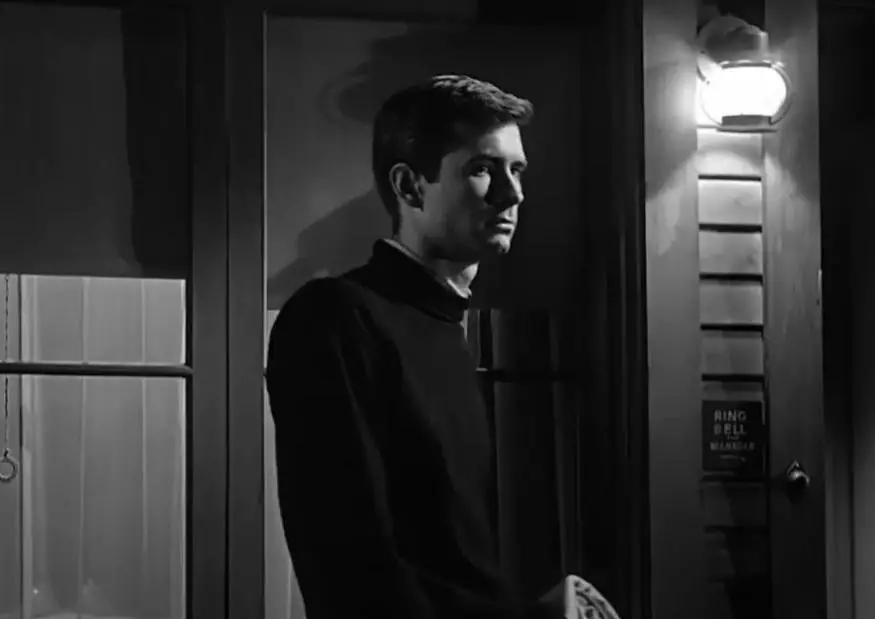
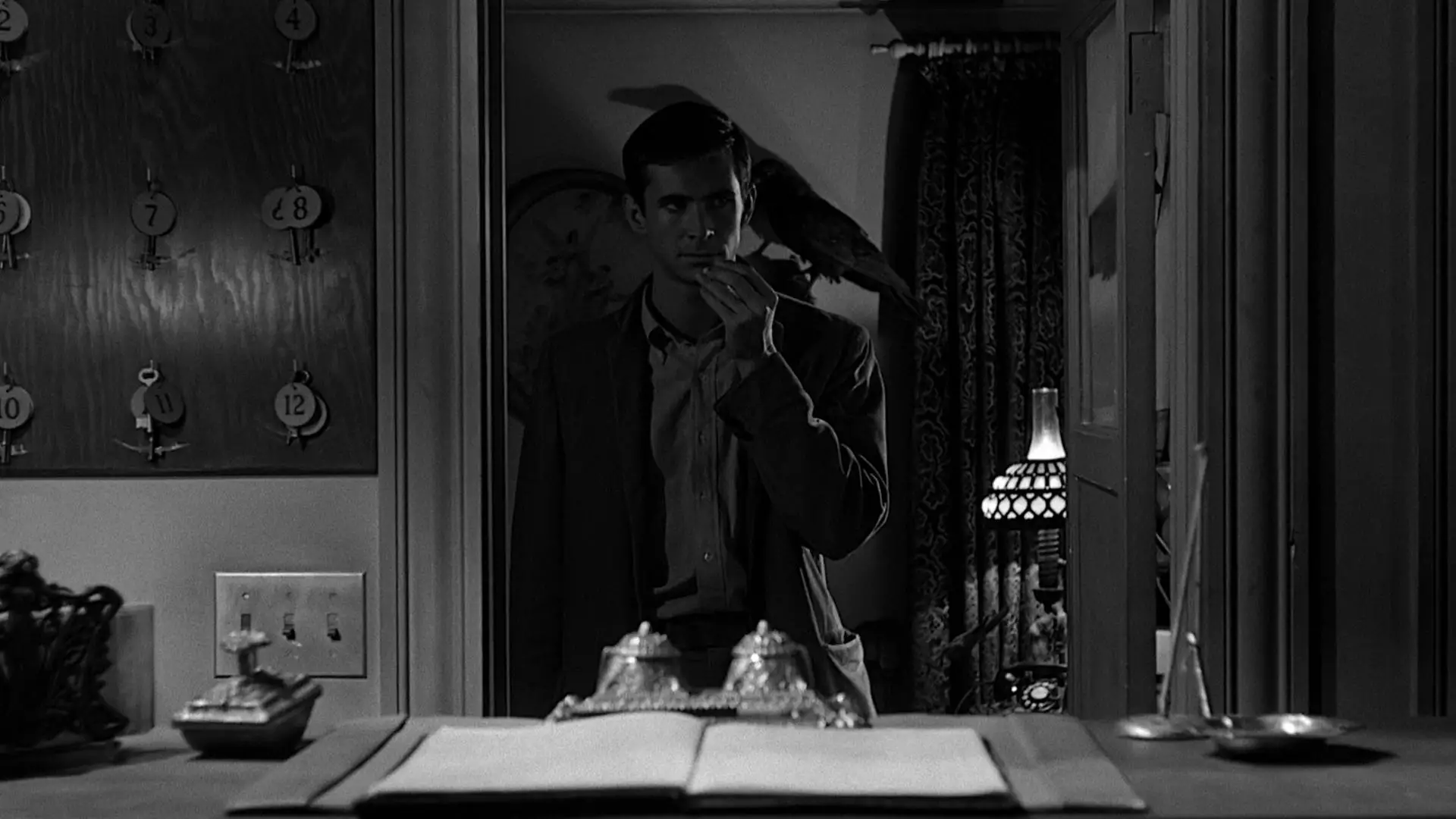
In Psycho (1960), Alfred Hitchcock first draws us into Marion Crane’s escape. We follow her decisions, her anxieties and her arrival at the Bates Motel. Everything seems to suggest that the narrative will continue to revolve around her. Her predicament gives the film a direction, and we look for possible outcomes based on her situation. Even before we begin to question the danger of the motel, we have adopted her point of view.
The shower scene shatters this certainty. The character around whom the film has been built disappears, whilst the story is far from over. The viewer loses their point of reference: if they were mistaken about Marion’s role, what can they still rely on? The effect goes beyond the violence of the attack. It is the way in which we thought we were interpreting the film that has just been shown to be flawed.
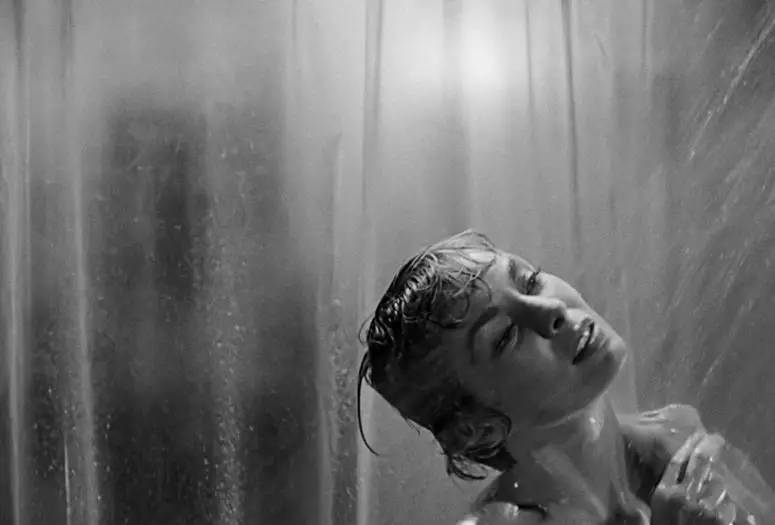
A shower, however, represents a moment of retreat. Marion is alone, separated from the rest of the world by a curtain, engaged in a mundane activity. This intimate space brings us closer to her whilst limiting what she can perceive. The curtain conceals part of the room. The water drowns out the sounds around her. What might seem protective becomes an obstacle to detecting danger. The threat arrives in a place where vigilance seems unnecessary.
Hitchcock reinforces this trap by making the bathroom an immediately recognisable space. There is almost nothing to make out in the setting: a few light-coloured walls, a curtain, a shower. This simplicity frees the viewer’s attention and makes every change visible. The silhouette behind the curtain first appears as a shape, before becoming a threat. The staging thus exploits a fundamental principle of horror: the more controllable the setting appears, the more striking the intrusion of an unexpected element can be. The mundane setting is not merely a contrast to the murder. It serves as a dramatic device, because the audience grasps its boundaries at a glance and immediately recognises when they are breached.
Editing and sound convey the sense of aggression
Violence is then a matter of editing. The knife, the face, the water, the hands and the curtain follow one another in fragments. Our minds connect these images and reconstruct the attack. No single shot contains the full impact of the scene. It is their sequence, with its shifts in scale and abrupt breaks, that makes the whole so brutal. The viewer must understand what is happening whilst being prevented from observing it from a stable vantage point.
Bernard Herrmann’s strings contribute to this assault. Their sharp, incisive quality lends the sequence an added sense of violence. The sound makes the cuts almost physical: we are no longer merely receiving information about an assault; we are subjected to a rhythm. Then the change in tempo, when Marion collapses, gives way to a heavy, drawn-out moment. The scene takes us from a state of saturation to stillness.
What the scene changes for the viewer
This passage also shows just how much the impact depends on what has gone before. Presented on its own, the sequence remains striking. In the film, however, it carries with it a story we were already following. The screenplay therefore sets the stage for part of the effect achieved by the editing. We have invested our attention in a character, envisaged their future, and then that future is taken away from us.
For writers and directors, the lesson concerns implicit expectations. A character who has been followed at length seems to enjoy narrative protection, even though no one has promised it. Hitchcock exploits this trust only to shatter it. After the shower scene, the audience can no longer rely so readily on a protagonist’s apparent standing. The uncertainty extends to the rest of the narrative, beyond this single scene.
Night of the Living Dead: Help can become a threat
A promise of safety swiftly shattered
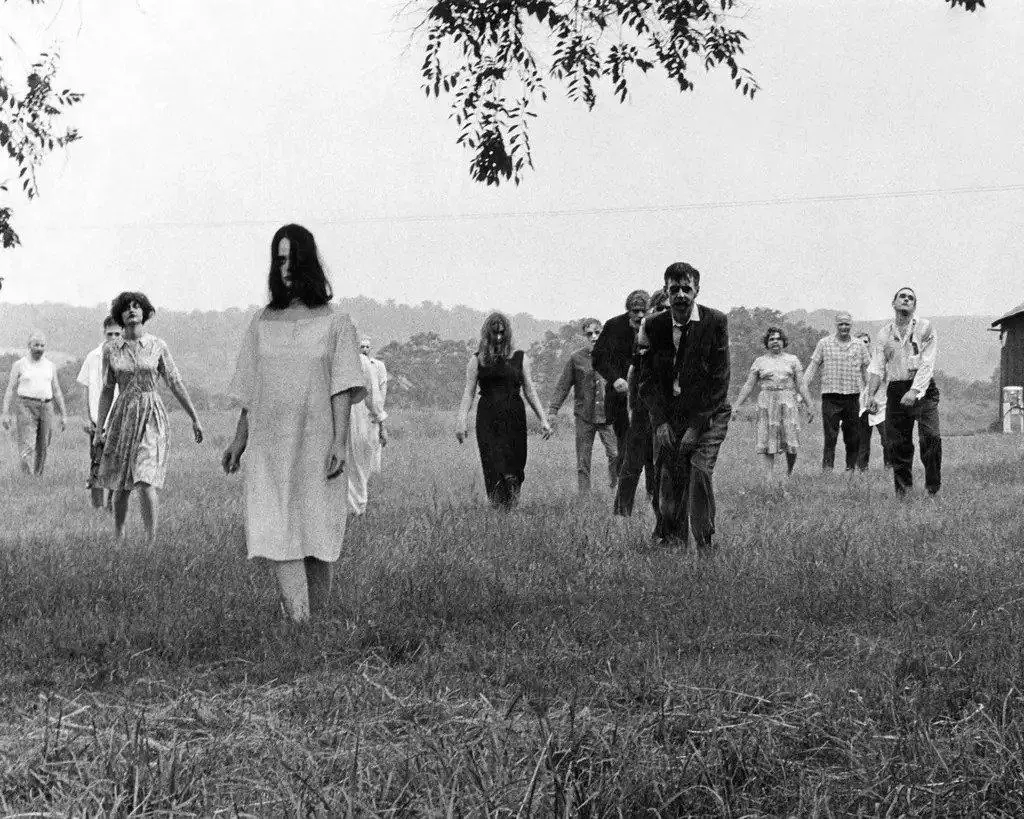
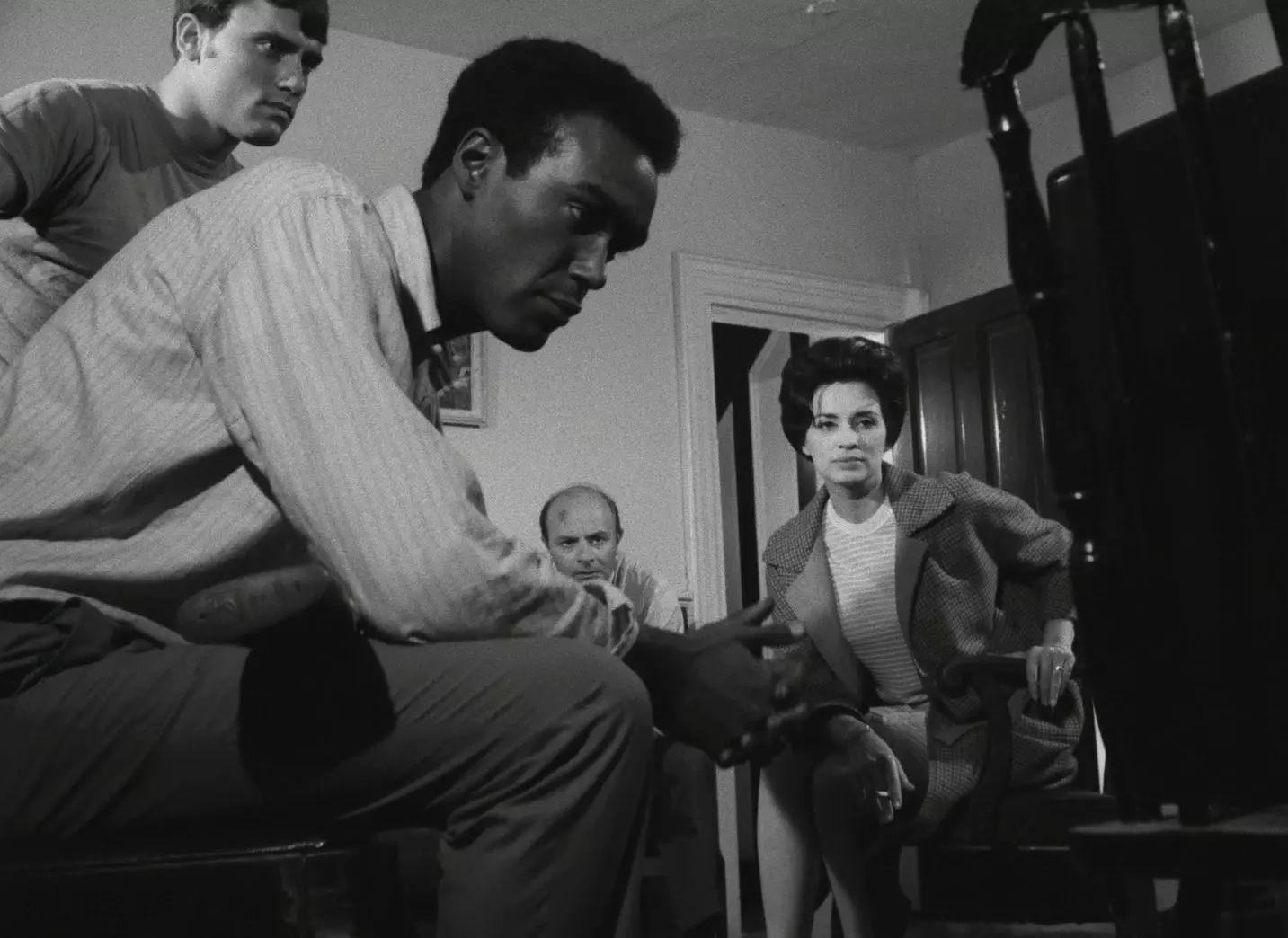
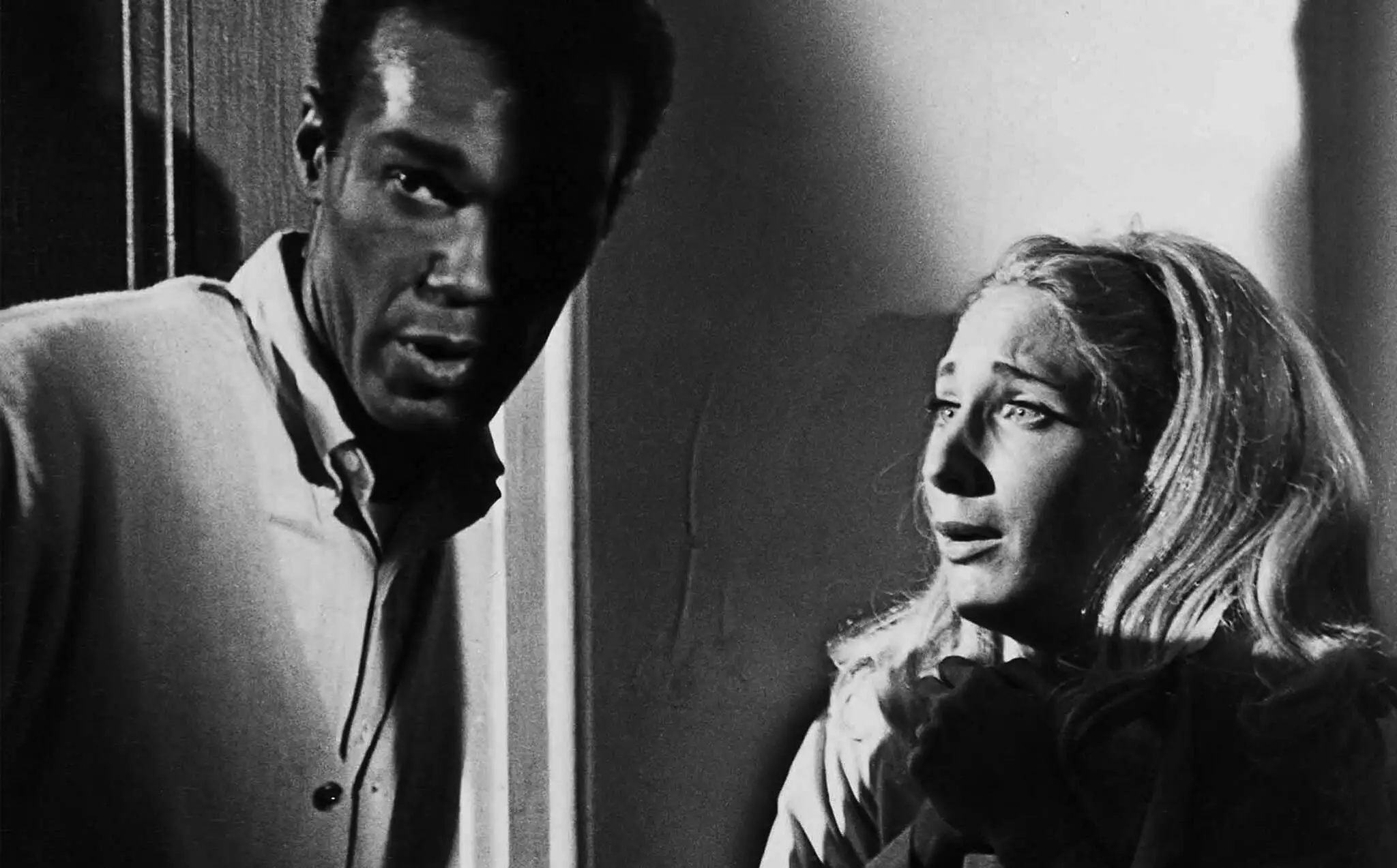
In Night of the Living Dead (1968), George A. Romero traps his characters inside a besieged farmhouse. The living dead are closing in, but internal disagreements also complicate their chances of survival. Where can they take shelter? Who decides? Can they act together? The external danger gradually reveals the group’s difficulties in formulating a united response. The house is a fragile refuge, riven by fear and conflict.
After the night, Ben has survived. Armed men are patrolling the surrounding area, whilst daylight brings better visibility. The viewer might see this as the promise of a return to order. The situation seems to be becoming comprehensible once more: the living are taking action, the threat has been identified, and an operation is being organised. The film offers a glimpse of a way out just as we have learnt how difficult survival really is.
But Ben is shot dead by one of these men, mistaken for an undead creature. The arrival of the living brings him no salvation. The violence is swift, with no build-up to a confrontation that would allow the hero to defend himself or prove his identity. The narrative shifts abruptly from survival to a death inflicted from outside. The man we know becomes, to those who see him from a distance, a figure to be eliminated.
This difference in perception is what gives the sequence its power. We know who Ben is and what he has just been through. The armed men do not share this knowledge. The film thus contrasts our closeness to an individual with the superficial view taken of him. His death is all the more unbearable because the viewer possesses the information that could have prevented it, yet has no way of conveying it.
The framing here takes on a moral significance without artificially emphasising its message. Ben is seen from a distance, reduced to a silhouette in a window. For the shooter, this appearance is enough to make a decision. For us, it is insufficient, because the film has given us access to his face, his gestures and his choices throughout the night. The drama stems from this gap between two ways of seeing. A scene can thus evoke horror without introducing a new monster: it places the audience in a position where they understand the mistake, gauge its consequences and remain powerless to intervene.
Still images prolong the violence
The dénouement shifts the source of fear. It no longer comes solely from the creatures outside the house, but also from the humans supposed to restore safety. Daylight does not correct the mistakes, and an efficient organisation can inflict indiscriminate violence. The death of this Black hero also carries political weight. It allows the scene to be interpreted through the lens of power dynamics and dehumanisation, without reducing the film to a single explanation.
The still images that accompany the ending prolong this unease. They lend the treatment of the body a starkness distinct from that of an action scene. The viewer is forced to witness what comes after death, when the protagonist is no longer regarded as a person. This continuity matters: cutting immediately after the shot would have created a shock; lingering on its consequences instils a different kind of horror, less about the initial jolt and more about the way a human being is erased.
Romero did not invent the tragic ending. His film, however, helped to transform the figure of the undead and to turn the survival narrative into a vehicle for social critique. This final sequence brings both dimensions together. For a filmmaker, it serves as a reminder that an ending can alter the meaning of what has gone before. The question is no longer simply who escapes the monsters, but what value this survival holds in the world that awaits the characters.
Alien: the threat was already inside
The false sense of relief during the meal
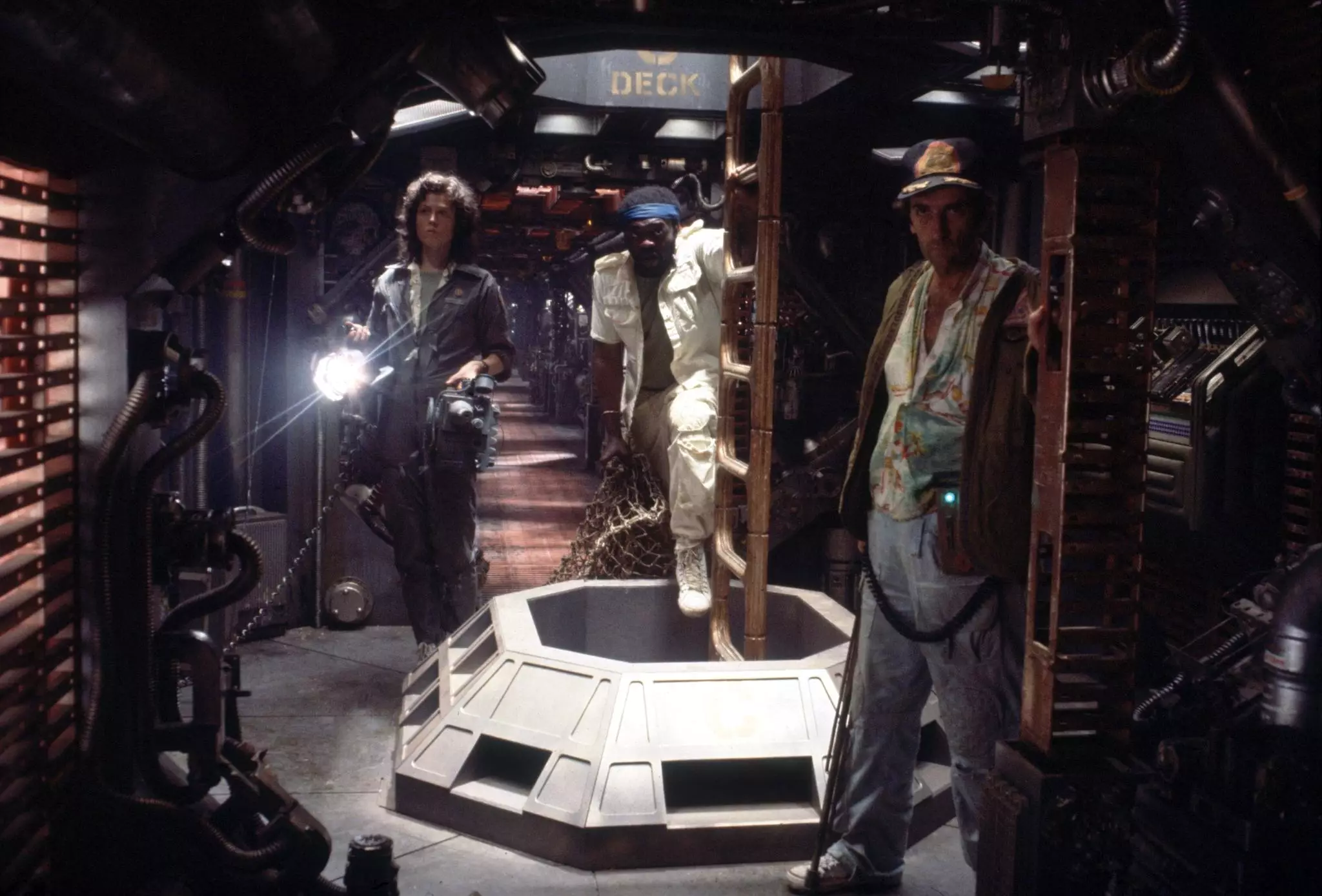
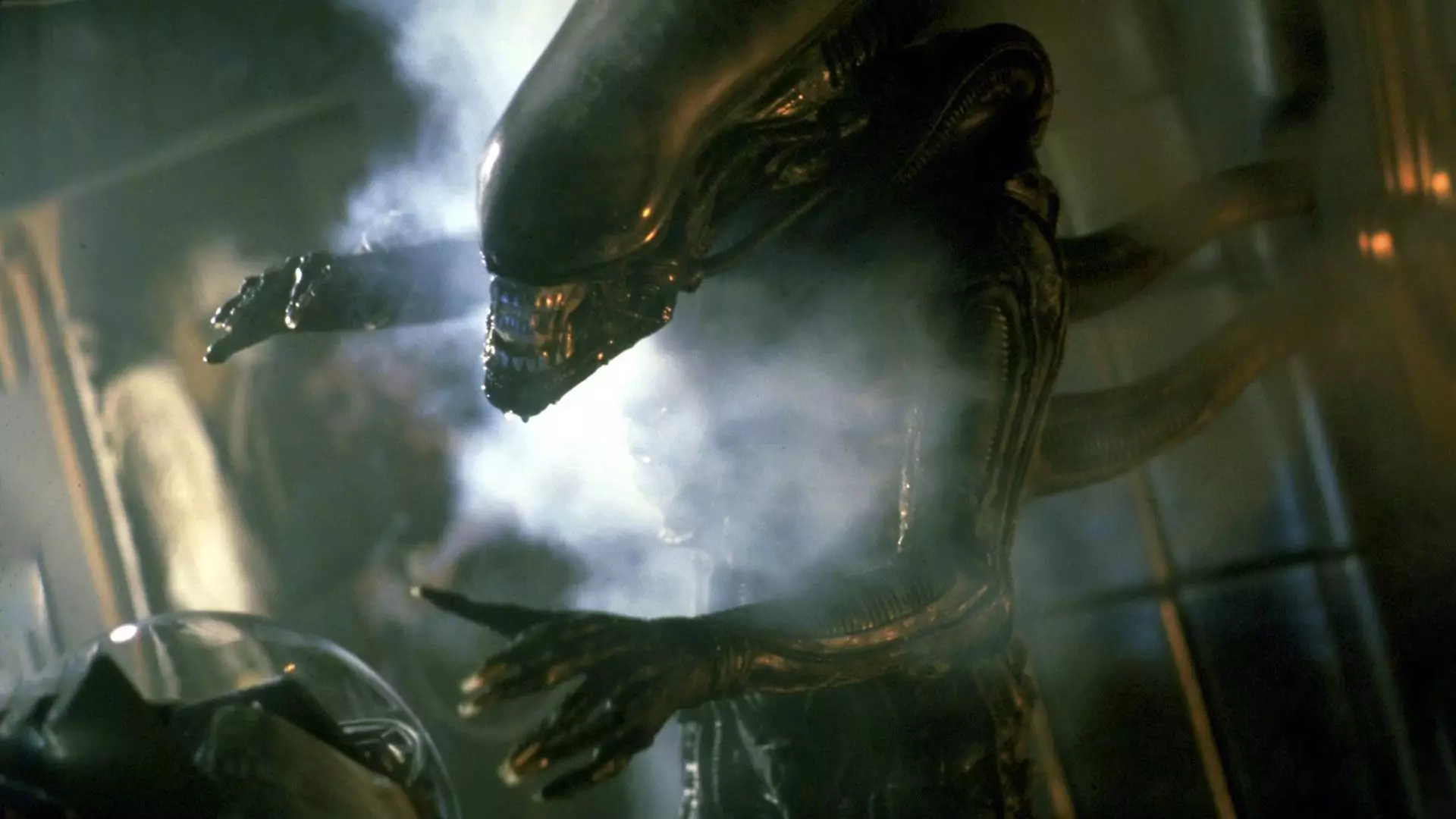
In Ridley Scott’s*Alien* (1979), Kane appears to have recovered from his encounter with an unknown creature. The crew of the *Nostromo* share a meal. Conversation resumes, and bodies relax. The scene provides a brief respite in an environment where danger has already been encountered. Seeing Kane sitting amongst the others encourages us to believe that the disturbing episode is a thing of the past.
This ordinary moment plays a decisive role. The characters are not engaged in an exploration, a chase or a rescue mission. They are eating together. The table brings the group together in a single space and presents the viewer with a situation that is easy to interpret. We can observe everyday behaviour rather than immediately searching for a threat in every nook and cranny. It is this sense of normality that makes the rupture so violent.
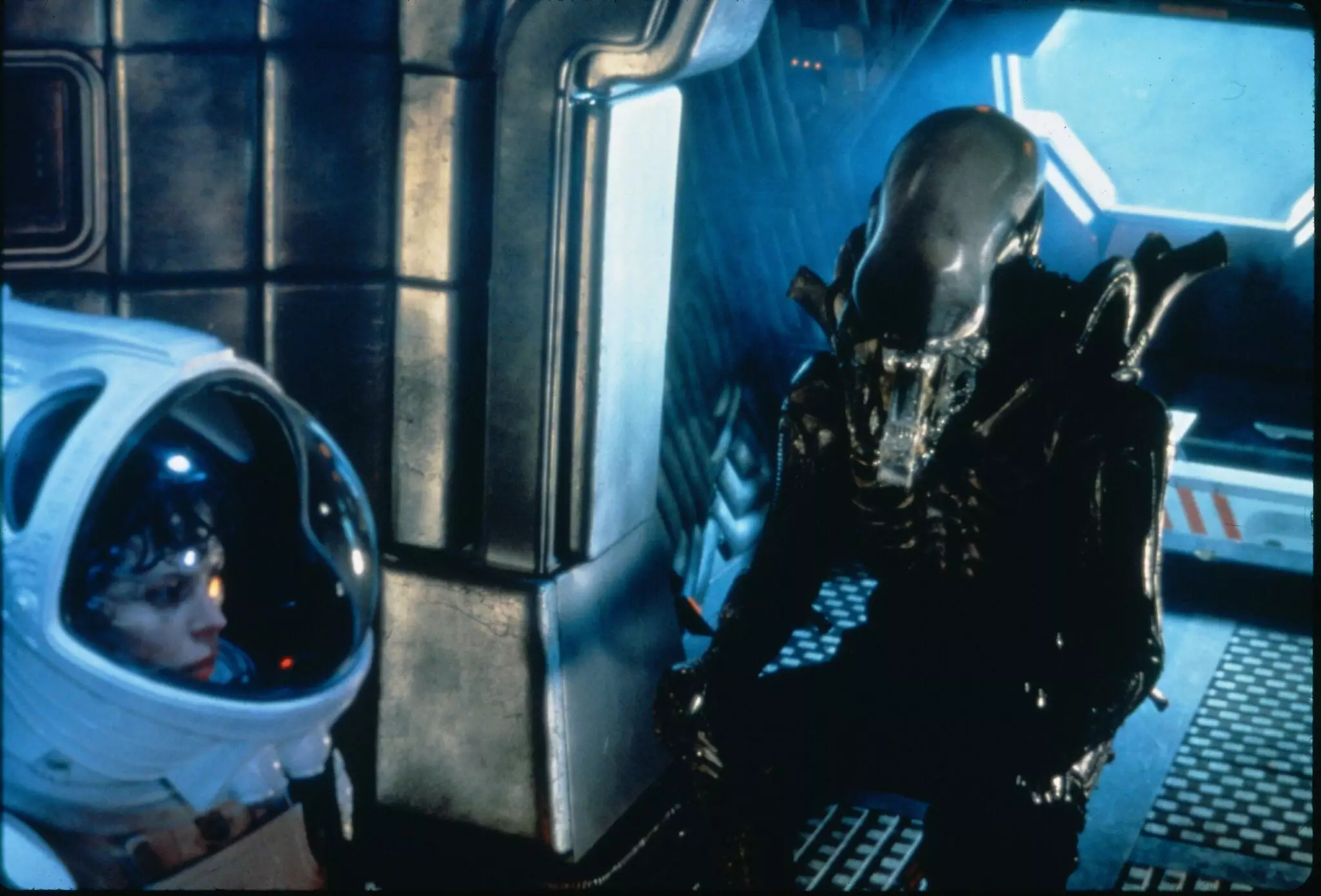
Kane is seized by convulsions. At first, his colleagues try to help him: the problem still seems to be a bout of illness that could be understood and treated. Then a creature bursts out of his chest. The danger we thought had passed was already there, hidden within his body. The scene forces us to reinterpret what we are seeing. The man who had been saved has, unbeknownst to him, become the very place where the threat was developing.
The sequence combines two fears: that of intrusion and that of losing control of oneself. A door can be locked and a room kept under surveillance. The body offers a far more intimate boundary, one we would like to consider safe. By breaching it from within, the creature renders the safeguards we usually imagine to be inadequate. The character could neither see what was happening to him nor keep his distance.
The scene is also conveyed through the group’s reactions. Their glances, their movements towards Kane and their successive steps back guide our understanding. The actors’ performances lend a human scale to what might otherwise become a mere spectacle. These are colleagues trying to save one of their own, only to discover that they are powerless to respond to what is happening. Their helplessness becomes our own.
This collective dynamic also prevents the scene from becoming an isolated display of special effects. Each reaction confirms a different stage of the event. Some characters approach, others hesitate, then the group falls into disarray when the creature appears. The viewer is not merely presented with a monstrous image; they see a working community lose its bearings in a matter of seconds. The table, which had brought the crew together, becomes the centre of a shared panic. The staging thus allows the shock to ripple from one body to another, until the entire room seems infected by the threat.
An apparition built up in stages
To analyse the editing, it is useful to observe this transition between several states of the scene: conviviality, unease, urgency, and then the apparition. The revelation does not come out of emotional nowhere. It follows a build-up that has shifted our attention towards Kane’s body. The film leads us to seek a cause, before providing an answer that goes beyond the expected explanation. The shock is therefore also a sudden shift in understanding.
After this meal, the layout of the ship seems different. A communal area no longer guarantees safety; the absence of any visible creature no longer proves the absence of danger. The sequence leaves a lasting sense of unease, because it alters the conditions of our trust. In a horror film, a powerful apparition can thus continue to have an effect long after the monster has disappeared from the screen.
A lesson in the staging of the body
*Alien* does not invent bodily horror. It presents an image that has become iconic, at the crossroads of science fiction and the fear of invasion. For anyone designing a scene, its appeal lies in this combination of an extraordinary event and a very simple situation. The everyday setting, the proximity of the characters and the careful pacing make the event feel credible to the viewer, even before any explanation of the creature is given.
The Blair Witch Project: the final frame doesn’t provide the answer
The camera becomes a vulnerable character
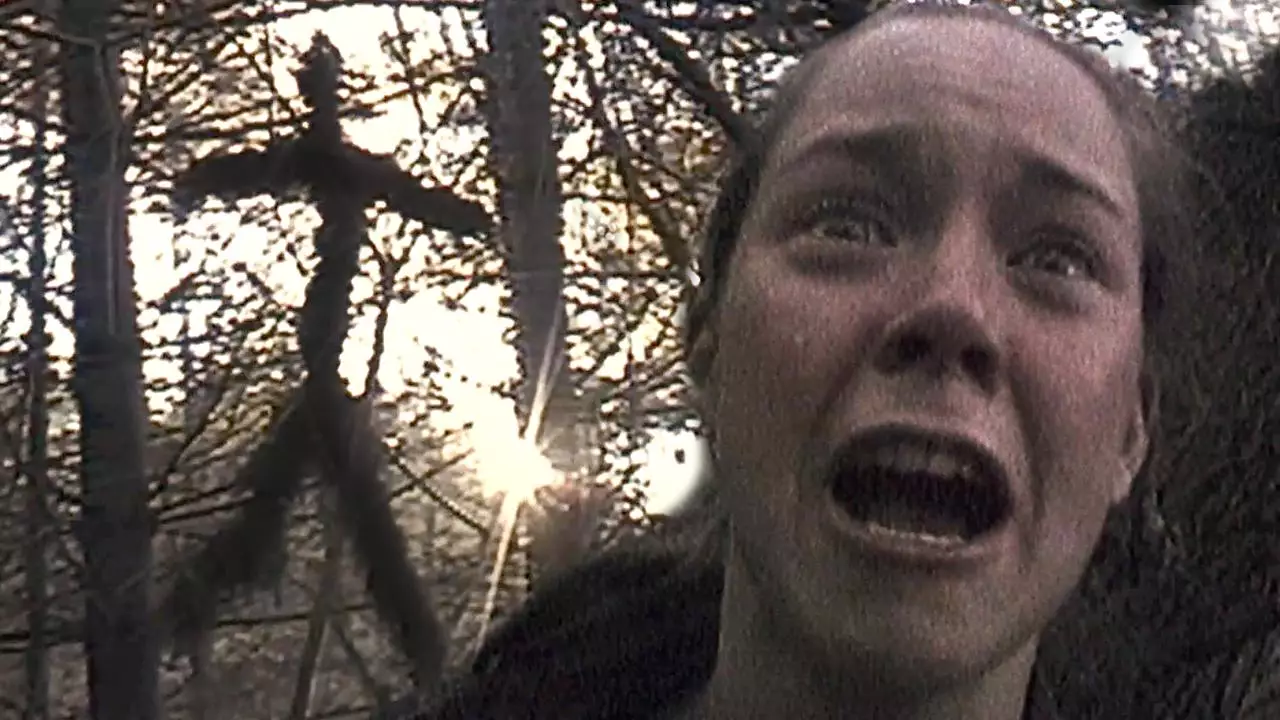
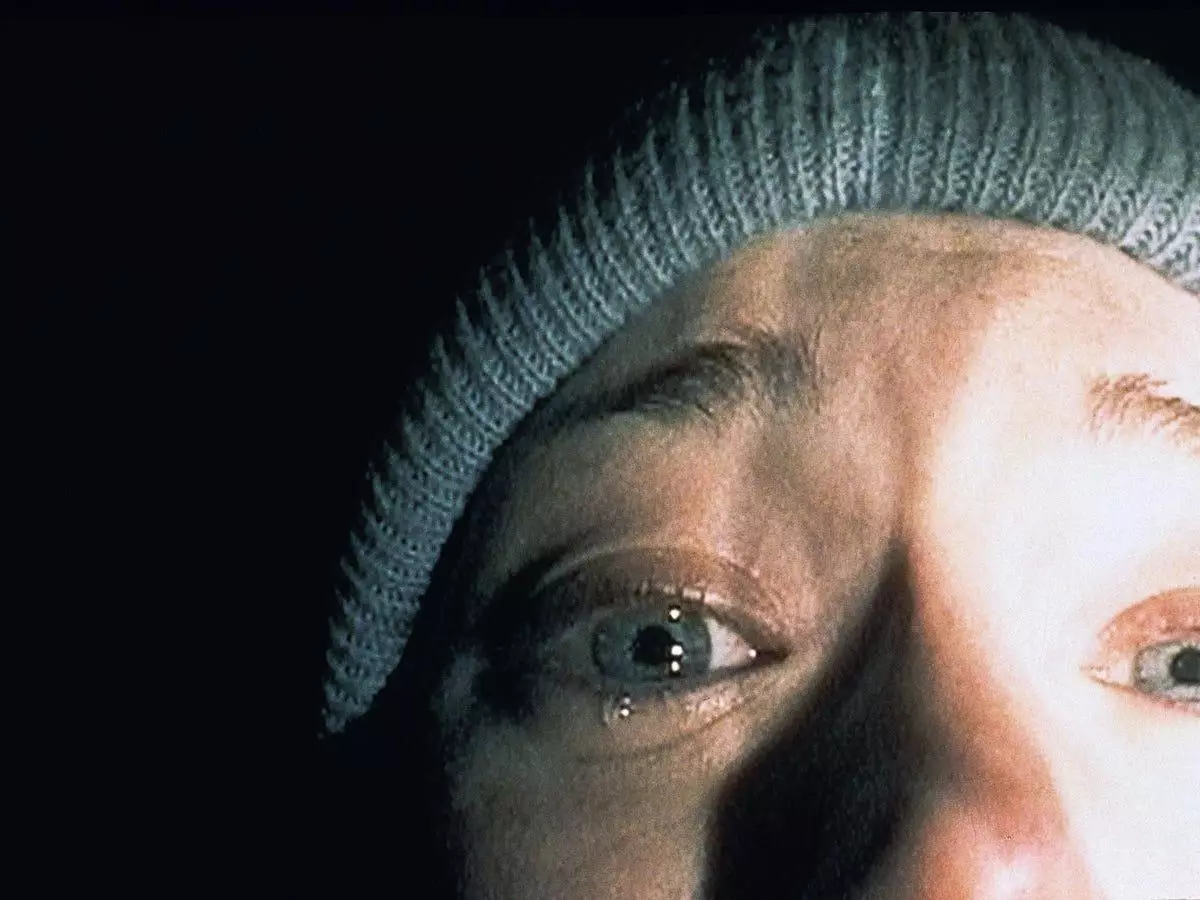
At the end of The Blair Witch Project (1999), directed by Daniel Myrick and Eduardo Sánchez, the characters enter an abandoned house. The screams, the movement and the shaky footage make it difficult to make sense of the space. The viewer is not given a reassuring wide shot that would allow them to pinpoint everyone’s location. They must interpret the situation based on the movements of a camera held by someone who is themselves in danger.
This constraint sets the sequence apart from a scene where the director could freely show us the entire setting. Here, what is filmed depends on the character’s position, movements and reactions. The camera may look away at the wrong moment or move forward without giving the viewer time to recognise a room. The image captures fear just as much as it reveals its source. Its instability becomes a tangible limitation on our understanding.
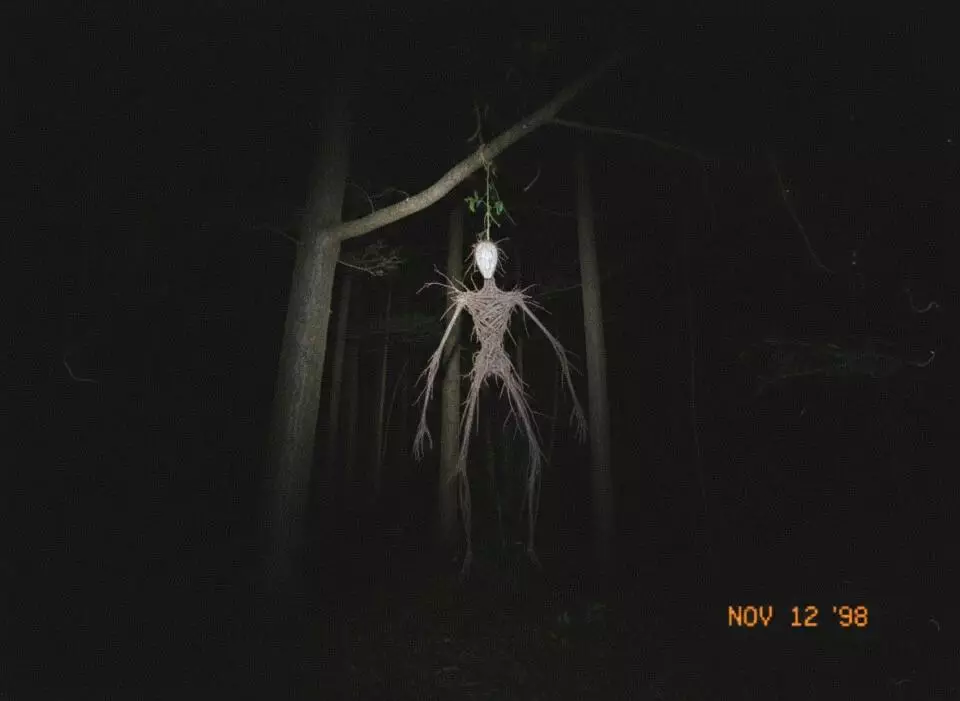
In the basement, Heather spots Mike standing facing a corner of the wall. This posture echoes a story told earlier in the film. A detail that the viewer might have filed away as part of the local narrative suddenly takes on a physical presence. There is no need to recount the whole story: the connection is made in our minds and lends the image an unsettling significance.
Then the camera cuts to black. The film ends without clearly showing what is attacking the characters. The effect relies on an interruption just as we are expecting confirmation. We recognise enough elements to understand that a danger exists, but not enough to pinpoint its form. The sequence thus leaves an active role for the viewer, who tries to piece together the posture, the noises and the disappearance of the gaze.
Sound plays a particular role here. A voice or a scream may signal a presence outside the frame without allowing us to pinpoint its exact location. The image does not always corroborate what we hear. This discrepancy maintains a tension between two sources of information that would normally help us to understand. Instead, they reveal just how incomplete our understanding of the event remains.
The film’s structure also imposes a simple rule: the camera can only show what the character chooses or manages to look at. In a conventional film, a cutaway shot might clarify Mike’s position or reveal the source of a noise. Here, such a shot would disrupt the film’s logic. This limitation does not detract from the scene; it gives it its form. The director transforms a constraint on the point of view into a source of tension. With every sudden movement, the audience wonders as much about what lies off-screen as about what the person filming might discover if they were to turn the lens.
Specific clues without a full explanation
The film did not invent the concept of ‘found footage’. Its success, however, helped to popularise a form of horror in which the recording is integral to the story. The camera is no longer a gaze that protects us through its control of the narrative. It is an object carried by a character and subject to whatever happens to them. When it stops filming, we lose our only access to the scene.
For a director, this ending raises a question of balance. Showing nothing at all is not enough to create fear. It is still necessary to have built up expectations and provided clues for the audience to latch onto. The silhouette in the corner of the wall is distinct; what it portends remains uncertain. It is this combination that makes what lies off-screen effective: our imagination works on the basis of concrete elements, rather than in a darkness devoid of any points of reference.
Looking at fear from the perspective of those who create it
Building anticipation before delivering the shock
What these sequences have in common is that they change the way we interpret the film. After *Psycho*, following a character no longer guarantees their survival. After the end of *Night of the Living Dead*, rescue no longer ensures salvation. *Alien* casts suspicion on an apparent recovery, whilst *The Blair Witch Project* transforms the disappearance of the image into a dramatic event. Each scene plays on a particular sense of trust, which is built up and then put to the test.
To analyse them, we can start by revisiting what comes just before. What emotional state does the film establish? What outcome does the audience anticipate? A meal, a shower or the breaking of day are not mere transitions: they help to direct the audience’s attention. Fear is sometimes building up at a moment when the narrative seems to slow down. Understanding this build-up prevents a sequence from being reduced to its most famous moment.
It is then useful to observe how information flows. Does the viewer know more than the characters, as when they recognise Ben? Do they share in their discovery, as at the table in *Nostromo*? Do they have fewer clues than they would like, as in *The Blair Witch Project*? These positions evoke different emotions. They are determined by the screenplay, then refined through framing, shot duration, editing and sound.
Another method is to watch these sequences without sound, then to listen only to their soundtrack. This exercise reveals the division of labour. In *Psycho*, the visual editing and the music together create a sense of urgency. In *Alien*, the sounds of the meal establish a sense of normality before the breakdown. In The Blair Witch Project, the voices and off-screen sounds extend the space beyond what the camera shows. No single department creates fear on its own. The result stems from coordinated choices that provide the audience with the right information, at the right moment, with the necessary degree of precision.
Making the effect last beyond the scene
The most spectacular sequence is not always the one that leaves the lastingest impression. A scene becomes enduring when it alters the viewer’s mental framework. After the shower, a protagonist may vanish. After Romero’s final shot, the restoration of order becomes suspect. After the meal on the Nostromo, the body itself no longer guarantees safety. After the camera falls in *The Blair Witch Project*, the absence of an image may signify that the most important event has just taken place. For a filmmaker, this lingering impact is a more fruitful objective than merely seeking to startle the audience: the scene then continues to influence subsequent scenes and the film’s overall memory.
At CinéCréatis, the Cinema and Audiovisual course explores the professions and stages involved in making a film. Revisiting these scenes through the eyes of a future professional involves identifying what each choice contributes to the experience. For Halloween, the great classics thus become opportunities to understand how a story captures our attention, then surprises us just when we thought we knew how to watch it.