There are some directors whose films are instantly recognisable. Not necessarily because of an immediately identifiable visual style, as with Wes Anderson, Tim Burton or Baz Luhrmann. With Christopher Nolan, it’s different. You don’t just recognise an image. You recognise a mechanism.
A man looks at a photograph and doubts his own memory. A magician sacrifices everything to produce a perfect illusion. A vigilante understands that symbols sometimes count for more than people. Astronauts cross space to save a humanity that can no longer save the Earth. A soldier flees a beach where time seems to contract. A scientist builds a bomb and discovers too late that an idea can continue to explode long after it has been invented.
Nolan’s films don’t just tell a story. They pose a problem. They establish a rule. Then they lock us in.
This undoubtedly explains the public’s very special attachment to his cinema. His films can be cold, overly serious and sometimes demonstrative. He may be criticised for his female characters being too often reduced to a dramatic function, for his explanatory dialogue, or for his somewhat visible obsession with men haunted by their mission. But one thing must be recognised: Nolan has succeeded in imposing a popular cinema that asks the spectator to work. Not to work like at school, with a pen and an Excel spreadsheet, even if some viewers would be capable of drawing a complete Tenet diagram. It’s more like working in a dream, where you have to understand the logic before you wake up.
A cinema built like an enigma
Nolan’s first great signature is structure. His films are rarely told in a simple order. Memento moves forwards and backwards at the same time. Inception piles up several levels of dream. Dunkirk superimposes three different temporalities: a week on the beach, a day at sea, an hour in the air. Oppenheimer alternates points of view, time periods, image regimes and power relationships. Tenet, on the other hand, pushes the idea to the point of vertigo: some characters move forward in time while others move backwards.
For many filmmakers, structure serves to organise the narrative. With Nolan, it becomes the subject of the film. We don’t just watch what happens to the characters. We’re watching the shape of the film happen to them.
In Memento, the main character suffers from an immediate memory disorder. He forgets what he has just experienced. The structure of the film puts us in a state similar to his: we receive information in fragments, we have to reconstruct continuity, we doubt what we know. So editing is not just about creating suspense. It becomes a mental experience. The viewer does not understand Leonard from the outside. He is, in part, a victim of his way of being in the world.
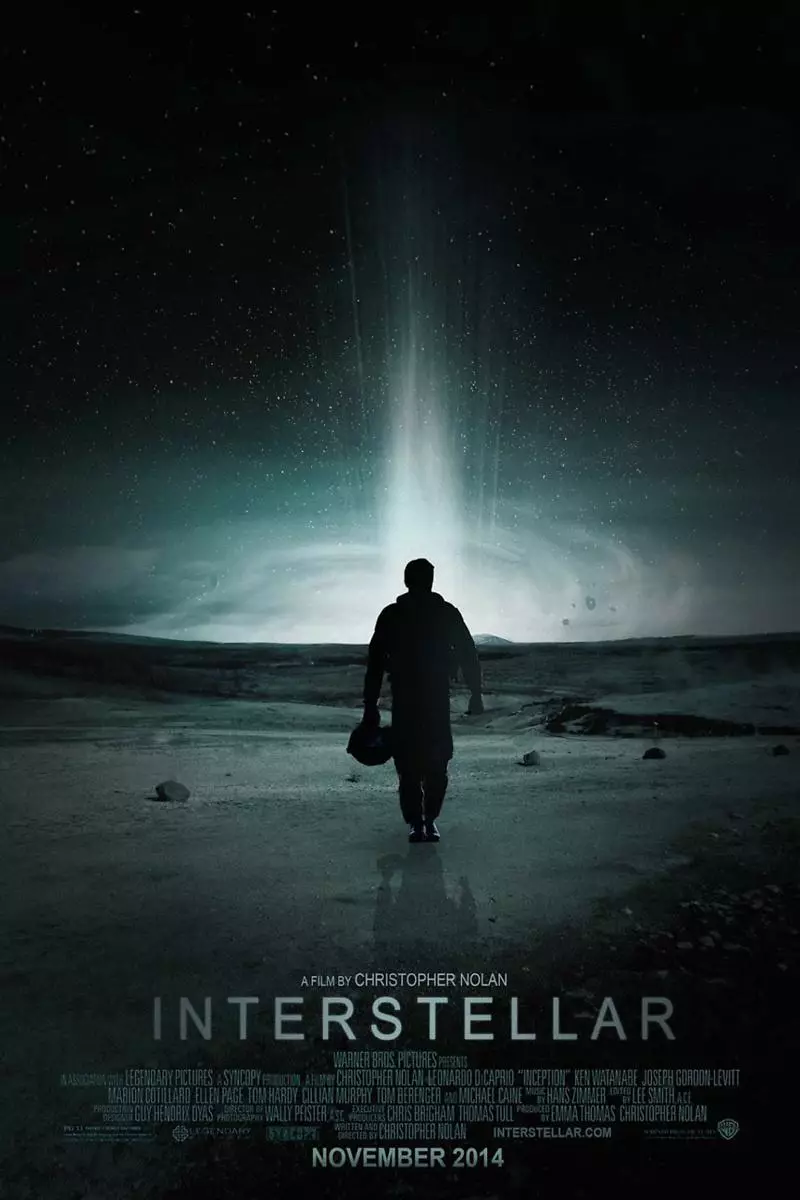
This is often where Nolan is at his strongest: when form marries idea. Interstellar is not just about time passing differently in different places and bodies. It makes you feel it. A few hours on one planet become years for those who have stayed elsewhere. The scientific concept becomes an intimate wound. In Dunkirk, time is not a narrative setting. It is a physical pressure. You can feel it tightening around the soldiers, the pilots and the civilians who came by boat. The question is no longer just “what’s going to happen”, but “how long can they hold out?
Nolan has understood something rare in mainstream cinema: a good directorial idea can be as spectacular as an explosion.
Characters trapped in an obsession
If Nolan’s films seem so tense, it’s because his characters almost never lead normal lives. They don’t move on with their lives. They pursue a fixed idea.
Leonard wants to avenge his wife in Memento. Bruce Wayne wants to turn his pain into a symbol in The Dark Knight Trilogy. The magicians in The Prestige want to create the perfect trick, even if this perfectionism destroys them. Cobb wants to go home in Inception. Cooper wants to save his children in Interstellar. Robert Oppenheimer wants to solve a scientific problem before realising that he has contributed to an irreversible moral shift.
These are men who want to master something that is beyond their control: time, memory, fear, grief, chaos, guilt. They are often brilliant, methodical and rational. But this rationality does not save them. It traps them.
This is where Nolan’s cinema becomes interesting. Contrary to what is sometimes said, his films don’t just glorify intelligence. They also show its limits. His characters think a lot. They calculate, anticipate and construct complex plans. Yet they often fail to understand what really matters. They know how to manipulate systems, but they don’t always love correctly. They can bend time, but not repair relationships. They can build a legend, but not erase a trauma.
In Le Prestige, this logic takes on an almost cruel form. The two magicians are prepared to do anything to preserve their secret. The trick becomes more important than life. The audience applauds an illusion whose real cost is unknown. It’s almost a metaphor for cinema itself: we want to be amazed, but we don’t always want to know what that illusion requires.
With Nolan, obsession is never just a character trait. It is a dramatic driving force. It gives characters their greatness, then consumes them.
The show as an intellectual experience
Nolan’s success is also due to his ability to reconcile two desires that the industry often opposes: the pleasure of grand spectacle and the pleasure of complexity.
His films are massive. They feature chases, explosions, inward-looking cities, black holes, aeroplanes, bombs, battles, hold-ups and meticulous action scenes. But this spectacle is almost never purely decorative. It is attached to an idea.
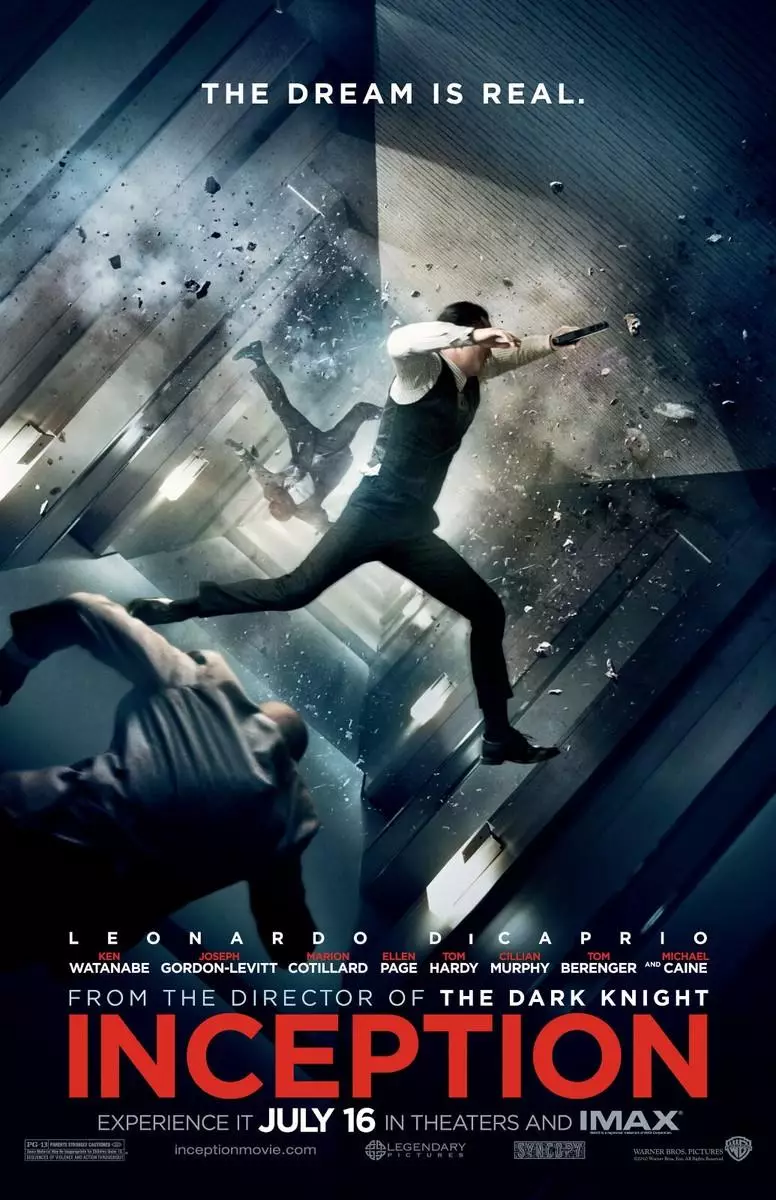
The corridor scene in Inception is not just a technical feat. It embodies a rule of storytelling: when the body becomes agitated in one level of the dream, space becomes disordered in another. The tension comes from the fact that we understand the logic of the scene as we watch it. The same is true of Dunkirk: the spectacular is not linked to the accumulation of pyrotechnic effects, but to the precision of the set-up. Three temporalities, three spaces, the same feeling of being in a vise.
That’s why Nolan occupies a special place in contemporary cinema. He has succeeded in making an auteur blockbuster. A rather strange expression, sometimes used indiscriminately, but one that suits him quite well. His films have the resources of huge productions, while retaining a personal obsession with certain themes: time, identity, memory, sacrifice, truth and moral responsibility.
He has a kind of contract with the viewer. He promises the spectacular, but not only that. He promises architecture. When you go to see a Nolan film, you’re not just looking to be entertained. You also want to understand how the film works. You look at the story, but you also look at the trap.
That’s why his films generate so much discussion after the screening. You don’t just walk out and say “I liked it” or “I didn’t like it”. They ask: “Did you understand the ending?”, “When does he dream?”, “Does the top fall or not?”, “Who manipulates whom?”, “Which way does time go? His films continue to be part of the conversation. And in an age when so much content is consumed and then immediately forgotten, that’s no mean feat.
Time, its real main character
If you had to single out one central obsession in Nolan’s work, it would be time. Even more than the heroes, the concepts or the great narrative machines, it is time that runs through his entire filmography.
In Memento, time is broken by memory. In Inception, it dilates according to the levels of dreams. In Interstellar, it becomes a physical and emotional given. In Dunkirk, it becomes a question of survival. In Tenet, it turns against itself. In Oppenheimer, it takes on a more historical form: the past does not pass, and the moral consequences extend far beyond the moment of decision.
This relationship with time explains why his films often have a tragic dimension. Nolan’s characters cannot simply turn back time. Even when the story plays with chronology, even when the narrative bends, even when science fiction allows for impossible movements, something remains irreversible.
Cooper can cross space and communicate across dimensions, but he will never get back the years he lost with his daughter. Oppenheimer can justify his choices by the scientific, military and political context of his time, but he cannot contain what he has helped to liberate. Bruce Wayne can become Batman, but he won’t resurrect his parents. Leonard can tattoo his body to preserve traces, but he will never regain a reliable relationship with his own truth.
For Nolan, time is not just a brilliant concept. It is a debt. You can manipulate it on screen, but you always end up paying something.
A coldness that is part of the style
Nolan is often criticised for a certain lack of emotion. The criticism is not entirely unfair. His cinema is rarely abandoned, sensual or spontaneous. He loves structures, systems and rules. His characters sometimes speak as if they are explaining the inner workings of the script. Feelings are often filtered through abstract issues: mission, secret, guilt, promise, truth.
But this coldness is also part of his identity. Nolan does not film emotion as an overflow. He films it as a compression. His characters don’t always collapse. They hold on. They endure. They move forward. And it is sometimes in this restraint that emotion finally emerges.
The relationship between Cooper and Murph in Interstellar works precisely because it contrasts the immensity of the concept with a very simple pain: a father has gone, a daughter has waited for him. The whole film can be about gravity, relativity, wormholes and the survival of the human race. At the end of the day, what remains is this silent phrase: you weren’t there.
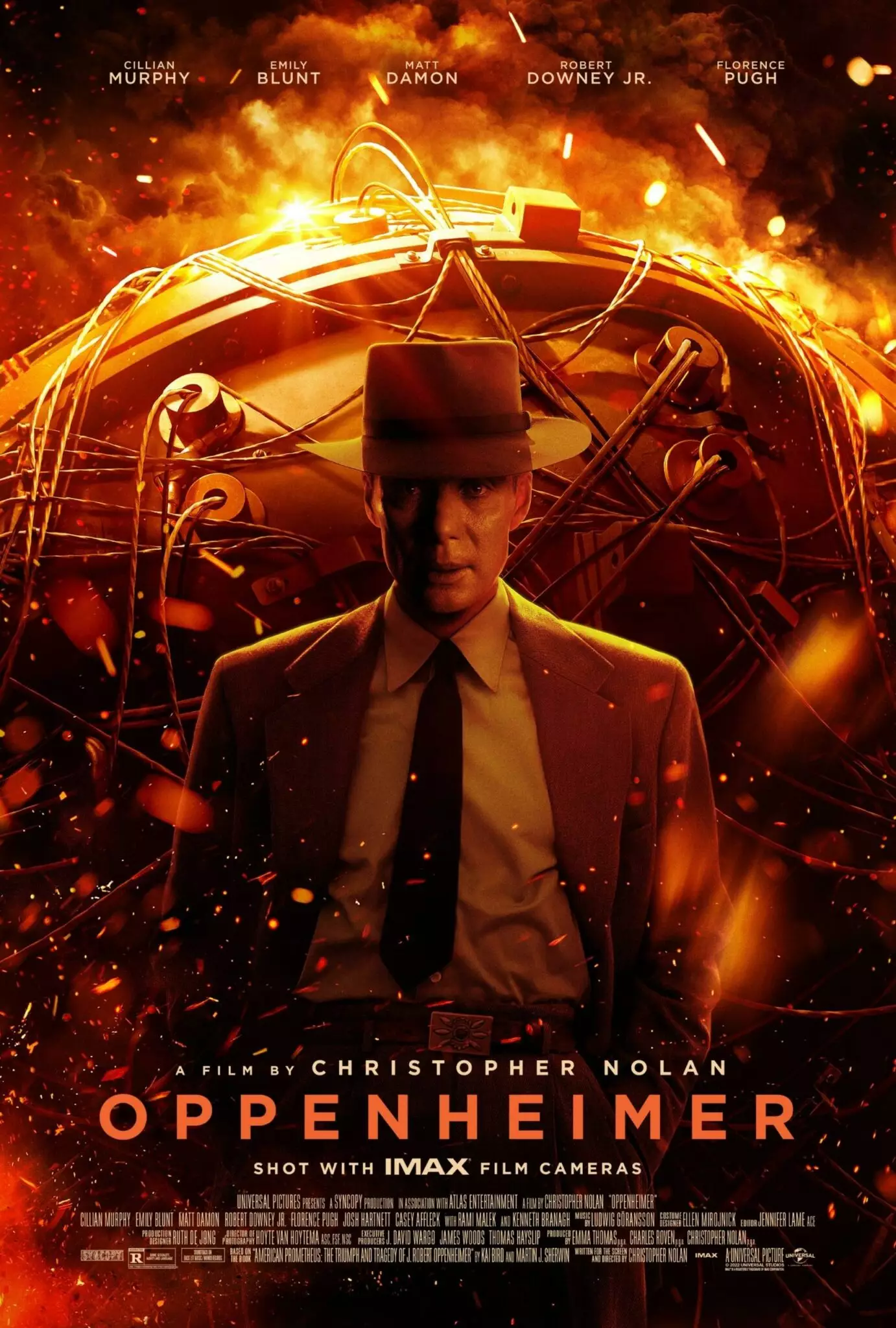
In Oppenheimer, the emotion is less immediate, more political, more moral. It does not come from a tearful scene, but from a gradual shift between the excitement of the discovery and the terror of its consequences. The character is celebrated, interrogated, used and then judged. The film shows how an intelligence can become an instrument of power before once again becoming a problem of conscience.
This is not a cinema that always seeks to make you cry. It’s a cinema that seeks to make you weigh.
Why audiences love his films so much
The Nolan case is interesting because it contradicts a lazy idea: that the general public only wants simple stories. His films are sometimes complex, long, dense, full of internal rules. Yet they attract massive audiences.
And why is that? Because complexity is not an obstacle when it is transformed into pleasure.
Nolan doesn’t ask the audience to understand concepts for the sake of appearing intelligent. He transforms these concepts into dramatic tension. In Inception, understanding the dream levels makes it easier to feel the urgency. In Dunkirk, understanding the three temporalities makes the montage more powerful. In Memento, accepting the fragmentation of the narrative allows you to share in the character’s disorientation.
His films give the viewer an active role. You don’t passively watch a sequence of events. You put them together. You check. You suspect. You reconstruct. You almost become an editor in your head.
That’s another reason why they last so long. Some films impress at the time and then lose their force once the surprise effect has worn off. With Nolan, rereading is part of the pleasure. Revisiting The Prestige means spotting the clues. Revisiting Memento means understanding how the manipulation was already there. Revisiting Inception is less about looking for a definitive answer than measuring the ambiguity of the set-up.
His films are not just made to be seen. They are made to be revisited.
A filmmaker for the age of control
Finally, there is something very contemporary about Nolan’s cinema: his obsession with control. His characters want to master complex systems, in a world where everything seems liable to collapse. They are looking for rules, plans, proof, protocols. They want to reduce uncertainty.
This is undoubtedly why his films are so relevant to our times. We live in a world saturated with information, simulations, competing narratives, hard-to-understand technologies, global threats and unstable truths. Nolan’s films dramatise this anxiety, but in a spectacular and legible form. They give an architecture to our confusion.
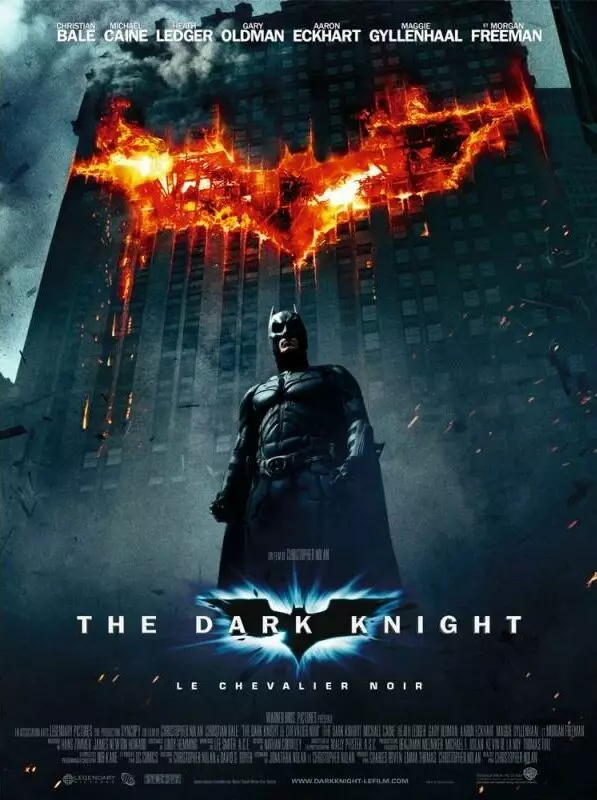
Inception is about a world where the mind can be infiltrated. The Dark Knight is about a social order threatened by chaos that refuses to negotiate. Interstellar is about a humanity forced to think on a cosmic scale because it has exhausted its own habitat. Oppenheimer speaks of an invention that surpasses its creators. Even Tenet, despite its sometimes opaque nature, seems to be an attempt to represent a world that has become unreadable, where causes and consequences no longer follow one another in a reassuring order. The characters move through a system they barely understand, with the impression that each action has already produced its effects elsewhere, even before it has been decided.
Perhaps that’s what makes Nolan’s cinema so contemporary: he doesn’t just tell complex stories, he dramatises our relationship with systems that are beyond our understanding. Time, technology, war, finance, science, information, collective memory. Everything seems organised, coded and rational. And yet something always eludes the characters. They want to understand the mechanism, but the mechanism swallows them up.
So his films are less about control than about the fear of losing it. Behind the meticulous shots and masterful narrative architecture, there is often this simple anxiety: what if the world has become too complex to be truly understood?