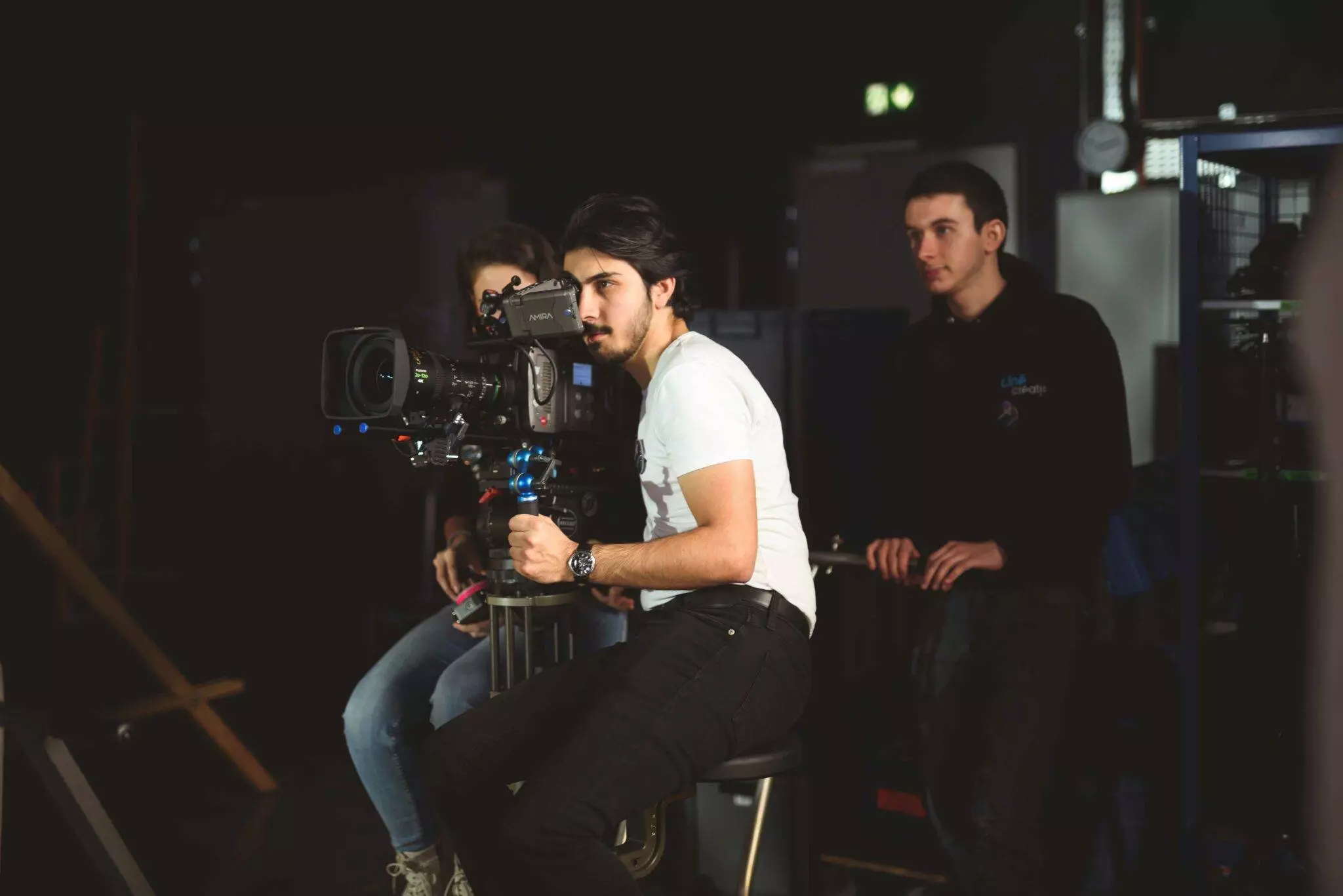
A dynamic sector in full transformation
Over the last few years, the audiovisual sector has undergone major upheavals that have fuelled its incredible growth. Here’s why you should work in the audiovisual industry:
The emergence of streaming platforms
The emergence of streaming platforms in the 2000s has transformed the media and content consumption landscape. The great revolution came with video streaming (embodied in particular by Netflix) and the possibility for users to watch content on demand, on a wide variety of media.
Technological advances
The arrival of new technologies such as 4K, virtual reality and augmented reality, not to mention immersive technologies such as 8K, have changed the way audiovisual content is produced and distributed. Virtual reality and augmented reality have also brought considerable advances in visual quality.
Advances in artificial intelligence
In recent years, there have been many advances in the field of artificial intelligence, which is increasingly present in the production and distribution of audiovisual content. AI is used in particular in the creation of animated content.
The rise of social networks and the emergence of content creators
Fuelled by the democratisation of mobile phones, platforms such as YouTube, Instagram, TikTok, etc. have contributed to the success of independent content, offered in short formats.
New consumer expectations
In the audiovisual sector, consumers are demanding greater interactivity and flexibility, with access to content on different devices. What’s on offer is now easily available on mobile phones. This trend towards new business models is driving suppliers to create and develop original content that can be adapted to all media.
The synergy of the audiovisual industries
Why work in the audiovisual sector? Quite simply because the audiovisual sector is now recognised as an industry that provides many jobs. The audiovisual industry brings together all the professions and production methods that contribute to the creation of a work. This sector of the future has seen the emergence of numerous professions that often interact with each other (video games, telecommunications, information and digital technologies, etc.). One example is virtual reality, which combines elements of cinema, video games and immersive experiences.

Express your creativity through innovative, collaborative projects
The audiovisual professions provide fertile and stimulating ground for giving free rein to your creative expression, through innovative and collaborative projects!
A wide range of formats
Audiovisual production covers a wide range of formats, adapted to each type of content. You can express your creativity on projects as diverse as films, series, videos, podcasts and even interactive content. Some projects may combine traditional cinema with interactive elements (virtual reality, web series, etc.).
Audiovisual production: teamwork
Audiovisual projects are often the fruit of collaboration between different professions: scriptwriters, directors, technicians, editors, content creators, graphic artists, sound engineers, designers, etc. This synergy, bringing together people with diverse technical skills, encourages the emergence of innovative ideas.
An industry that relies on cutting-edge technologies
Thanks to latest-generation technologies such as virtual reality (VR), augmented reality (AR), motion capture, 3D animation and even artificial intelligence, audiovisual professionals today have powerful tools at their disposal to explore new narrative and visual forms. These technologies encourage innovation at the heart of every project, pushing back the boundaries of creation by offering infinite possibilities for designing immersive experiences, spectacular visuals or interactive stories with the viewer.
Influencing culture and social behaviour through audiovisual media
Audiovisual plays a major role in shaping people’s culture and social behaviour. Cinema, television, streaming, digital and interactive platforms, through their content, shape the way people perceive the world, interact with each other and construct their identity. By choosing a career in the audiovisual sector, you will have an influence on ..:
Creating and transmitting the history and culture of a society
Audiovisual productions (films, series, documentaries, etc.) maintain the collective memory, transmit the values of a community and also raise public awareness of social or environmental issues.
Individual behaviour
Series, films, adverts or social networks and their influencers reinforce or, on the contrary, challenge people’s perception of the way they consume, of established norms, etc. Many animated films convey messages of diversity and tolerance, influencing younger generations by creating a profound impact on social values. Audiovisual media also influence the political and social commitment of their audiences. Films, series and documentaries also raise awareness of specific causes and encourage viewers to take action or reflect on societal issues.
The globalisation of culture and ideas in general
Through productions from all over the world, cinema and streaming platforms are helping to reach a wide international audience and foster a vast global cultural exchange.
A wide range of professions with numerous career opportunities
The audiovisual sector offers a wide range of professions and career prospects, covering many creative, technical and commercial areas. It’s a particularly dynamic world, where people can find the career path that suits their skills and passions. By choosing one of the various paths and specialisations on offer, you can take advantage of a wide range of career opportunities.
Creative and production professions
Director, scriptwriter, director of photography, editor, soundtrack composer, animator, sound designer.
Post-production professions
Sound engineer, Special effects designer, Colourist, Sound engineer, Cameraman, Mixer, Head of set design, Head of editing.
Broadcasting and distribution professions
Producer, Production Director, Production Manager, Production Assistant, Distributor, Programming Manager, Venue Operator.
Audiovisual-related commercial professions
Press attaché, Marketing manager for the promotion of audiovisual works, Digital distribution manager.
The audiovisual sector: inclusive and accessible to all
Why work in the audiovisual industry? The answer is simple: a career in the audiovisual industry means joining a constantly evolving sector that is open to everyone, whatever their origin, gender, profile or abilities. It has become much more inclusive and accessible, encouraged by numerous initiatives such as :
Technological developments that have made production tools more accessible. Today, novice designers with small budgets can produce quality projects.
Women are also much better represented in the audiovisual industry. There are more and more women directors, scriptwriters, producers, directors of photography and so on.
The rise of collaborative and participatory projects, which enable anyone with no financial means to create audiovisual content requiring funding.
Festivals, internet platforms, mobile applications, etc. are also making it easier to promote works and content all over the world.
A wide range of training courses. Training courses with a certified state diploma, accessible to all, are now widely offered to attract new talent. Specialised schools and online platforms such as CinéCréatis offer courses on a variety of audiovisual themes.
If you’re not sure which course to take, you can read our article on why going to an audiovisual school is important for your future career.
What kind of training do you need to work in the audiovisual industry?
The CAP, BTS and BUT are fast-track courses for entering the audiovisual professions. It is also possible to train in the audiovisual sector at university for a course ranging from a bachelor’s to a master’s degree, or through private establishments that offer courses leading to professional qualifications and certification, such as our audiovisual training course. If you’re from the Nouvelle-Aquitaine region, you can join our film and audiovisual school in Bordeaux.
Most of the recognised courses in the film and audiovisual industries are offered by specialist schools. Accessible after the baccalauréat, they offer students courses from bac+2 to bac+5 level in a wide variety of fields (cinema, directing, image and animation techniques, etc.).