An essential profession, often misunderstood
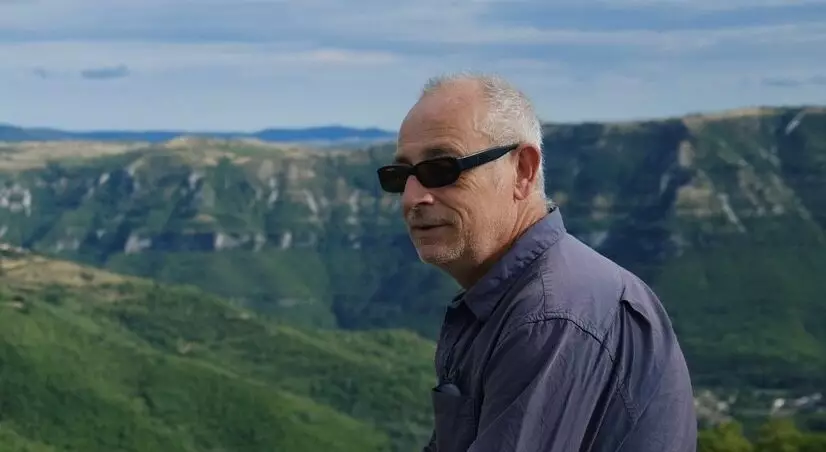
François Gila Girard, a production designer, worked in the Paris region for many years before settling in Occitanie a few years ago. Behind this title, which is sometimes unfamiliar to the general public, lies a major role in the production of a film or TV series: creating sets, designing spaces, building a visual world, and bringing a work to life.
His job, he explains, involves designing sets for film shoots, mainly for cinema and TV series, although this field can also extend to other audiovisual formats, and even to the theatre. By his own admission, his career is rooted first and foremost in cinema, with a particular affinity for projects driven by a genuine auteur’s vision.
Very early on in the conversation, one point becomes clear: François Gila Girard does not see himself as merely a technician. On the contrary, he claims a place as a creator in his own right within the filmmaking process. This is an important clarification – almost a point of clarification – given that he believes set design is still too often reduced to a mere executive function, when in fact it plays a full part in the visual narrative of a film.
From arthouse cinema to TV series: a career fuelled by creativity
His career, he explains, began in arthouse cinema, often on a shoestring budget, in settings where set design was kept to a minimum and crews were relatively small. Then, from the mid-2010s onwards, he began to be approached for TV series, notably for Arte, on projects that allowed him to retain a genuine creative input.
He cites several key projects that have shaped his career, including*Tripalium*, a science-fiction series for Arte, and*Ad Vitam*, directed by Thomas Cailley, also for Arte. He also mentions*Kim Kong*, which he describes as a particularly enjoyable project to work on, as well as season 3 of*Baron Noir*for Canal+, which he describes as the biggest series he has worked on in terms of financial resources.
Whilst he refuses to single out one project of which he is “most proud”, this is not out of a sense of caution, but because, in his view, every film or series represents a unique investment. What he emphasises is not so much the prestige of the title as the degree of creative freedom a project has afforded him.
“I’m in a creative profession. I don’t see myself as a technician, but as a creator.”
This sentence alone sums up his approach to his work. Set design is not, in his view, merely window dressing. It is a fundamental component of the cinematic work.
A sector under pressure, caught between economic pressures and a loss of freedom
When asked about the current state of the sector, François Gila Girard offers a clear-eyed assessment. Yes, there is a slowdown at present. Yes, many professionals are working very little. But beyond the economic climate, he sees above all a deeper problem: that of a costly film industry, which is becoming increasingly difficult to finance, and in which certain historical balances are being undermined.
In particular, he highlights the decline of ‘mid-range’ auteur cinema, which once occupied a central place in the French film landscape. On the one hand, he explains, there are still films with more ambitious budgets, often supported by their international potential. On the other, debut films and certain more radical projects continue to exist, but on very tight budgets. In between, a whole section of French cinema has, in his view, lost some of its solidity.
His view of TV series is just as nuanced. He points out that they have taken on a significant role in the industry, particularly in the 2010s, when filmmakers brought new approaches to screenwriting to the medium. But he also observes a gradual shift towards more commercial approaches, with financiers and broadcasters becoming increasingly involved in the scriptwriting process.
This trend, he argues, has a direct consequence: it tends to water down the content.
COVID has changed habits, not the fundamentals
On the issue of COVID and its long-term effects, he takes a measured view. He does not see the strikes as a decisive factor from his perspective; however, he does consider that the health crisis has permanently altered viewing habits. Audiences have got into the habit of watching more films at home, and this inevitably has an impact on cinema attendance.
Nevertheless, he rejects hasty generalisations. From his small town in Occitanie, for example, he observes a thriving local cinema, well-attended and with full screens. In his view, the issue also depends heavily on the local area, the type of programme on offer and ticket prices. A local, accessible cinema does not necessarily face the same challenges as a large urban multiplex.
On the other hand, when it comes to the sector’s overall future, he is not particularly optimistic. What worries him most is the ongoing financialisation of the industry, with all that this entails in terms of trade-offs, standardisation and pressure on films.
AI, digital technology and sets: a tool is no substitute for a filmmaker
On the subject of artificial intelligence, François Gila Girard takes a clear stance, free from posturing or fascination. He does not deny the transformations currently underway – quite the contrary. He begins by pointing out that digital technology has long since profoundly altered working practices, particularly in the creation of backdrops, set extensions and composites.
He refers to his collaborations on science fiction series, where real sets were extended using 3D in post-production. This work, he explains, took time for the teams to learn how to truly co-create. Whereas, initially, set designers would sometimes lose control over anything beyond their immediate remit, the balance of power has gradually shifted back in their favour.
On the subject of AI itself, his stance remains firm: a tool is just a tool. What matters is the person using it, the intention they put into it, and the thinking that guides it. For him, the fundamental issue is the same as for literature or music: that of creation.
“AI doesn’t invent anything. It recomposes using existing data. The only way to collaborate intelligently with it is to encourage the work of the creator.”
He also points out that certain professions or practices had already disappeared or been transformed long before the recent emergence of AI. The large painted or printed canvases once used in studios to create backdrops have gradually given way to green screens and digital compositing. The landscape has therefore already changed profoundly. But for him, the real dividing line remains between reproduction and creation.
In set design, you need skills… but also a genuine understanding of the field
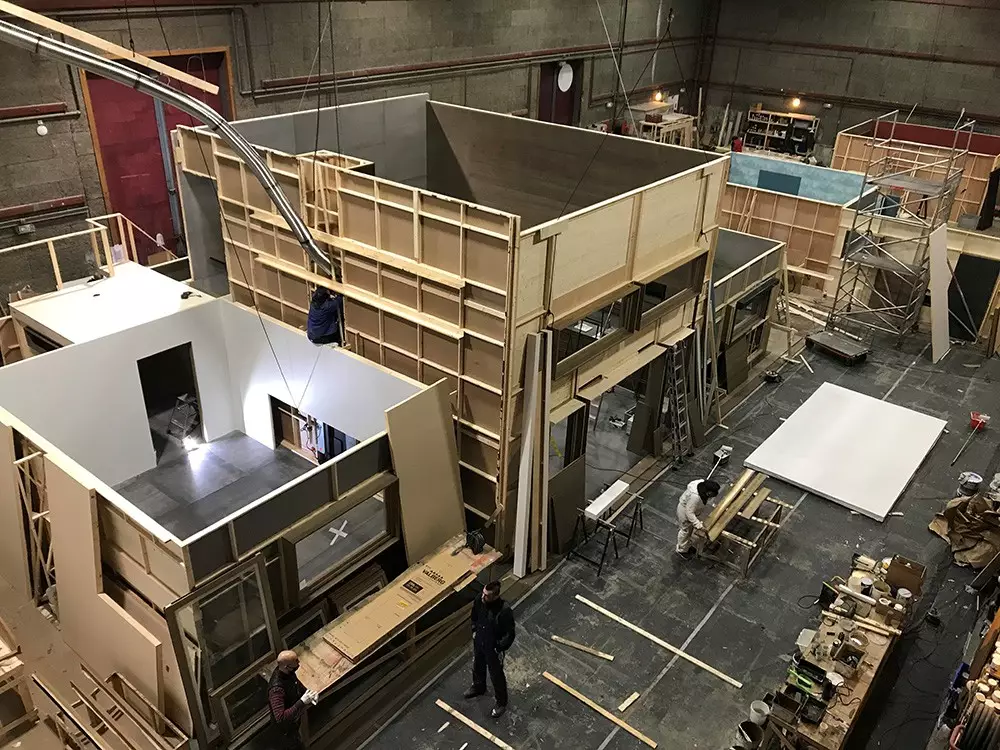
When discussing the profiles sought after, François Gila Girard emphasises the diversity of professions that make up an interior design team. This sector brings together organisers, managers, designers working from plans, furnishing specialists and fitters, as well as numerous more technical trades: builders, painters, locksmiths and plasterers, amongst others.
What it takes to find one’s place in this field, he believes, has not fundamentally changed. You need to know what you’re doing, of course. But you also need a solid general knowledge, enthusiasm, commitment and the ability to visualise. He points out, moreover, that technical know-how can be acquired. On the other hand, a keen eye, curiosity, sensitivity and the ability to bring a world to life are crucial.
He also emphasises one point: interior design still suffers from an unfair reputation. All too often, he says, it is reduced to a form of DIY. As if “anyone could do that”. Yet the various roles involved in set design for the cinema require extremely specific techniques, a far cry from the simplistic notions people might have of them.
The role of a film painter, for example, has, in his view, nothing to do with repainting a flat. The techniques, constraints, practices and logic involved are entirely different.
A profession that is learnt on the job, but which deserves a proper place in schools
On the subject of training, François Gila Girard points out that there are now more schools and courses dedicated to film set design than there used to be. Historically, many professionals came from very different backgrounds: decorative arts, architecture, hands-on experience on set, and apprenticeships within production teams. For a long time, the trade was passed on more through practical experience than in the classroom.
But this does not mean, in his view, that teaching should remain vague or secondary. Quite the contrary. He believes that, in some generalist schools, there is still a lack of a solid educational foundation for understanding what film set design entails, how a team is put together, who does what, how a set is conceived based on a script, how location scouting is prepared, and how the design process aligns with the practical realities of production.
He laments the absence of a truly dedicated workshop, the lack of suitable workspace, and the insufficient resources given to students to gain practical experience in these professions. And he sees this as more than just a logistical problem: it is a symptom of a deeper form of devaluation.
Restoring set design to its rightful place
This issue is clearly close to his heart. François Gila Girard emphasises the real importance of production design both in a film’s budget and in its artistic creation. He points out that it generally accounts for between 8 and 10 per cent of a feature film’s total budget – a considerable proportion. He also emphasises that, in the film industry’s pay scales, the production designer is on the same union pay grade as the production manager and the director of photography.
In other words, the importance of this role is recognised within the industry. What he feels is lacking, however, is its symbolic and educational recognition in certain discourses on cinema.
He also points out that the history of cinema would be unthinkable without great production designers. Set design, he says in essence, is not an afterthought. It plays a full part in the staging, the storytelling, the atmosphere and the very embodiment of a project.
Finally, he returns to another fundamental issue: environmental sustainability. In his view, the film industry remains behind on these issues, even though changes are beginning to emerge. In set design, this involves, in particular, the development of recycling centres, the reuse of materials, the search for less polluting paints, and the reintroduction of certain construction elements into circulation. In this regard, he cites the initiatives undertaken by the Association of Film Production Designers, as well as various tools introduced in recent years.
He believes this fundamental shift is set to gain momentum. And, in a way, it ties in with older practices, when set structures were designed more with a view to being reused and adapted from one project to the next.
To the students: champion set design as a creative profession
When addressing students, François Gila Girard does not offer the usual advice. He begins by addressing what he considers to be a misconception: the tendency to underestimate set design professions, to portray them as ‘easy’ or secondary roles, when in fact they are hiring, they are demanding, and they require a genuine creative mindset.
His message is therefore almost a call to action: we must claim this place for ourselves. We must assert that set design is a major profession within the film industry. We must refuse to reduce it to mere execution. We must understand that a production designer is not just another member of the crew, but one of the pillars of a film’s creative process, on a par with the director, the screenwriter, the director of photography or the sound engineer.
“These are creative professions, not industrial ones. The first thing to do is to think, reflect, imagine, create, possess a rich cultural background and develop one’s general knowledge.”
That, essentially, is the crux of it. Think before you create. Conceive before executing. Cultivate your vision even before mastering the tools. Techniques, he says, can be learnt. But culture, imagination and the ability to construct a world require genuine commitment.