First assistant film operator
The first assistant cameraman is an essential cog on the film set.
Responsible for the smooth running of the filming equipment, particularly the camera, they work under the direct orders of the cameraman and the cinematographer.
Here’s what you need to know about their tasks, training and skills, among other information.
Role and missions
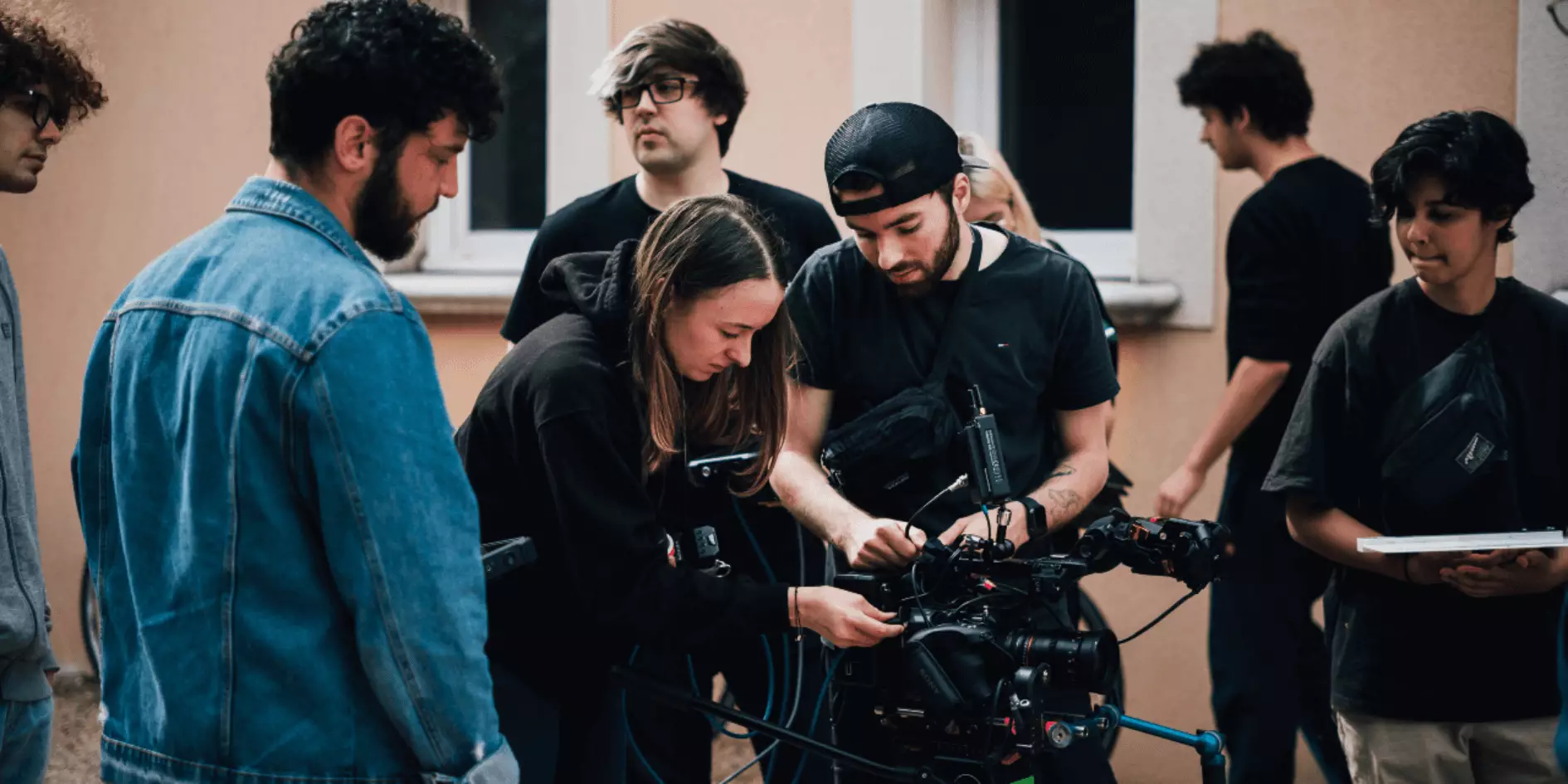
The first assistant cinematographer is the guarantor of the smooth running of the shooting equipment and all the accessories that go with it. Working directly with the cameraman and cinematographer, who give him the orders to follow, he is the only person who can handle the equipment. Supported by the machinery team for the placement of the camera stand, it is his role to ensure the stability and safety of the camera and its accessories when changing shots (cranes, dollies, steadycam, etc.).
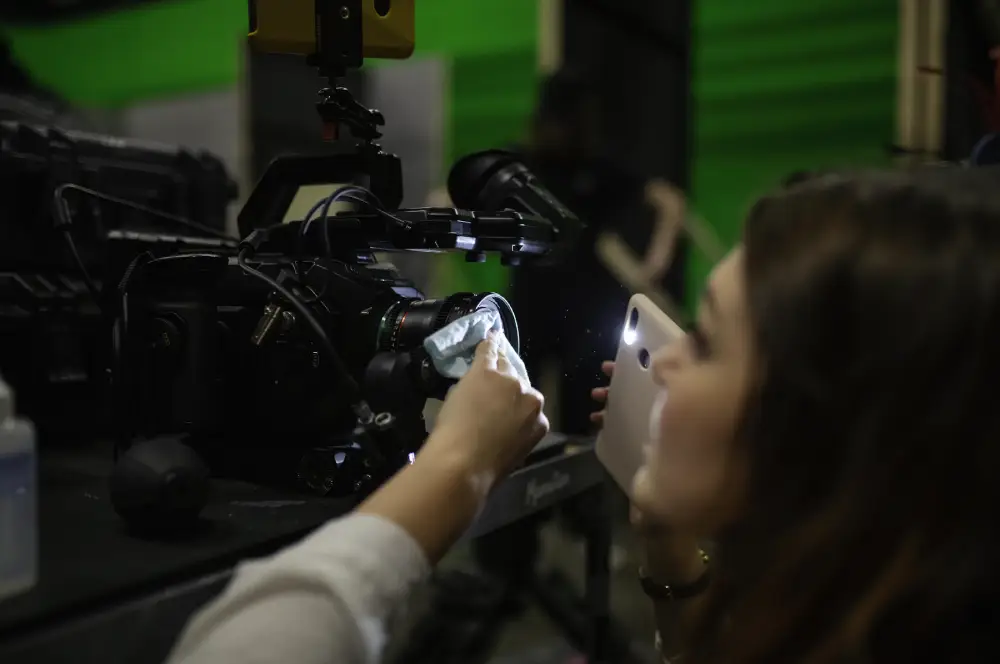
During filming, they are responsible for focusing the lens, defining the image and keeping it clean. He makes sure there are no scratches on the camera and monitors image stability.
Working directly with the cinematographer whom they assist on the shoot, they must be as responsive as possible to make changes in focus that are perfectly synchronised with camera movements or the movement of actors. A decameter or rangefinder is used to measure focusing distances.
Diplomas and training
To become a cinematographer’s first assistant, training in the audiovisual professions is essential if you hope one day to practise. The three-year course offered by the CinéCréatis film and audiovisual school provides a solid foundation for the job.
In addition to this, a thorough technical knowledge of all the shooting equipment is needed to adapt to every situation. You need to know how to make the right choices depending on the conditions and the movement of the actors, and be able to repair the equipment if necessary.
Skills and qualities required
The first assistant cinematographer is an audiovisual professional who is responsible for the shooting and the smooth running of the equipment. Alert and responsive, they have a wealth of theoretical and, above all, practical knowledge, particularly in photography, which they learnt at audiovisual school. Confronted with shooting conditions that are not always easy (poor lighting, wind, rain), he or she is able to demonstrate excellent adaptability in order to always succeed in making the visual harmonious.
Working directly with technicians, the cameraman, the cinematographer and the director of photography, they are good listeners and enjoy working as part of a team.
They are familiar with all the cameras and find out about the equipment used before each shoot so as to be prepared for any eventuality.
Careers and career opportunities
This profession requires a long apprenticeship in the field and a great deal of knowledge behind the camera. Professional integration is very difficult at the start of your career, and you’ll need to do a lot of work placements or sandwich courses in order to have one or more professional experiences to justify. Later, with additional training or experience, the first assistant cinematographer can move up the hierarchy and become a chief operator or director of photography on a shoot. They may also become camera operators.
Salary expectations
The first assistant cinematographer has the status of a casual entertainment worker. On average, for a week’s shooting, they earn €1,139 gross according to the collective agreement for film production. They may also be hired on a daily basis, where the daily rate varies between 300 and 350 euros gross.