INFOS
- thème Graduation film
- formation 3rd year
- durée 14:46
SYNOPSIS
Alison, aged 31, a single mother and heroin addict, flees her home in a hurry with her son Jarvis and drags her best friend Vicky along on a run for it, the reason for which she refuses to reveal. As the night wears on, Alyssa’s secrets resurface and Victoria realises that this escape to the beach hides something far more serious than simply a night under the stars...

With *My Shooting Star*, the team is not simply seeking to tell the story of a mother and her son on the run. Behind this dramatic road movie lies a much broader exploration of addiction, motherhood, love and the bonds that can become as essential as they are destructive. The various aspects of the project all share the same aim: to create a coherent world in which every artistic choice serves the emotional development of the characters.
Alison: telling the story of the person behind the addiction
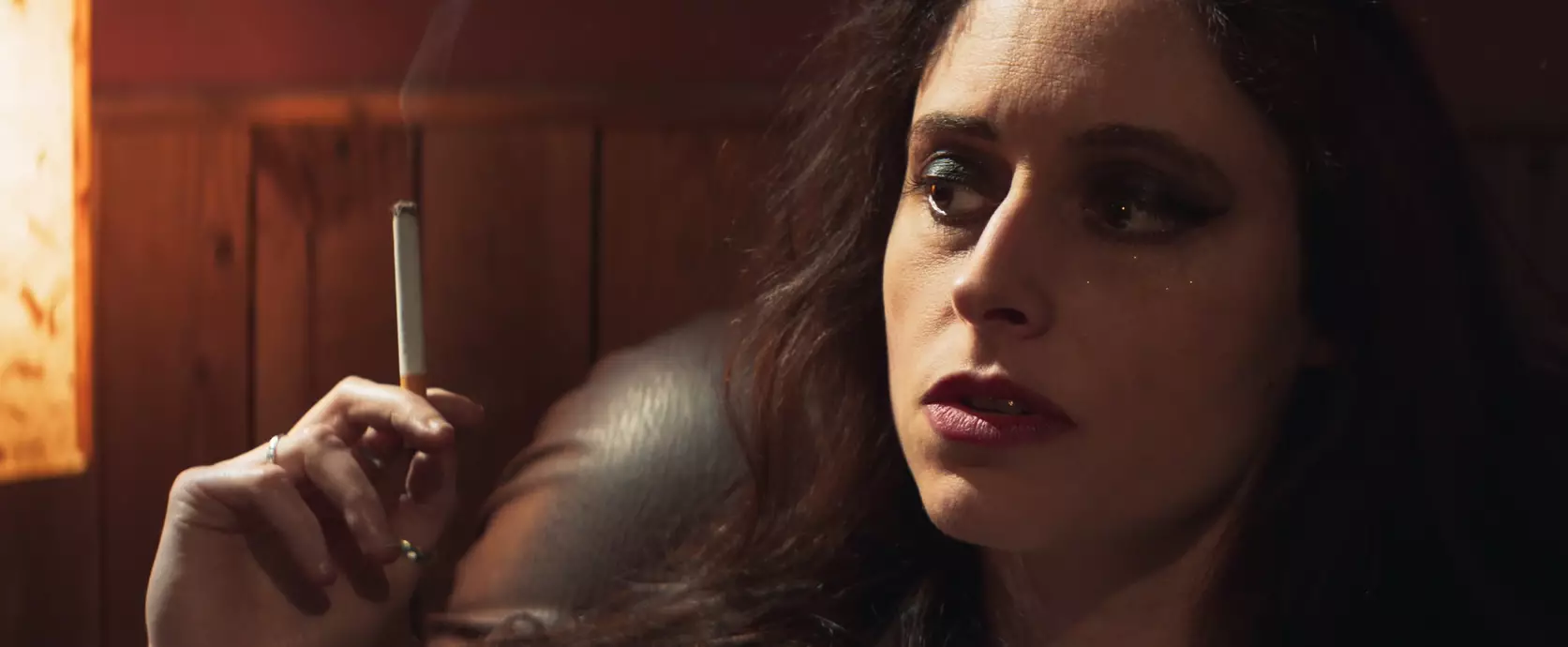
At the heart of the film is Alison, a single mother addicted to heroin. The choice of the main character is deliberately complex. Alison is neither a perfect victim nor an ideal mother. She is a self-destructive character who loves her son deeply but proves incapable of providing him with the stability he needs.
Director Lúka Ouvrard’s intention is precisely to place the viewer within this contradiction. The aim is not to excuse Alison, but to enable the audience to understand what drives her to act in this way. Her addiction is presented less as the film’s sole subject than as a factor that gradually destroys her relationships with the people she loves.
This approach also explains why the drugs must remain relatively in the background visually. The bathroom scene is obviously crucial, but the aim is not to show drug use for its own sake. The real breaking point is when Alison crosses a new line with regard to her son and Vicky.
Alison’s journey is therefore conceived as a path towards responsibility. She begins the film by trying to maintain control over her situation. She decides on the destination, drags Vicky along on the run and wants to protect Jarvis on her own terms. But gradually, her authority crumbles.
Vicky: the outside perspective that drives the narrative
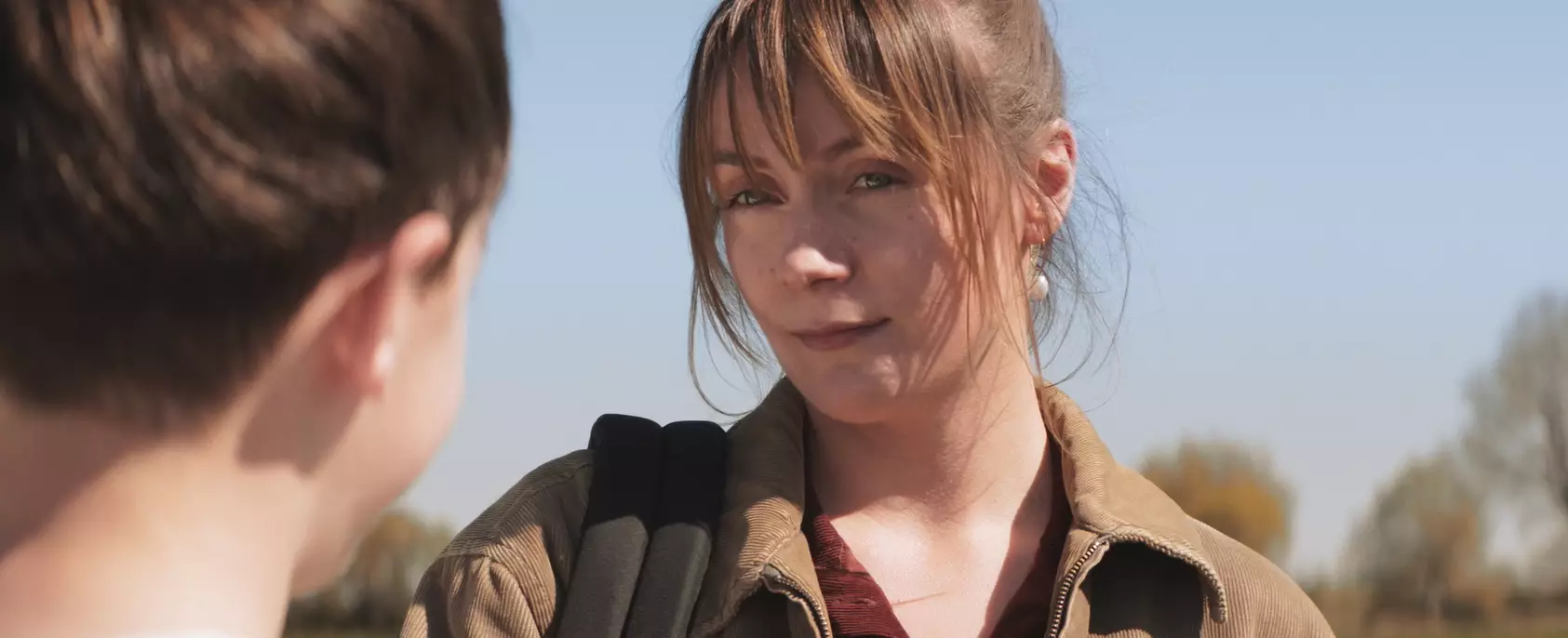
Vicky occupies a unique position. As Alison’s best friend and Jarvis’s godmother, she has a strong emotional bond with both characters. But she also represents the outside perspective that the film requires.
At first, Vicky is drawn into the situation against her will. She does not immediately grasp the gravity of the situation and gradually comes to realise the reality of Alison’s addiction. She observes, asks questions and tries to help her friend. Then her role evolves.
The director thus depicts a genuine shift in the balance of power between the two women. Alison is initially the one in charge of the journey. But Vicky gradually becomes the one who takes action, makes decisions and shoulders the responsibilities that Alison can no longer bear. This shift reaches its climax when Vicky intervenes in the face of Alison’s relapse.
Vicky then becomes almost a surrogate mother figure for Jarvis. However, the bond between them is not intended simply to replace Alison. On the contrary, it helps the mother realise what she stands to lose.
Jarvis: innocence amidst conflict
At the age of eight, Jarvis is a child with a passion for astronomy, mature for his age and particularly sensitive to the emotions around him. His dream of watching a meteor shower provides the concrete starting point for the journey.
But the stars also represent more than just a narrative objective. They offer the characters an idealised, almost magical destination, amidst a deeply dramatic situation.
Jarvis understands far more than Alison realises. He senses his mother’s struggles and bears the direct consequences of them. His growing closeness to Vicky thus becomes essential: in her, he discovers a sense of stability and care that contrasts with his mother’s instability.
A road movie as an inner journey
The choice of the road movie genre is not merely aesthetic. The characters’ physical journey mirrors their psychological development.
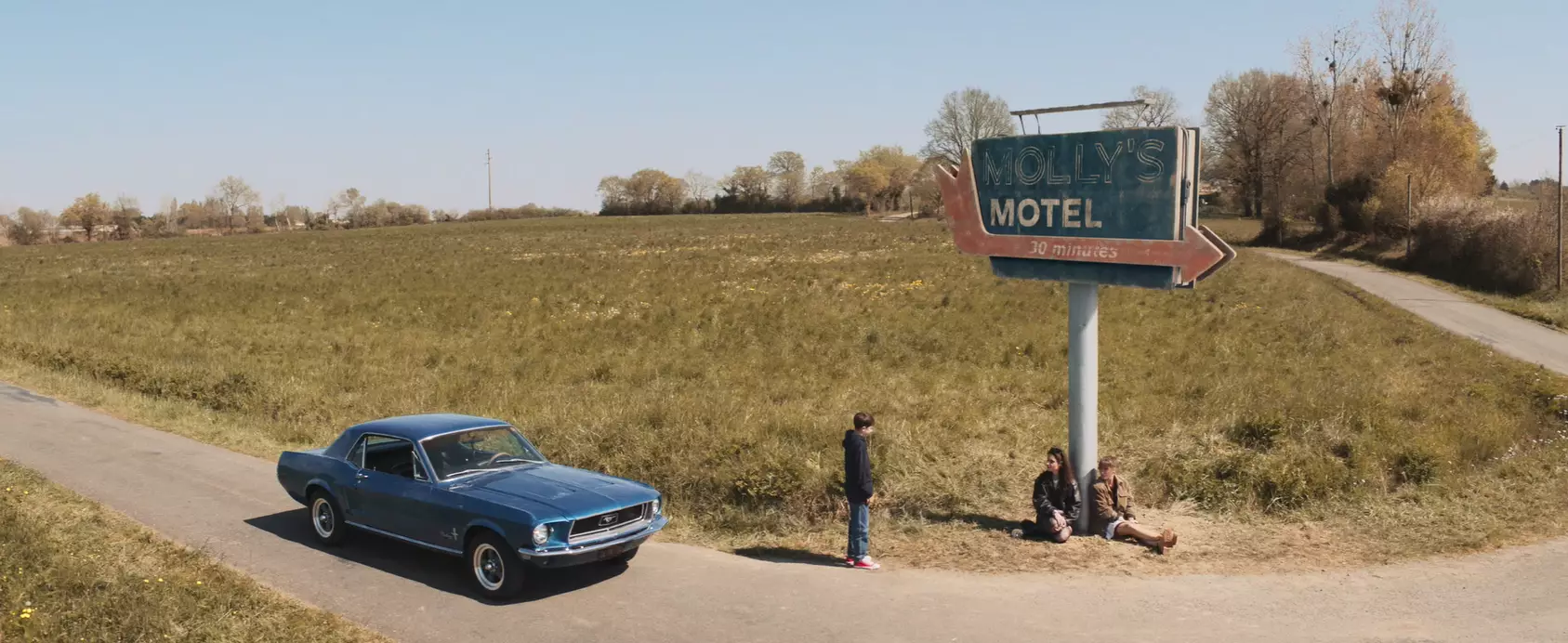
The road becomes a space where the characters are forced to talk, to confront one another and to gradually let their defences down. The car, in particular, plays a special role: an enclosed space amidst open landscapes, it confines the characters together and transforms unspoken tensions into inevitable conflicts. The production design team therefore wishes to make it a genuine element of the narrative, notably with the idea of using a classic car with a strong personality.
The journey ultimately leads Alison to a place she can go no further: the beach.
The beach: immensity as a prison
The beach is the most symbolic setting in the project. It represents both freedom and confinement.
Alison has managed to achieve her goal: she and Jarvis have arrived at the spot where they can gaze at the stars. Yet she cannot go any further. The sea blocks the horizon.
This contrast between the vastness of the landscape and the impossibility of moving forward directly reflects Alison’s emotional state. She has reached the end of her escape. All that remains is for her to accept what must come.
The final scene must therefore avoid cheap melodrama. The team wishes to prioritise a more restrained emotional tone.
An aesthetic blending nostalgia and melancholy
The world of *My Shooting Star* deliberately blends several eras. The 1960s, 1970s and 1990s inform the art direction to create a world that is not entirely realistic.
The aim is to recapture the light-heartedness and carefree spirit associated with the American West Coast of the 1960s, whilst incorporating the counter-culture of the 1970s and a more grunge, fatalistic and nihilistic dimension from the 1990s. These influences are intended to give the film an identity situated somewhere between dream and reality.
The set design plays a direct part in achieving this. The teams sought to blend contemporary elements with older objects, drawing in particular on second-hand shops and car boot sales. The motel, too, must have its own distinct identity and become an extension of this nostalgic world.
The image: confining the characters within the vastness
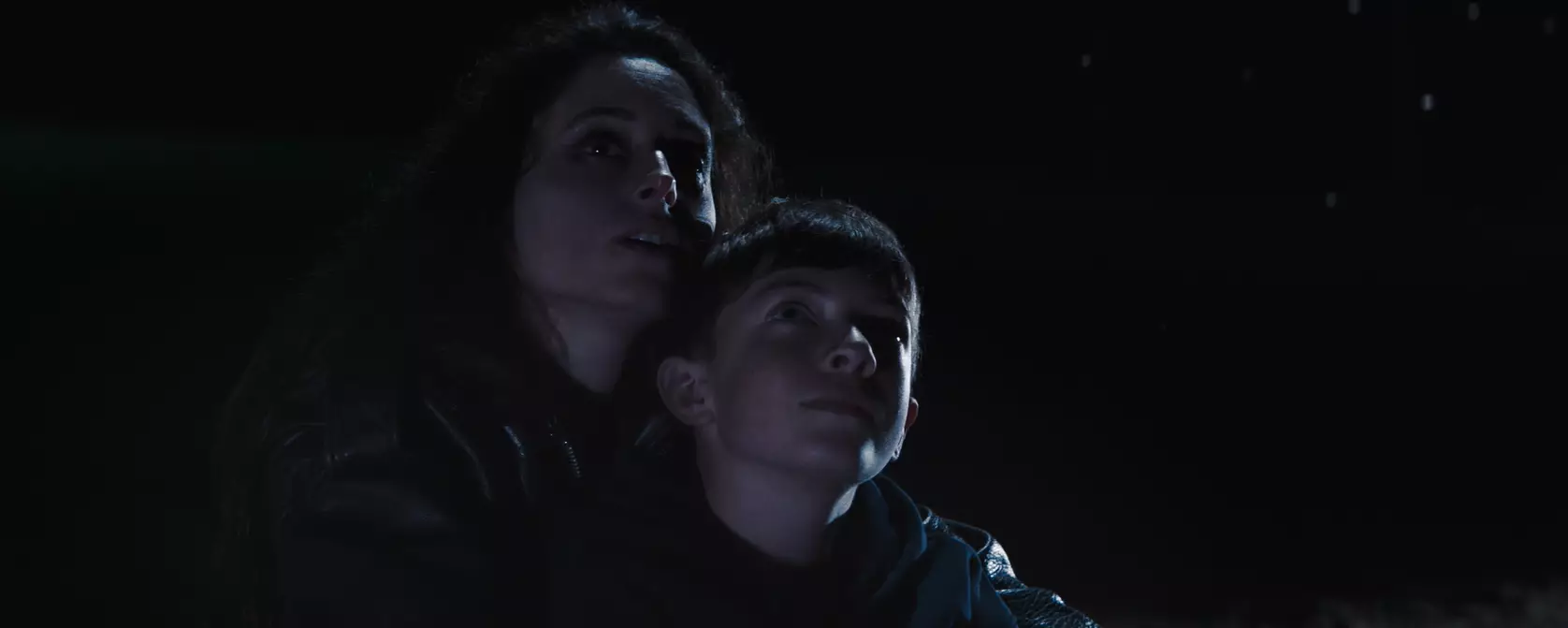
The chosen aesthetic directly reflects Alison’s journey: she is physically surrounded by vast spaces, yet emotionally trapped by her addiction and her own choices.
The alternation between handheld and static shots follows the same logic. The handheld camera is intended to convey the instability of relationships, whilst the static shots allow the viewer to observe the characters and their emotions. The team also aims to use the landscapes to show how the characters move through their environment, sometimes giving the impression that they are almost overwhelmed by it.
Colour as a reflection of emotions
Photography is also based on an emotional logic.
The sequences from the journey are associated with a predominantly yellow hue, a colour traditionally linked to warmth, happiness, hope and American imagery. This choice helps to create a contrast with the harshness of the narrative.
As the situation deteriorates, the colour palette shifts. Alison’s broken promise is associated with a more unsettling pale green. For the beach scene, the team opts for a melancholic pastel blue.
Colour thus directly accompanies the character’s emotional journey.
Music as a mother’s letter to her son
The music is one of the most personal elements of the project. Several original compositions were written for the film, with influences ranging from DeVotchKa to Elliott Smith, Bob Dylan and Pulp.
But ‘Shooting Star’, which now gives the project its new name, serves a particular purpose. The song is intended to be heard as a letter from Alison to Jarvis: a way of telling him she loves him, whilst reassuring him that their separation does not mean the end of their relationship.
This intention directly echoes the film’s conclusion.
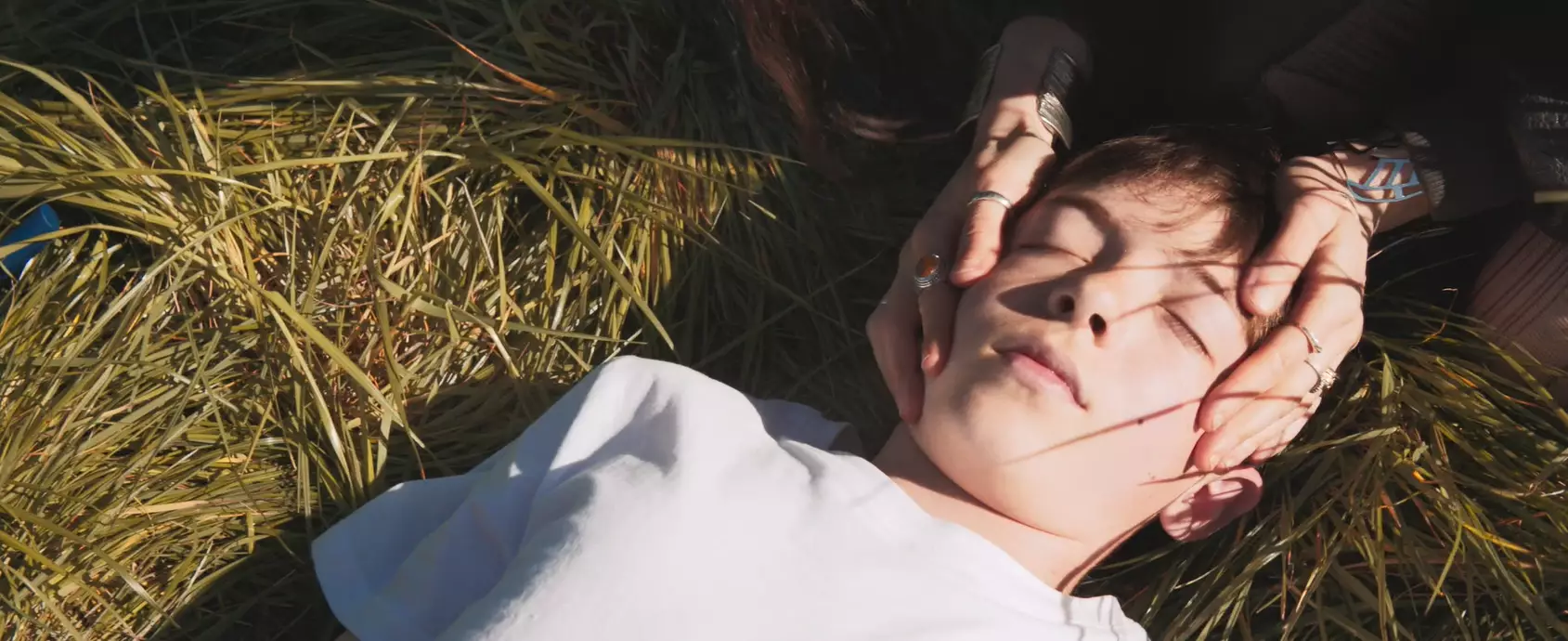
Redemption through renunciation
The most significant narrative choice probably concerns the conclusion of Alison’s journey. Her act of redemption does not consist in immediately getting her son back or miraculously overcoming her addiction.
It consists in letting him go.
Throughout the film, Alison tries to keep Jarvis by her side. But when she finally accepts that he must be separated from her, she paradoxically fulfils her first true act of maternal responsibility.
In the expanded version of the project, Jarvis’s final line – ‘You’re still my mum’ – confirms this idea: Alison ceases to be the central and exclusive figure in her son’s life, but that does not mean she ceases to be his mum.
Separation thus becomes a form of love.
A collective ambition
This coherence does not rest solely on the direction. Every department involved in the project contributes to building the same narrative language.
The casting team therefore sought actors capable of quickly establishing genuine trust between Alison, Vicky and Jarvis, as the relationships between these three characters form the emotional heart of the film.
The production team, for its part, is undertaking an ambitious project for a student film: over 60 crew members, three lead actors, two composers and eight days of filming.
Funding is based on a combination of events, sales, an online fundraising campaign, a raffle and the search for sponsors. The team is also seeking to forge links with organisations specialising in addiction prevention, so that the film can serve as a platform for discussion and exchange on these themes.
‘My Shooting Star’ thus emerges as a project in which artistic choices are never entirely divorced from the film’s message. The car represents confinement, the road symbolises escape, the stars embody hope, the beach represents a dead end, the music becomes a letter, and the imagery reflects Alison’s emotional fluctuations.
Behind the story of a mother fleeing with her son lies, ultimately, a tale exploring a far more universal idea: loving someone does not always mean knowing how to stay by their side. Sometimes, loving means accepting that you must let them go.
-

3rd year Class of 2026
French Blood Establishment
-

2nd year Promotion 2025
The Oppenheimer Way
-
3rd year
Manifesto
-

1st year
Out of frame
-
Promotion 2024
The Announcement, or the unexpected virtue of family mourning
-
3rd year
L'arbre caché par la forêt
-
3rd year
In the way of... " Payback
-
4th year
Le jour où j'ai grandi
-
1st year
Camille
-
3rd year
À contre courant
Crédits
Technical Team
Director / Co-screenwriter : Luka Ouvrard
Co-screenwriter : Lyse Favareille
Co-screenwriter : Naya Choblet
Co-screenwriter : Margot Autret
Co-screenwriter : Victoire Martin
Co-screenwriter : Marion Amouillin
Co-screenwriter : Nathan Lombrey
1st Assistant Director : Lisa Kerharo
2nd Assistant Director and Casting Assistant : Tatiana Treichel
3rd Assistant Director, Casting Assistant and Children’s Coordinator : Enora Saliou-Kerivois
Script : Nathan Lombrey
Head of Casting and Extras Coordinator : Marion Amouillin
Storyboard artist : Naya Choblet
Production Manager : Swann Legendre
Production Manager : Juliette Delalande
General Manager : Alizée Fort
Assistant Stage Manager : Noémie Caplanne
Head of Decoration : Keyran Lapierre
Chief Set Builder and First Assistant Set Decorator : Maxime Trouillaud
Interior design assistant : Eva Guerchet
Decorative trim : Noémie Caplanne
Head Prop Master : Tom Brohan
HMC Manager : Inès Rouiched
HMC Reinforcement : Juliette Delalande
Director of Photography : Victoire Martin
Chief Electrician : Patrick Neau
Electrician : Louis Fonteneau
Electrician : Victor Leroy
Camera Operator : Titouan Raillard
1st OPV Assembly : Simon Gaillard
2nd OPV Meeting : Naya Choblet
3rd OPV Assembly : Gabriel Guillaud
Steadicam operator : Liloue Robin
Steadicam Assistant : Lenny Geslin
Chief Stage Manager : Paul Sirot
Stagehand : Liloue Robin
Stagehand : Lenny Geslin
Sound engineer : Valentin Gay
Sound Department : Margot Autret
Perchman : Simon Lafontaine
Head of Post-Production : Julie Ramos
Head Editor : Orian Lebreton
Assistant editor / sound mixer : Margot Autret
Colour Grader : Simon Gaillard
Sound Designer : Valentin Gay
VFX Artist / 3D Compositor : Alexis Guerry
Assistant VFX Supervisor / Computer Graphics Artist : Leo Grammaticopoulos
VFX Supervisor : Eliott Watier
VFX Assistant : Chloé Laurent
Generic Designer : Simon Lafontaine
Teaser/Trailer Editor : Hussie Hilbert
Communications Officer : Guillaume Peron
Funding Officer : Célian Leprince
Chagée: Social Media and Graphic Designer : Naya Choblet
Communications Department : Swann Legendre
Communications Department : Margot Autret
Communications Department : Orian Lebreton
Communications Department : Alexis Guerry
Communications Support : Victoire Martin
Communications Support : Maxime Trouillaud
Communications Support : Lisa Kerharo
Director and camerawoman, Behind the Scenes 1 : Maylis Bailly
Behind the Scenes - 2 : Enola Deschamps
Editor: behind-the-scenes feature : Léa Chauvel
Press Officer : Juliette Delalande
Set Photographer : Ludivine Chetreanu
Artistic team
Alison : Julia Salaün
Vicky : Chloé Aloma
Jarvis : Charlie Vauselle