
What makes a great director?
A great director is an emblematic figure in the film industry. They are recognised for their artistic vision, for the way they bring their message to the screen, for their talent in creating films and for their contribution to the 7th art. His cinematographic works stand out for their technical and artistic quality, the power of their dialogue and their unique, captivating scripts. He is also a master in the art of directing, editing and music. He understands how his actors must interpret their characters.
A renowned director has the ability to transcend the codes of cinema, explore profound themes and create remarkable works that audiences remember generation after generation. The best director will have left his mark on the history of cinema, but will also have inspired many generations of filmmakers. Audiences and the industry as a whole will continue to celebrate these film professionals for their technical mastery and talent for innovation.
The criteria for judging a director
Interested in becoming a director? Here’s what you need to show to become the next Spielberg…
A great director has an artistic vision and a very personal style that is reflected in his or her work. The best directors leave their mark on the world of cinema with their influence, their signature style.
They often innovate by introducing new technical processes, sometimes pushing back the boundaries of the film genre. Quentin Tarantino, for example, is known for his use of ultra-fast zooms and wide shots. The use of classical music is also a “trademark” of this great director. Martin Scorsese, on the other hand, relies more on camera movements, which he uses to film in all directions. Jean-Luc Godard was also one of the first to use a hand-held camera.
The films of directors who have left their mark on the 7th art often have a lasting impact on cinema and on society in general. These works influence other artists or provoke deep reflection on important themes.
A great director has a real ability to collaborate and communicate effectively with his or her actors, giving them precise directions while leaving them free to bring their own personal touch to their roles.
Influence and impact on the history of cinema
Great directors have always had a considerable influence on the history of cinema and played an active part in its development. They have shaped not only cinematic technique, but also the way in which films explore themes and tell stories. Directing a film is much more than simply telling a story. The impact of renowned directors and cinematographers can be measured on different levels:
On the aesthetics of cinema
The aesthetics of cinema refer to all the visual, sound and narrative choices that contribute to the creation of a cinematic experience. Directors such as Stanley Kubrick and Akira Kurosawa have redefined the aesthetics of cinema. Kubrick, for example, is known for his meticulous framing, his symbolic use of colour and his ability to manipulate space and time. The latter was a pioneer in the use of wide shots and editing techniques.
On technical innovations
Many directors have revolutionised traditional cinematographic processes and the equipment used to film. These include Georges Méliès, a pioneer in trick shots and special effects, and Orson Welles, who innovated with the sequence shot in Citizen Kane.
Through their profound impact on popular culture
Some directors have had a profound impact on popular culture through films and lines that have become emblematic.
Through their influence on generations of filmmakers
Many directors have inspired generations of filmmakers of their own or subsequent eras. Francis Ford Coppola and Martin Scorsese not only influenced other directors of the same era, but also created schools of thought for young filmmakers that guide them in the way they perceive and create films.
Major awards and distinctions
A number of awards recognise the talent of filmmakers and their influence on cinema. Among the most prestigious are
- The Oscars (Academy Awards) (Best Director, Best Film and Honorary Oscar) are the film industry’s most prestigious awards.
- The Palme d’Or (Cannes Film Festival) is the highest distinction awarded at the Cannes Film Festival, one of the most prestigious film festivals in the world. The Palme d’Or is awarded to the best film in the official selection and to a director whose film stands out for its artistic quality and singularity.
- The Golden Lion (Venice Festival), the Venice International Film Festival’s highest distinction, is awarded to the best film in the official competition.
- The Best Director Award (Berlin Festival), also known as the “Golden Bear”, recognises the excellence of a director and artistically daring works.
- The César for Best Director
- The Golden Globe Awards, a prize awarded by the foreign press in Hollywood, for the most outstanding films
- The Prix Lumière in Lyon and the Golden Bear for Lifetime Achievement in Berlin.
- The BAFTA (British Academy of Film and Television Arts) in the UK, which are the equivalent of the Oscars for the best directors.
Our top 10 best directors in the history of cinema
Steven Spielberg, American film director born in 1946
Spielberg developed a passion for film from an early age, so much so that at the age of 13 he made his first videos with a Super 8 camera, including “Firelight”, his first low-budget science fiction short. His film breakthrough came in 1975 with “Jaws”, a success he confirmed in 1977 with “Close Encounters of the 3rd Kind”.
What sets Spielberg apart is his ability to combine deep emotional stories with a remarkable technical approach. His use of camera movements, particularly the famous “travellings” that give an impression of fluidity and immersion, has become a hallmark of his style. He also uses elements such as light and shadow to intensify the emotion in a scene. Spielberg’s films are also enjoyed by audiences of all ages, while tackling universal themes. With the exception of westerns and peplums, Spielberg has explored everything from science fiction to historical drama (The Color Purple, Empire of the Sun), war (Saving Private Ryan), romantic comedy (Always), animation (The Adventures of Tintin), adventure (Raiders of the Lost Ark) and more.
- 1983: Golden Globe Awards for E.T. the Extra-Terrestrial
- 1994: Oscar for Best Director and Best Film for Schindler’s List
- 1999: Oscar for Best Director for Saving Private Ryan
- 2009: Spielberg made Commandeur de la Légion d’Honneur by the French government in recognition of his cultural contributions to cinema
Frédérico Fellini, Italian film director (1920-1993)
Fellini’s early films were in the tradition of Italian neo-realism, which aimed to depict the reality of everyday life in the post-war working classes with great sincerity. He made his film debut as a scriptwriter and assistant scriptwriter to Roberto Rossellini for the 1945 film Rome, Open City (Roma, città aperta). Fellini began to make a name for himself in the 7th art firmament with “La Strada”, released in 1954, followed by “Dolce Vita”, a social satire of the Roman aristocracy and the world of cinema, starring Marcello Mastroïani.
Frédérico Fellini became famous for his ability to blend realism and surrealism, imagining worlds where it becomes difficult to distinguish between the real and the imaginary. Fellinian films often begin in concrete, very real contexts, before unrealistic or fantastical elements appear.
- 1960: Palme d’Or at the Cannes Film Festival for La Dolce Vita
- 1985: Golden Lion at the Venice Film Festival
- 1993: Honorary Oscar for lifetime achievement
David Lynch, American film director (1946-2025)
David Lynch’s career has been marked by cult films and series, as well as a highly personal approach to cinema. In 1977, he released “Eraserhead”, his first feature film, with its absurd, nightmarish atmosphere, made over several years with very little money. The film was a great success at midnight screenings, where it became a cult thanks to word-of-mouth. In 1980, his career was launched with “Elephant Man”, a film that recounts the tragic fate of Joseph Merrick, a young Englishman suffering from deformities during the Victorian era. The film earned him several Oscar nominations and international recognition.
On the fringes of the Hollywood canon, David Lynch has succeeded in imposing his style through films with murky, mysterious and disturbing atmospheres and enigmatic characters. A true master of the strange, this director also makes masterful use of sound and music.
- 1990: Palme d’Or at the Cannes Film Festival for “Sailor and Lula”.
- 2001: Director’s Prize at the Cannes Film Festival for Mulholland Drive
- 2006: Honorary Lion at the Venice Film Festival.
Jean-Luc Godard (1930-2022)
An emblematic figure of French cinema, Jean-Luc Godard was one of the pioneers of the Nouvelle Vague. He discovered cinema in the film clubs of the Latin Quarter. Before taking up directing, he worked as a film critic, developing a unique and iconoclastic vision of the 7th art, challenging all the cinematic conventions of the time. In 1960, he directed “À bout de souffle”, his first feature film, starring Jean-Paul Belmondo and Jean Seberg. Godard’s innovative style was already apparent, and he became a key figure in the French New Wave. Memorable works such as “Le Mépris” in 1963 and “Pierrot le Fou” in 1965 followed, cementing his reputation as a “revolutionary” filmmaker.
Godard’s style is characterised by his desire to break with the conventions of traditional cinema. He explored complex themes such as politics, the human condition and existentialism. He tells stories in a different way, using an innovative style and unprecedented techniques of colour, offbeat dialogue and non-linear editing to provoke strong emotion in the viewer.
- 1960: Jean Vigo Prize for “Breathless” (best film)
- 1982: Honorary Golden Lion for lifetime achievement
- 1987: Honorary César for lifetime achievement
- 1987: Prix Louis-Delluc for “Soigne ta droite” (best film)
- 2007: European Film Prize for lifetime achievement
Alfred Hitchcock, British-American film director (1899-1980)
Commonly known as “The Master of Suspense”, Alfred Hitchcock joined the film industry in 1920 as a title designer for silent films. It was at this time that he began to develop an interest in directing. In 1925 he made his first feature film, The Pleasure Garden, before achieving success in 1927 with The Lodger, a thriller inspired by Jack the Ripper.
From then on, each of his films introduced stylistic elements that would become Hitchcock’s signature. He skilfully manipulated the audience’s emotions using techniques that were his secret. These included the MacGuffin, a screenplay device in which a seemingly unimportant plot element is used as a pretext to start or advance the story.
Alfred Hitchcock never won the Oscar for Best Director, but in 1968 he received the Irving G. Thalberg Memorial Award for lifetime achievement.
William Wyler, Swiss-German film director (1902-1981)
William Wyler started out making B-movie westerns. He quickly earned a reputation as a perfectionist, so much so that he was nicknamed “40-take Wyler” for the numerous takes he required to achieve perfection. His breakthrough in Hollywood came in 1938 with “Jezebel”, in which Bette Davis won an Oscar, then with “Wuthering Heights” in 1939, which was a huge success, followed by “Mrs Miniver” in 1942, which won him the Oscar for Best Film and Best Director. Wyler’s filmography covers a wide range of genres, from romantic drama with “Wuthering Heights” (1939) to the epic peplum “Ben-Hur” (1959). Wyler’s cinematic style is recognisable for its attention to detail and innovative use of depth of field.
- 1943: Oscar for Best Director for “Madame Miniver
- 1947: Oscar for Best Director for The Best Years of Our Lives
- 1957: Palme d’Or at the Cannes Film Festival for “The Law of the Lord
- 1960: Oscar for Best Director for Ben-Hur
Woody Allen, American film director born in 1935
In the 1960s, before making his film debut, Woody Allen performed in New York clubs as a stand-up comedian. In 1969, he made his first film, Annie Hall. From the 1980s onwards, he diversified the themes of his work, with very different films such as “The Purple Rose of Cairo” and “Hannah and Her Sisters”. He tackled themes as varied as love, relationships, infidelity, religion, doubt, fear of death, the meaning of life and the place of the individual in the universe, to name but a few.
Woody Allen’s style is distinguished by its unique blend of humour, philosophy, psychology, neuroses and fast-paced dialogue. Woody Allen likes to play with words and comic situations while exploring profound subjects with a touch of cynicism. Many of his characters are intellectual beings, often neurotic or dissatisfied, navigating complicated relationships and existential crises.
- 1978: Oscar for Best Director for Annie Hall
- 1987: Oscar for Best Director for “Hannah and Her Sisters
Martin Scorsese, American film director born in 1942
Martin Scorsese began his film career in the 1960s, making short films after studying at New York University’s film school. His early work was marked by an exploration of Italian-American culture and the violent and conflicted aspects of society. His first feature film of note was “Who’s That Knocking at My Door” (1967), an independent film that attracted a great deal of attention. The 1970s and 1980s were marked by great cinematic successes such as “Taxi Driver” (1970) and “Raging Bull” (1980), a biography of boxer Jake LaMotta, considered to be one of the best films of all time.
Scorsese’s films pay particular attention to characters who are marginal, complex and deeply marked by inner conflicts. He also frequently uses flashbacks or voice-overs to tell the story, allowing viewers to enter the heads of his characters. Music also plays an essential role in Scorsese’s filmography, through the use of popular songs from different eras to heighten the emotion of certain scenes.
- 1976: Palme d’Or at Cannes for Taxi Driver
- 2007: Golden Globe for Best Director with “The Undercover”.
- 2011: Golden Globe for Best Director with “Hugo Cabret3
Orson Welles, American film director (1915-1985)
Orson Welles began his career on the radio, where he made a name for himself in 1938 with his broadcast of“War of the Worlds”. His new-found fame opened the door to other projects, including cinema, which would make him a household name throughout the world. Indeed, in 1941, he signed his first masterpiece, “Citizen Kane”. Today, “Citizen Kane”,often cited as the best film of all time, remains a model for study in film schools around the world. After this success, Orson Welles continued to make outstanding films, although his film career had its ups and downs. From the 1940s onwards, the director encountered difficulties with the Hollywood studios, due to his artistic independence and conflicts with producers. He went into exile in Europe in the early 1950s.
Welles often mixed realism with fantastical elements. His style is marked by the use of depth of field, where he keeps both the background and the foreground sharp and perfectly visible. This helps to create a visual effect where everything in the frame is emphasised and allows several important elements to be seen at different levels of the scene. He also has a perfect mastery of light and shadow, flashbacks and temporal ellipses.
Welles received an Oscar and three Grammy Awards, among many other distinctions including the Golden Lion in 1947, the Palme d’Or in 1952, the Academy Honorary Award in 1970, the AFI Life Achievement Award in 1975 and the British Film Institute Fellowship in 1983.
- 1942: Oscar for Best Director for “Citizen Kane
- 1952: Palme d’Or at the Cannes Film Festival for “Othello
- 1970: Golden Lion for lifetime achievement
Akira Kurosawa, Japanese film director (1910-1998)
Akira Kurosawa’s early films were influenced by Western productions and a variety of genres, such as Hollywood cinema, in particular the films of John Ford, as well as the works of European directors such as Jean Renoir. His cinema has always been marked by a desire to combine Eastern and Western influences. In 1944, he began to make a name for himself in the cinema with “The Most Beautiful”. His career took off in the 1950s and 1960s, notably with “The 7 Samurai” in 1954. Kurosawa’s work inspired filmmakers such as Steven Spielberg, Martin Scorsese and George Lucas to create “Star Wars”, andhe has made over 30 films in his 57-year career.
Kurosawa is a master in the art of composing images. He uses space, light and the elements of the frame to accentuate the emotion, atmosphere and psychology of the characters.
- 1980: Palme d’Or at the Cannes Film Festival for “Kagemusha, l’ombre du guerrier”.
- 1990: Honorary Oscar for lifetime achievement.
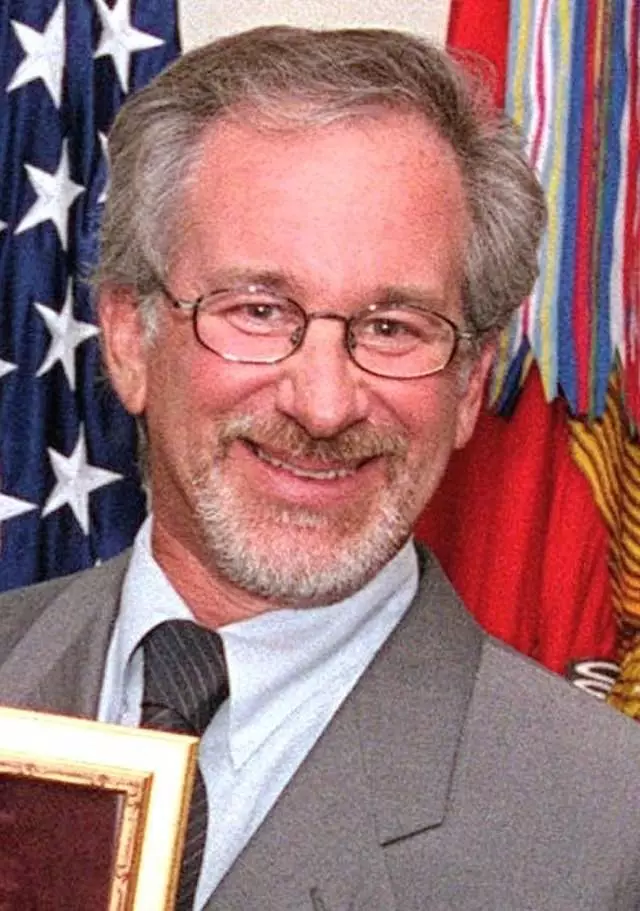
Who is considered the best director of all time?
Choosing the best director is always subjective and based on individual tastes. John Ford is renowned for having won 4 Oscars throughout his career, notably for “The Grapes of Wrath” in 1940, but Steven Spielberg is at the top of many best director rankings. He is ahead of James Cameron, who makes the most profit per film on average.